Fireplace Ash Management Minnesota: What Every Wood-Burning Homeowner Should Know
Fireplace ash management Minnesota homeowners deal with every winter looks simple on the surface: scoop out the leftovers, toss them, done. In practice, how much ash you leave, when you remove it and where you put it affect draft, moisture, airflow and the long-term health of your firebox.
This guide explains the right amount of ash to keep, the seven rules that prevent common problems, and which warning signs mean the firebox or flue needs a professional look. Whether you live in Minneapolis or near Maple Lake, the same principles apply.
How Much Ash Should Be Left in a Wood-Burning Fireplace?
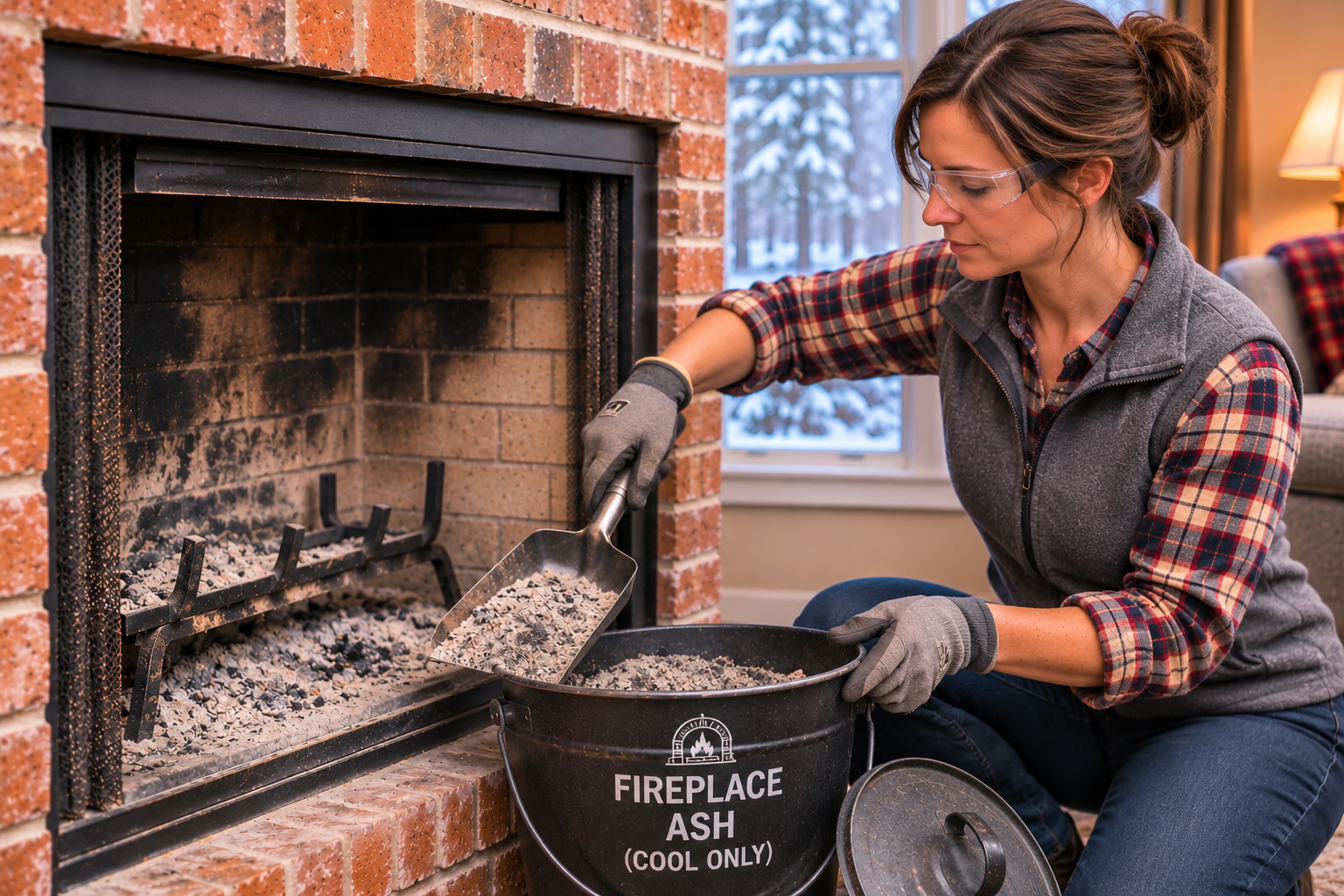
Leave a thin bed of about one inch of ash on the firebox floor between fires. That ash bed insulates the floor, helps new wood catch fire faster and keeps the firebox from cooling too quickly.
More than about one inch is too much. Fireplace ash management Minnesota winters require means removing excess ash before it restricts airflow, traps moisture or hides damage in the firebox below.
Always let the fire burn out completely and the ashes cool for at least 24 hours before touching them. Never scoop warm ash, and never put hot ash in a trash can.
Why Ash Management Matters in a Minnesota Winter
Three conditions make proper ash care more important here than in milder climates.
Moisture and freeze-thaw cycles. Ash left deep in the firebox absorbs moisture from the air and from water that enters the chimney. When that wet ash freezes, it expands and can widen cracks in the firebox floor. Our guide to chimney water intrusion Minnesota explains where the water usually enters.
Long burning seasons. Minnesota homeowners run their fireplaces for months, so ash accumulates faster than in warmer states. A firebox that gets cleaned only once a season often ends up with four or five inches of compacted ash by March.
Reduced draft in cold flue conditions. A deep ash bed blocks air from reaching the burning wood from below, which slows combustion and weakens the pull up the flue. Our guide to poor chimney draft Minnesota covers the causes of weak draw.
Proper fireplace ash management Minnesota homes need is a small habit with a large payoff.
7 Essential Fireplace Ash Management Minnesota Rules
1. Leave About One Inch of Ash Between Fires
A thin ash bed is your friend. It insulates the firebox floor, reflects heat back into the fire and gives new kindling a warm base to catch on.
Fireplace ash management Minnesota homeowners follow in November usually starts here: after the last fire, rake the ashes flat and leave roughly one inch. Too much ash and you lose airflow; too little and the firebox floor cools faster than it should.
2. Remove Ash Only After 24 Hours of Cooling
Hot ash can stay dangerous for a full day, even when the surface looks cold. A single spark hidden in a pile of ash can ignite a paper towel, a trash bag or a wooden shelf.
Fireplace ash management that skips the cooling period is the most common cause of household fires started near a hearth. Wait, then handle. Never rush it.
3. Use a Metal Container with a Tight-Fitting Lid
Ash belongs in a metal bucket or can made for ash disposal, with a lid that closes fully. Set it on a non-combustible surface outdoors, away from the house, the deck and anything that can burn.
Fireplace ash management Minnesota garages often get wrong is storing ash indoors or in a plastic container. Both are fire hazards. Keep the metal can outside until you are certain every ember is dead, then dispose of the ash according to local rules.
4. Never Use a Vacuum for Warm Ash
Household vacuums and shop vacs can pull a hidden ember into the motor and ignite it instantly. Fireplace ash management that uses a vacuum on warm or even cool-looking ash is a serious fire risk.
Wait the full 24 hours, use a metal scoop, and handle the ash by hand with gloves and a metal container.
5. Keep the Ash Bed Flat and Even
A lumpy ash bed creates pockets where airflow is restricted and others where too much air rushes through. Rake the ashes flat after each fire so the next burn starts evenly.
Fireplace ash management that keeps the bed level also makes it easier to see how deep the ash actually is. Use the one-inch rule as your guide.
6. Remove Excess Ash During the Season, Not Just at the End
Do not wait until spring to clean out a winter’s worth of ash. Check the depth every few fires and remove the excess whenever it passes about one inch.
Fireplace ash management Minnesota long seasons demand means a mid-season cleanout, usually once or twice between November and March. It takes five minutes and prevents months of compaction.
7. Never Burn Trash, Paper Piles or Treated Wood to “Clear” Ash
Some homeowners try to burn off excess ash with a hot fire or by tossing in paper and cardboard. That practice produces heavy smoke, builds creosote fast and can overheat the firebox.
Fireplace ash management that relies on burning to clean is counterproductive. Remove it cool with a metal scoop instead. Burn only dry, seasoned firewood, never trash, painted wood or treated lumber.
Safe Removal and Disposal Steps
These steps stay on the floor, in front of a cold fireplace with no warm ash or embers.
Before You Touch Anything
- Confirm the fire has been out for at least 24 hours and the ash is completely cool to the touch.
- Put on heat-resistant gloves and set a metal ash can with a lid nearby.
- Close the damper to keep ash dust from rising into the flue.
- Lay down newspaper or a drop cloth if you want to catch spills.
Removing the Ash
- Use a metal scoop or small shovel, not a plastic or wooden tool.
- Scoop the excess ash out of the firebox and into the metal can.
- Leave about one inch of ash flat on the floor.
- Wipe the firebox walls with a dry cloth to remove loose soot.
- Take a photo of the cleaned firebox for your records.
Disposal
- Set the metal can outside on a non-combustible surface with the lid on.
- Leave it for at least 48 hours to confirm no embers remain.
- Dispose of cool ash according to local guidelines. Some municipalities accept it for garden use; others require landfill disposal.
Fireplace ash management that follows these steps prevents household fires and keeps the firebox ready for the next burn.
What You Should Not Do at Home
Never climb onto the roof, reach past the damper, enter the flue or poke at creosote to investigate ash-related problems. Fireplace ash management is one of the few fireplace tasks homeowners can do safely; everything else above the firebox belongs to a professional.
Never store ash in a cardboard box, paper bag, plastic bucket or indoors near anything that can burn. Never spread warm ash on a garden or driveway, because hidden embers can ignite dry material hours later.
Red Flags: Stop and Call a Professional
Fireplace ash management alone will not fix these signs. Stop using the fireplace and call if you notice:
- Water, ice or damp spots in or above the firebox
- Loose, shifted or missing bricks, or open mortar joints in the firebox floor
- Heavy black or shiny creosote on the firebox walls or flue
- Smoke entering the room during or after a fire
- A strong smoky odor from a cold fireplace
- A chimney fire history, an appliance change or a recent home purchase
If a carbon monoxide alarm sounds, leave the house immediately and call 911. Keep working smoke and carbon monoxide alarms on every level.
What a Professional Checks During an Inspection
The Inspection Itself
A technician inspects the firebox, damper, smoke chamber and flue, often with a camera, and looks for creosote, blockages, moisture and structural damage. The NFPA 211 standard defines three inspection levels. Level 1 covers readily accessible parts, and Level 2 adds a camera scan of the flue.
The Chimney Safety Institute of America (CSIA) recommends an annual inspection, and the EPA Burn Wise program pairs it with tips for cleaner home burning.
When Ash Is Only Part of the Story
Sometimes ash buildup points to a deeper issue: a firebox that holds moisture, a flue that is too narrow for the amount of ash being produced, or draft problems that leave smoke and residue behind. A camera inspection separates one from another.
Our chimney cleaning page explains how professionals clear creosote and residue, and our chimney repair page covers structural fixes when the firebox itself needs attention.
Choosing a Qualified Professional
Look for CSIA certification and a Minnesota contractor license, and ask for both numbers. Free homeowner guidance at Verified Chimney Pros helps you ask better questions before you hire.
Fireplace Ash Management Minnesota Prevention Checklist
- Between fires: leave about one inch of flat ash on the firebox floor.
- Every few fires: check the depth and remove excess with a metal scoop.
- After 24 hours of cooling: handle ash only when completely cool.
- Disposal: metal can with a lid, set outside away from the house.
- Mid-season: schedule a full cleanout once or twice between November and March.
- Every year: book a professional chimney and fireplace inspection, as CSIA recommends.
Fireplace ash management that follows this rhythm keeps the firebox clear, the draft strong and the firebox ready for the next Minnesota winter night.
Fireplace Ash Management Help in Maple Lake, Minneapolis and the Twin Cities
Midwest Chimney Repair works from Maple Lake and serves homeowners within an approximately 25-mile radius. If you live in Minneapolis or elsewhere in the Twin Cities, call to confirm whether your address is covered. Our team can walk you through any fireplace ash management Minnesota winters have made complicated.
Services and Service Areas in Minnesota
We proudly provide chimney repair MN, including:
Buffalo, MNAnnandale, MNMonticello, MNWaverly, MNClearwater, MN
Our chimney and fireplace repair services include:
Frequently Asked Questions
How much ash should be left in a fireplace?
Leave about one inch of flat ash on the firebox floor between fires. That thin bed insulates the floor and helps new wood catch faster. More than one inch restricts airflow and traps moisture.
When should I remove ash from my fireplace?
Remove excess ash whenever it passes about one inch, which usually means once or twice during a Minnesota heating season. Always wait at least 24 hours after the fire is out before touching the ashes.
Is it safe to leave ash in the fireplace overnight?
Yes, if the fire is completely out and the damper is closed. A thin ash bed is fine to leave; a deep pile of ash is not. Fireplace ash management Minnesota winters require means checking depth before every fire.
Can I vacuum warm ash from my fireplace?
No. Household vacuums can pull a hidden ember into the motor and ignite it. Wait 24 hours for the ash to cool completely, then use a metal scoop and a metal container with a lid.
Where should I dispose of fireplace ash?
Put cool ash in a metal container with a tight-fitting lid and set it outside on a non-combustible surface, away from the house. Leave it for 48 hours to confirm no embers remain, then follow local disposal rules.
Does too much ash affect fireplace draft?
Yes. A deep ash bed blocks air from reaching the burning wood from below, which slows combustion and weakens the pull up the flue. Our guide to poor chimney draft Minnesota explains draft problems in detail.
Can wet ash damage my firebox?
Yes. Ash left deep in the firebox absorbs moisture, and freeze-thaw cycles then widen cracks in the firebox floor. Fireplace ash management that removes excess ash before winter moisture sets in prevents this damage.
Should I leave ash when I go on vacation?
If the fireplace will be unused for more than a few days, remove all ash and close the damper. Deep ash left unattended for weeks absorbs moisture and can hold hidden embers longer than expected.
Can I use ash for anything?
Cool fireplace ash can be used as garden lime in small amounts, but only after confirming it is completely ember-free and only if local rules allow it. Fireplace ash management that reuses ash should always prioritize safety over convenience.
How often should my fireplace be professionally cleaned?
CSIA recommends an annual inspection, and cleaning frequency depends on how much creosote and residue build up. Fireplace ash management that stays on schedule usually means less work between professional visits.
What does a Level 2 inspection include?
Under NFPA 211, Level 1 covers readily accessible parts of the chimney and fireplace. Level 2 adds a camera scan of the flue, which finds blockages, damage or moisture that cleaning alone will not resolve.
Does freeze-thaw weather affect ash in the fireplace?
Indirectly, yes. Moisture entering through the crown or flashing mixes with deep ash, and when it freezes it expands and widens cracks in the firebox floor. Keeping the ash bed thin prevents this.
How much does a chimney cleaning and inspection cost?
Cost depends on access, flue condition and whether a camera scan is needed. A professional inspection gives you a clear scope before any work begins.
Does Midwest Chimney Repair serve Minneapolis?
Yes. We are based in Maple Lake with an approximately 25-mile service radius. Twin Cities homeowners should call (612) 655-8181 to confirm whether their address is covered.
How do I schedule a chimney and fireplace inspection?
Call (612) 655-8181 or email mnchimneyrepair@gmail.com. Our hours are Monday–Friday, 9:00 AM–4:00 PM. Photos of the firebox and any ash buildup help us prepare.