Fireplace Spark Protection Minnesota: What Every Homeowner Should Know
One popping log can send an ember across the hearth in a second. Fireplace spark protection Minnesota homeowners set up before the first fire of the season is what stands between a cozy evening and a burned rug. The good news: most of it is simple, and none of it requires a ladder.
This guide explains why sparks escape, the seven rules that keep them contained, and which warning signs mean your fireplace or chimney needs a professional look. Whether you live in Minneapolis or near Maple Lake, the same principles apply.
What Is Fireplace Spark Protection?
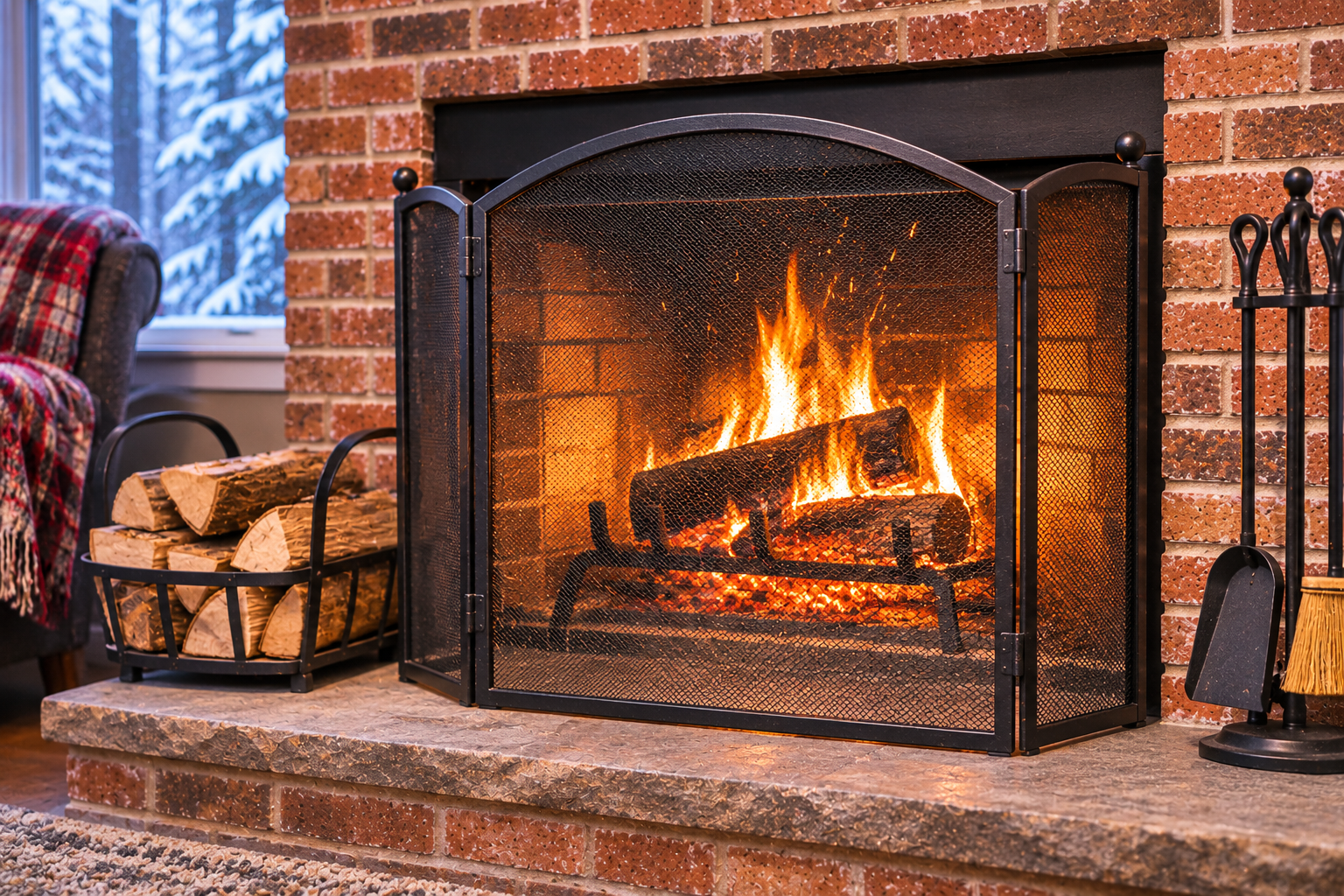
Fireplace spark protection Minnesota homes rely on is the set of barriers that keep embers, sparks and popping debris inside the firebox: a tight-fitting mesh screen or glass doors, a non-combustible hearth, and a clear zone around the opening.
Above the roofline, a chimney cap with a spark arrestor does the same job for the top of the flue. Sparks escape when a screen is missing or loose, glass doors are opened during a fire, the hearth is combustible, or wet wood pops aggressively.
Why Fireplace Spark Protection Minnesota Homes Need It Before Winter
Three local conditions raise the stakes.
Long, hot fires. Minnesota homeowners run the fireplace for hours during cold snaps, which gives sparks far more chances to escape than a short evening fire does.
Dry indoor air and dry wood. Winter air and kiln-dry or well-seasoned wood burn hot and fast, and hot fires pop. Our guide to firewood moisture fireplace Minnesota explains why moisture changes how aggressively a log snaps.
Holiday clutter near the hearth. By late November, wrapping paper, stockings, decorations and gift boxes start collecting near the fireplace. A clear zone is the cheapest spark protection you will ever install.
Freeze-thaw damage matters too. Water that enters through the crown or flashing cracks the firebox and can loosen the very components that contain sparks, as our guide to chimney water intrusion Minnesota explains.
7 Proven Fireplace Spark Protection Minnesota Rules
1. Keep the Mesh Screen or Glass Doors Closed During Every Fire
A screen or doors are the first line of defense, and they only work when they are shut. Open doors let embers roll straight onto the floor.
Fireplace spark protection that ignores the screen is not protection at all. If your screen is warped, loose or has gaps, it needs attention before the next fire.
2. Burn Only Dry, Seasoned Firewood
Wet wood smolders, but partially dry wood pops. As trapped moisture turns to steam, it bursts the log open and throws sparks toward the screen.
Fireplace spark protection Minnesota fires benefit from most starts with wood below about 20 percent moisture. Never burn trash, painted wood or treated lumber. The EPA Burn Wise program shares practical tips for cleaner home burning.
3. Do Not Overload the Firebox
A firebox packed with wood starves the fire of air. The result is a smoky, sputtering burn that throws more sparks and builds creosote faster.
Build smaller, hotter fires: dry kindling first, then one or two larger logs once the flame climbs. Fireplace spark protection works best when the fire is controlled rather than crammed.
4. Keep the Clear Zone Around the Opening Free of Combustibles
Nothing that can burn belongs near the opening: curtains, wraps, paper, stockings, furniture or holiday decor. Spark protection that starts three feet out costs nothing.
Fireplace spark protection that fails here is the most common cause of hearth-area fires during the holidays. Move the clear zone before you light anything, not after you smell smoke.
5. Use a Non-Combustible Hearth Extension or Ember Rug
The floor in front of the fireplace should be tile, stone, metal or a certified ember-rated rug. Carpet right up to the opening is a risk that sparks exploit in seconds.
Fireplace spark protection Minnesota older homes sometimes lack is a proper hearth extension. If your hearth looks combustible, have a professional evaluate it before the first fire.
6. Never Leave a Fire Unattended
Sparks do their damage when nobody is watching. If you leave the room, either extinguish the fire or keep the screen closed and the clear zone clear.
Fireplace spark protection that depends on you being present is realistic for most evenings. On nights when you cannot stay, run a smaller fire or none at all.
7. Confirm the Chimney Cap and Spark Arrestor From the Ground
A cap at the top of the chimney catches large embers leaving the flue. Check from the yard or window that a cap appears to be in place, and note any visible damage.
Fireplace spark protection that stops at the screen misses the top of the system. Cap installation and repair are professional work: never climb the roof. Our chimney inspections page covers what a technician checks up there.
Safe Checks Before Your Next Fire
These checks stay on the floor, in front of a cold fireplace with no warm ash or embers.
What You Can Safely Observe
- Confirm the screen fits tightly or the glass doors close fully.
- Look at the hearth for cracks, loose tile or combustible material near the opening.
- Sweep the clear zone and move anything that can burn at least an arm’s length away.
- Check your wood: dry, seasoned, stored off the ground.
- Note how much the fire pops, and photograph unusual sparking for your technician.
- Test your smoke and carbon monoxide alarms.
What Belongs to a Professional
Never climb the roof, reach past the damper, enter the flue or repair a screen, door or hearth yourself. Cap work, flue scanning and structural repairs need trained hands. Anything that looks risky gets a phone call instead of a ladder.
Red Flags: Stop the Fire and Call a Professional
Do not light the next fire if you notice any of these:
- Sparks or embers landing beyond the hearth while the screen is closed
- A missing, warped or gapped screen, or glass doors that will not close
- A wall beside the fireplace that feels unusually hot during a fire
- Loose bricks, open mortar joints or cracks in the firebox
- Smoke entering the room, or a strong smoky odor from a cold fireplace
- A chimney fire history, an appliance change or a recent home purchase
If a carbon monoxide alarm sounds, leave the house immediately and call 911. Keep working smoke and carbon monoxide alarms on every level.
How Professionals Verify Spark Safety
What an Inspection Covers
A technician checks the firebox, damper, smoke chamber, flue and cap, often with a camera, and looks for creosote, blockages, moisture and structural damage. The NFPA 211 standard defines three inspection levels. Level 1 covers readily accessible parts, and Level 2 adds a camera scan of the flue.
The Chimney Safety Institute of America (CSIA) recommends an annual inspection, which is exactly when loose screens, damaged caps and firebox wear get caught early.
When Sparking Points to a Bigger Problem
Excessive sparking can signal wet wood, weak draft or firebox damage rather than a screen issue. Our guide to poor chimney draft Minnesota covers weak draw, and our firebox damage Minnesota guide separates cosmetic wear from repair-worthy damage.
A chimney cleaning clears the creosote that makes any spark hotter than it should be, and structural work falls under our chimney repair page.
Choosing a Qualified Professional
Look for CSIA certification and a Minnesota contractor license, and ask for both numbers. Free homeowner guidance at Verified Chimney Pros helps you ask better questions before you hire.
Fireplace Spark Protection Minnesota Prevention Checklist
- Before the first fire: screen tight, doors closing, hearth sound, clear zone empty, alarms tested.
- Every fire: dry wood only, no overloading, screen closed, nobody leaves the room.
- During the holidays: keep wrapping paper, stockings and decor out of the clear zone.
- After storms: look for debris and damp spots, and check the cap from the ground.
- Every year: book a professional inspection, as CSIA recommends.
Fireplace Spark Protection Help in Maple Lake, Minneapolis and the Twin Cities
Midwest Chimney Repair works from Maple Lake and serves homeowners within an approximately 25-mile radius. If you live in Minneapolis or elsewhere in the Twin Cities, call to confirm whether your address is covered. Our team can walk you through any fireplace spark protection Minnesota winters demand.
Services and Service Areas in Minnesota
We proudly provide chimney repair MN, including:
Buffalo, MNAnnandale, MNMonticello, MNWaverly, MNClearwater, MN
Our chimney and fireplace repair services include:
Frequently Asked Questions
What is fireplace spark protection?
Fireplace spark protection Minnesota homes use is the set of barriers that keep embers inside the firebox: a tight mesh screen or glass doors, a non-combustible hearth, and a clear zone around the opening. A chimney cap with a spark arrestor does the same job at the top.
Why does my fireplace throw so many sparks?
Partially dry wood, an overloaded firebox or a weak draft can all cause heavy sparking. Fireplace spark protection that includes dry, seasoned wood below about 20 percent moisture reduces it immediately.
Are fireplace sparks dangerous?
Yes. A single ember can ignite a rug, curtain or stack of paper within seconds. Keep the screen closed, the clear zone empty and never leave a fire unattended.
Should I keep the glass doors open or closed while the fire burns?
Closed. Open doors let embers roll onto the floor. Fireplace spark protection depends on the screen or doors staying shut for the entire burn.
What is a clear zone?
It is the area around the fireplace opening that must stay free of anything that can burn: curtains, wrapping paper, stockings, furniture and decor. Keep it at least an arm’s length clear before you light the fire.
Do I need an ember rug?
If your hearth is combustible or the floor in front of the fireplace is carpet or wood, a certified ember-rated rug or a non-combustible hearth extension adds real protection. Have a professional confirm your hearth meets the standard.
Can a chimney cap really stop sparks?
A cap with a spark arrestor catches large embers leaving the flue, which protects the roof and yard. Cap installation and repair are professional work: never climb onto the roof yourself.
Does wet firewood cause sparking?
Wet wood mostly smolders, but partially dry wood pops as trapped moisture turns to steam and bursts the log open. Fireplace spark protection that starts with properly seasoned wood prevents it.
Is it safe to burn a fire with the screen open for a minute?
No. Sparks do their damage in seconds, and a minute is long enough for an ember to reach a rug. Keep the screen closed until the fire is out and the ashes are cool.
Can I repair a damaged fireplace screen myself?
Screens, doors and hearth repairs involve fit and safety tolerances. Photograph the damage and call a CSIA certified professional rather than improvising a patch.
What does a Level 2 chimney inspection include?
Under NFPA 211, Level 1 covers readily accessible parts of the chimney and fireplace. Level 2 adds a camera scan of the flue, and is advised after a chimney fire, an appliance change or a home sale.
Does freeze-thaw weather affect spark protection?
Indirectly, yes. Moisture entering through the crown or flashing cracks the firebox and can loosen the components that contain sparks. Our guide to chimney water intrusion Minnesota explains the leak paths.
How often should my fireplace and chimney be inspected?
CSIA recommends an annual inspection. Fireplace spark protection Minnesota homes rely on works best when screens, caps, fireboxes and flues are checked together every year.
Does Midwest Chimney Repair serve Minneapolis?
We are based in Maple Lake with an approximately 25-mile service radius. Twin Cities homeowners should call (612) 655-8181 to confirm whether their address is covered.
How do I schedule a chimney and fireplace safety inspection?
Call (612) 655-8181 or email mnchimneyrepair@gmail.com. Our hours are Monday–Friday, 9:00 AM–4:00 PM. Photos of the screen, hearth and firebox help us prepare.