
Fireplace Water Stains Minnesota: Why Stains Around the Fireplace Need Investigation
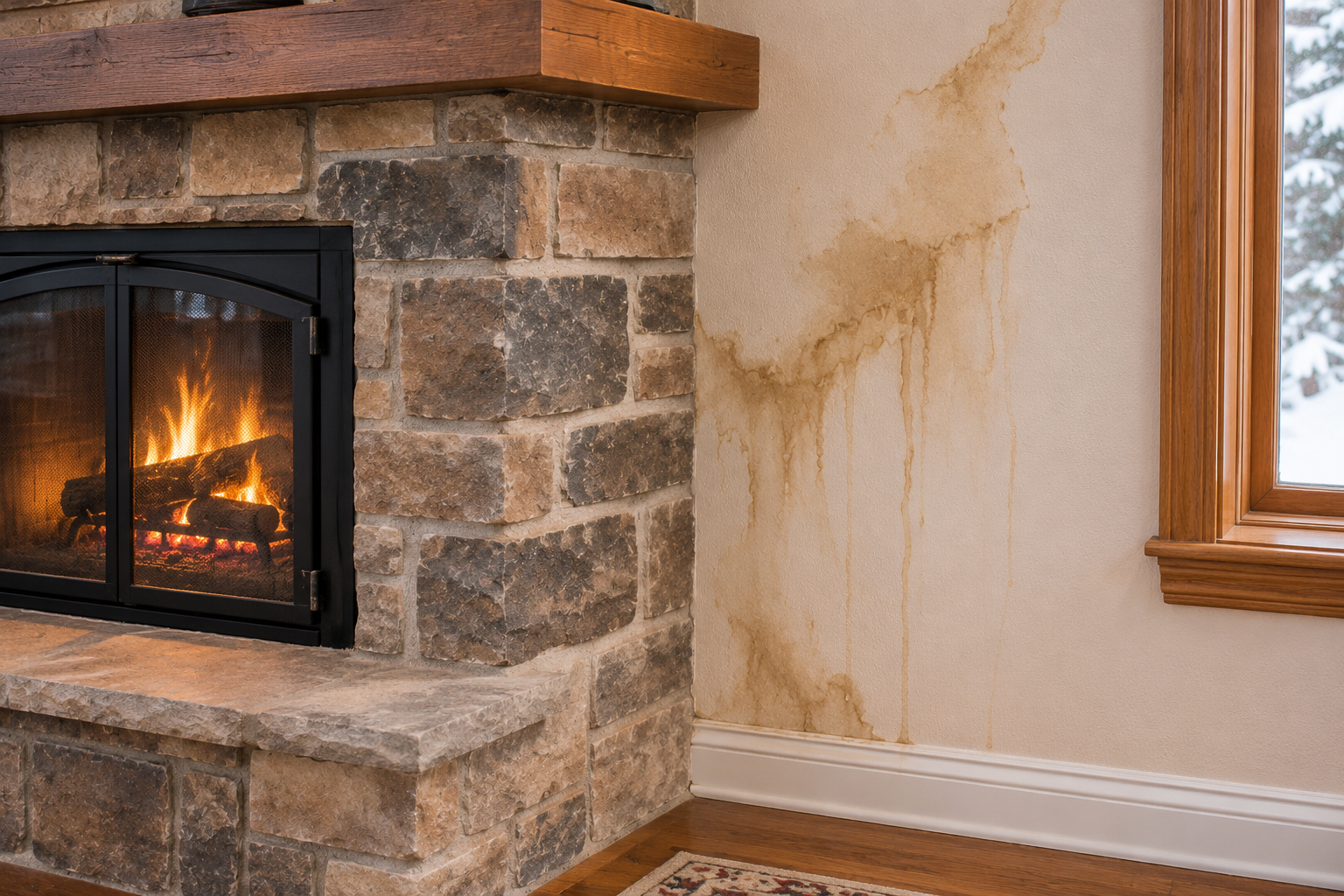
A damp patch, a yellow ring or white powder on the wall beside the fireplace is a signal, not a blemish. Fireplace water stains Minnesota homeowners notice in November usually began during a summer storm, a spring thaw, or the first freeze-thaw cycle of the year. The stain is the visible end of a path that started somewhere above or outside the system.
This guide explains the seven causes behind fireplace water stains, what each one points to, which checks are safe from the living room floor, and when a professional needs to trace the water to its source. Whether you live in Minneapolis or near Maple Lake, the same warning signs apply.
What Do Fireplace Water Stains Mean?
Fireplace water stains Minnesota homes develop mean water is reaching the fireplace or chimney system through a path you cannot see: failed flashing, a cracked crown, open mortar joints, a missing cap or condensation inside the flue. The stain on the wall, mantel or hearth is where that water finally shows itself.
Each stain pattern points in a different direction. Stains high on the wall usually trace to the roofline. Damp spots on the hearth often come from the flue or firebox. White chalky powder means water has been moving through masonry for some time.
Cleaning the stain will not stop it from returning. Fireplace water stains that reappear after every rain or thaw have a source that needs professional attention.
Why Minnesota Worsens Fireplace Water Stains
Three local conditions turn a small moisture problem into visible damage.
Freeze-thaw cycles. Water that enters through a cracked crown or failing flashing freezes inside the masonry, expands and pries joints open wider every winter. Our guide to winter chimney masonry Minnesota explains the cycle in detail.
Snow load and ice dams. Snow against the uphill side of a chimney melts from house heat, refreezes at the eaves and pushes water sideways under flashing that looked intact in July.
Humid summers followed by cold winters. Moisture absorbed during warm months stays trapped in masonry and flue materials, then expands when it freezes. Our guide to chimney water intrusion Minnesota covers the common leak paths.
That combination is why fireplace water stains Minnesota winters expose almost always trace back to the roofline or the flue, not the paint on the wall.
7 Critical Causes of Fireplace Water Stains Minnesota Homeowners See
Each cause points to a different component. Read them as clues, not a diagnosis.
1. Failed Flashing at the Roofline
Flashing seals the chimney-to-roof joint. When it rusts, lifts or separates from the brick, water runs down the outside of the flue and reaches the wall or hearth below.
Fireplace water stains that appear high on the wall beside the chimney often trace to flashing. Our chimney flashing repair page explains what a fix involves.
2. A Cracked or Missing Crown
The crown is the sloped cap on top of the chimney. Hairline cracks are common; wide gaps or missing pieces let water pour down the chimney body or behind the masonry.
Fireplace water stains that follow heavy rain but not light drizzle often point to the crown. Our 🔗 chimney crown repair guide explains why this repair should not wait.
3. Open Mortar Joints and Spalling Masonry
Mortar joints seal the chimney body. When they erode, water travels between the bricks and reaches the interior wall. Spalling means the face of a brick flakes off because water froze inside it.
Fireplace water stains paired with visible brick damage near the roofline often share the same cause. Our post on chimney roofline problems Minnesota lists the symptoms to watch from the ground.
4. A Missing or Damaged Cap
The cap keeps rain out of the flue. A missing or displaced cap sends water straight down the chimney interior, where it can reach the firebox and leak onto the hearth or surround.
Fireplace water stains on the hearth or inside the firebox, paired with a musty smell, often trace to a cap problem. Note it from the yard: never climb the roof to check.
5. Condensation Inside the Flue
A flue that is oversized for the appliance, or one that runs through a cold attic, produces condensation that drips and stains the fireplace surround or hearth. This differs from a roof leak but creates a similar mark.
Fireplace water stains that appear without rain, or that smell musty rather than wet, may be condensation. Our chimney liner inspection Minnesota guide explains flue sizing and relining.
6. Efflorescence From Ground or Masonry Moisture
White chalky powder on the fireplace surround or hearth is efflorescence: mineral salts left behind when water moves through masonry. It often appears before a visible wet stain.
Fireplace water stains that include white powder mean moisture has been passing through the system for weeks or months. Cleaning the powder alone will not stop it returning.
7. Ice Dams and Roofline Backups
When house heat melts snow on the roof, meltwater refreezes at the cold eaves and backs up under shingles and flashing. Water then travels down the chimney or the wall behind it.
Fireplace water stains that appear after a heavy snow and thaw cycle are classic ice-dam symptoms. They often show up on the wall nearest the chimney first.
Safe Checks Before You Call
These checks stay on the floor and in the yard. No ladders, no roof work, no wall cutting.
What You Can Safely Observe
- Note where the stain sits relative to the chimney and photograph it from several angles.
- After rain or snowmelt, check whether the stain grows, darkens or feels damp.
- Look for white powder, rust streaks or crumbling mortar on the fireplace surround and hearth.
- Stand back in the yard and look up at the chimney: note rust, missing crown pieces, loose bricks or a damaged cap.
- Check the ceiling above the fireplace for matching stains. Our guide to chimney ceiling water stains Minnesota covers that clue.
- Note whether the fireplace smells damp or musty when it rains.
- Test your smoke and carbon monoxide alarms.
What Belongs to a Professional
Never climb the roof, remove shingles, lift flashing, cut into the wall or patch masonry yourself. Fireplace water stains live behind surfaces that need trained eyes and tools. Any roofline or interior repair is professional-only.
If you are unsure whether the stain is from the chimney or a nearby pipe, a professional inspection checks both before recommending a repair.
Red Flags: Stop and Call a Professional
Schedule an inspection without delay if you notice:
- Active water dripping into the firebox or onto the hearth
- A stain that grows after every rain or thaw
- Loose or shifted bricks on the fireplace surround or chimney
- White powder spreading across the wall or hearth
- Musty odors that appear only when it rains
- A chimney fire history, an appliance change or a recent home purchase
If a carbon monoxide alarm sounds, leave the house immediately and call 911. Keep working smoke and carbon monoxide alarms on every level.
How Professionals Find and Fix the Source
What the Inspection Covers
A technician inspects the crown, cap, flashing, masonry, firebox and accessible flue, often with a camera from inside, and traces the moisture path from the stain back to its entry point. The NFPA 211 standard defines three inspection levels. Level 1 covers readily accessible parts, and Level 2 adds a camera scan of the flue.
The Chimney Safety Institute of America (CSIA) recommends an annual inspection, which is when moisture damage gets caught before it spreads through the wall.
Repairs That Follow the Diagnosis
- Flashing repair or replacement at the chimney-to-roof joint
- Crown rebuild or sealing
- Repointing or replacing damaged masonry
- Cap installation or replacement
- Flue relining where condensation or sizing is the cause
- Interior moisture repair once the source is sealed
The right fix follows the source. Repainting the stain while the roofline stays open invites the problem to return. Our chimney repair page covers the full scope, and our chimney inspections page explains what each visit involves.
Choosing a Qualified Professional
Look for CSIA certification and a Minnesota contractor license, and ask for both numbers. Free homeowner guidance at Verified Chimney Pros helps you ask better questions before you hire.
Fireplace Water Stains Minnesota Prevention Checklist
- Every autumn: look at the wall, mantel and hearth around the fireplace and note anything new.
- After rain or thaw: check whether the stain grows, darkens or feels damp.
- From the yard: look up at the chimney for rust, missing crown pieces or a damaged cap.
- In the attic: check from the attic floor for stains, damp insulation or daylight near the chimney.
- Never wait: roofline damage grows through winter, so book repairs in fall when the weather allows.
- Every year: schedule a professional inspection before the heating season, as CSIA recommends.
Fireplace water stains Minnesota winters make worse are far cheaper to fix in November than in March.
Fireplace Leak Help in Maple Lake, Minneapolis and the Twin Cities
Midwest Chimney Repair works from Maple Lake and serves homeowners within an approximately 25-mile radius. If you live in Minneapolis or elsewhere in the Twin Cities, call to confirm whether your address is covered. Our team can walk you through any fireplace water stains Minnesota weather has exposed.
Services and Service Areas in Minnesota
We proudly provide chimney repair MN, including:
Buffalo, MNAnnandale, MNMonticello, MNWaverly, MNClearwater, MN
Our chimney and fireplace repair services include:
Frequently Asked Questions
What causes water stains near a fireplace?
Fireplace water stains Minnesota homes develop are usually caused by failed flashing, a cracked crown, open mortar joints, a missing cap or condensation inside the flue. Water enters at the roofline or through the masonry and reaches the wall or hearth before you see the mark.
Should I worry about a damp spot beside my fireplace?
Yes. A damp spot means water has been traveling behind the surface for weeks or months. Fireplace water stains that reappear after every rain have a source that needs professional attention rather than paint or sealant.
Why does my fireplace wall get wet only after heavy rain?
Light rain may not generate enough water to reach the wall, but a storm saturates the roofline and pushes water past failed flashing or a cracked crown. Fireplace water stains that appear only after storms usually point to the roofline.
Can I paint over a fireplace water stain?
Painting hides the symptom without fixing the source. Fireplace water stains that return after repainting mean the leak is still active. Trace the source first, then repair the interior.
What is white powder on my fireplace surround?
That powder is efflorescence: mineral salts left behind when water moves through brick and mortar. Fireplace water stains that include white powder mean moisture has been passing through the system for some time.
Does freeze-thaw weather cause fireplace water stains?
Yes, indirectly. Water that enters through a cracked crown or failing flashing freezes, expands and widens the joint every winter. That is why fireplace water stains Minnesota winters expose often appear after the first thaw.
Can I repair chimney flashing or masonry myself?
No. Flashing and masonry work involves roof height, exact fit and heat-rated materials. Fireplace water stains belong to trained professionals who can trace the source and repair it correctly.
What does a Level 2 chimney inspection include?
Under NFPA 211, Level 1 covers readily accessible parts of the chimney and fireplace. Level 2 adds a camera scan of the flue, and is advised after a chimney fire, an appliance change or a home sale.
How much does chimney leak repair cost?
Cost depends on the component involved, roof access and the extent of water damage inside the home. A professional inspection gives you a clear scope and price before any work begins.
When is the best time to fix a fireplace leak?
Fall, before freeze-thaw season, is ideal. Fireplace water stains Minnesota winters worsen are cheaper and easier to fix in dry, mild weather than after a winter of spreading damage.
Can a fireplace leak damage more than the wall?
Yes. Water that runs behind walls damages insulation, framing and drywall, and it can reach the firebox where freeze-thaw then cracks masonry. Fireplace water stains are often the first visible sign of deeper damage.
Should I check the attic when I see a fireplace stain?
Yes. A quick look from the attic floor with a flashlight often reveals the water path before it reaches the wall. Our guide to chimney attic inspection Minnesota shows what to look for.
How often should my fireplace and chimney be inspected?
CSIA recommends an annual chimney and fireplace inspection. Schedule before the heating season so any leak is found and fixed in workable weather.
Does Midwest Chimney Repair serve Minneapolis?
We are based in Maple Lake with an approximately 25-mile service radius. Twin Cities homeowners should call (612) 655-8181 to confirm whether their address is covered.
How do I schedule a fireplace leak inspection?
Call (612) 655-8181 or email mnchimneyrepair@gmail.com. Our hours are Monday–Friday, 9:00 AM–4:00 PM. Photos of the stain, the wall and the chimney from the yard help us prepare.