Chimney Attic Inspection Minnesota: What the Attic Hides About Your Chimney
The attic is where chimney trouble shows its first real evidence. A stain, a gap, a scorch mark or a patch of crushed insulation near the chimney tells a story that the living room ceiling will not tell until months later. A chimney attic inspection Minnesota homeowners can do from the attic floor catches that story early.
This guide covers the seven attic clues that matter, which checks are safe to make, and what a professional does when the attic points to a problem. Whether you live in Minneapolis or near Maple Lake, the same warning signs apply.
What Is a Chimney Attic Inspection Minnesota Homeowners Can Make?
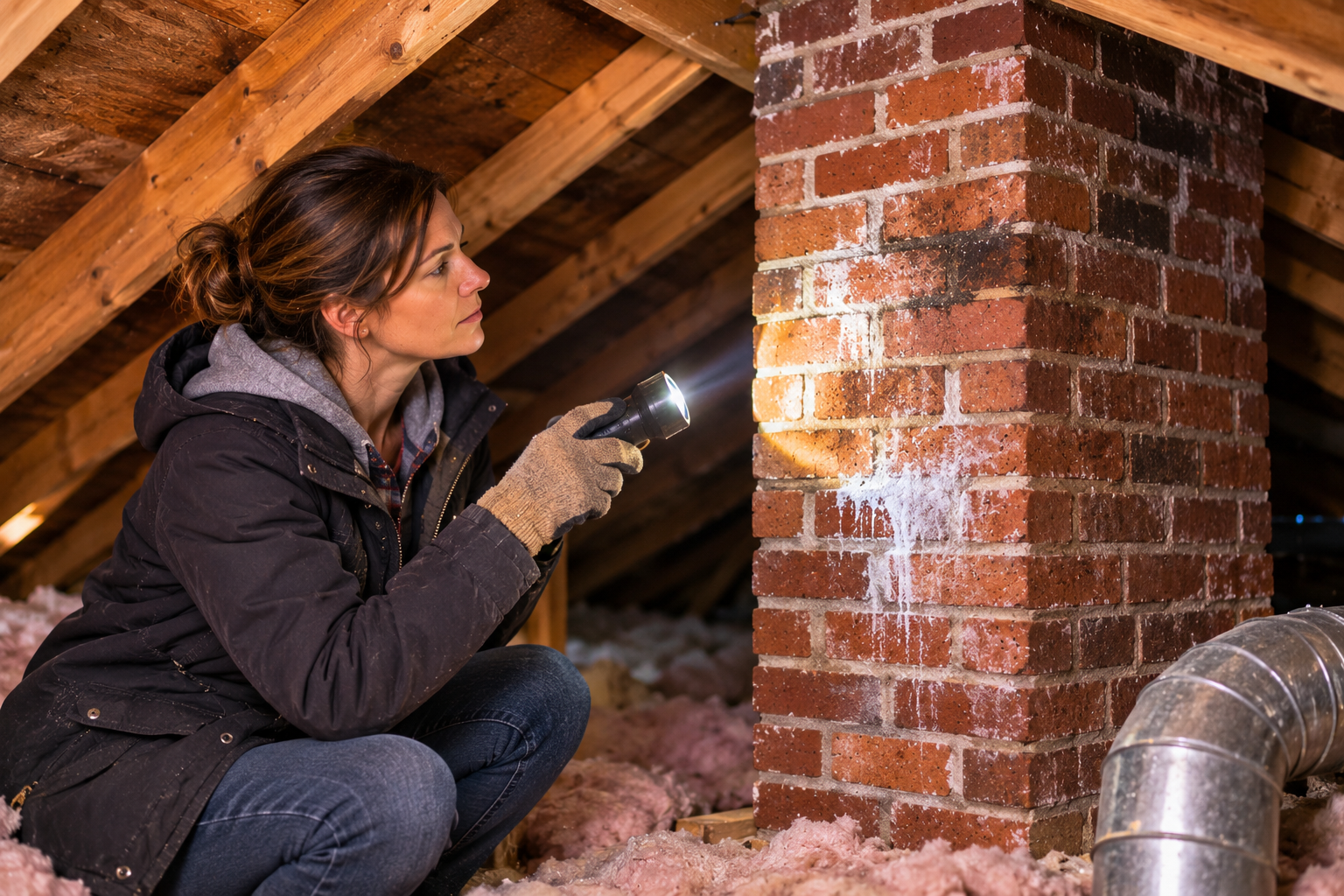
A chimney attic inspection Minnesota houses need is a look at where the chimney passes through the attic: the masonry or chase, the flashing you can see from inside, the clearances around combustibles, and any insulation, daylight or water damage near the chimney.
You do it from the attic floor with a flashlight. You do not touch the chimney, climb onto anything or reach past the opening. Anything risky gets a photo and a phone call instead.
Why the Attic Reveals What the Fireplace Cannot
Three reasons make the attic the best early-warning zone on the house.
Water shows up here first. Water entering at the roofline travels down the outside of the flue and lands on attic framing and insulation long before it drips onto a ceiling downstairs. Our guide to chimney roofline problems Minnesota explains where that water starts.
Heat and clearance problems are visible here. Combustible framing that sits too close to the flue, or scorch marks on wood near the chimney, cannot be seen from the fireplace at all.
Minnesota winters magnify everything. Moisture that reaches the attic then freezes, and freeze-thaw cycles crack masonry and pry at flashing. Our guide to chimney water intrusion Minnesota covers the leak paths.
That is why a chimney attic inspection Minnesota fall routine matters: it finds the problem in dry weather, before the heating season runs it down the wall.
7 Critical Chimney Attic Inspection Minnesota Warning Signs
Each clue points to a different component. Read them as clues, not a diagnosis.
1. Water Stains or Damp Insulation Near the Chimney
Yellow or brown staining on framing, decking or insulation right beside the chimney means water is entering at the roofline and pooling in the attic.
Chimney attic inspection Minnesota homeowners make after a rain or a thaw will show this first. Note it, photograph it, and treat it as the start of the path rather than the end.
2. Daylight Showing Around the Chimney
If you can see light between the chimney and the roof deck, the joint is open. Daylight means rain can get in the same way.
Chimney attic inspection that reveals daylight should never be followed by a climb onto the roof. Photograph it from the attic floor and call a professional.
3. Crushed, Wet or Missing Insulation
Insulation pushed aside, darkened with moisture or missing entirely around the chimney tells you water has been there. Wet insulation loses its value and can hide mold.
Chimney attic inspection Minnesota winters expose often begins with this clue, because insulation holds moisture that then freezes against cold masonry.
4. Soot, Creosote or Scorch Marks on Wood Near the Flue
Dark deposits or charred wood beside the flue mean heat has reached materials that were never meant to handle it. This is a clearance problem, and it is a fire risk.
Chimney attic inspection that finds scorch marks should stop the fire and trigger a professional evaluation. Never sweep, sand or paint over them.
5. A Gap Between the Chimney and the Framing
The chimney should pass through the attic with a defined clearance. A gap packed with debris, or wood sitting directly against hot masonry, both deserve attention.
Chimney attic inspection Minnesota older homes often reveals framing that was built tight against the chimney decades ago. Only a professional can tell you whether it needs correction.
6. Efflorescence or Spalling on the Attic Masonry
White chalky powder or flaking brick faces on the section of chimney inside the attic mean water is moving through the masonry.
Chimney attic inspection that finds efflorescence points to a source above, usually the crown or flashing. Our guide to winter chimney masonry Minnesota explains how freeze-thaw turns that moisture into damage.
7. Animal Nests, Droppings or Daylight-Driven Debris
Nesting material, droppings or chewed insulation near the chimney top means animals have found a way in. A missing cap is the usual route.
Chimney attic inspection Minnesota spring and fall often reveals this, and it usually means a cap or screen needs professional attention. Never reach toward a nest: call instead.
Safe Checks From the Attic Floor
These checks stay on the attic floor, in daylight or with a flashlight, and nothing above you gets touched.
What You Can Safely Observe
- Stand on the attic floor and look at the chimney: note stains, daylight, soot or missing insulation.
- Photograph everything from several angles for your technician.
- Check the ceiling below the attic for stains that match what you saw above.
- Note musty or smoky odors in the attic when it rains or when the fireplace runs.
- Test your smoke and carbon monoxide alarms on the way back down.
What Belongs to a Professional
Never reach toward the chimney, step onto framing, remove insulation, patch flashing or enter the flue. Chimney attic inspection is a look, not a repair job. Anything that feels risky becomes a phone call.
If you are uncomfortable on an attic floor, do not go up at all. A professional can do the same look safely.
Red Flags: Stop and Call a Professional
Schedule an inspection without delay if you notice:
- Active water dripping or pooling around the chimney
- Scorch marks or charred wood beside the flue
- Loose or shifted masonry in the attic
- A strong smoky or musty odor from the attic
- Visible nests or animals near the chimney
- A chimney fire history, an appliance change or a recent home purchase
If a carbon monoxide alarm sounds, leave the house immediately and call 911. Keep working smoke and carbon monoxide alarms on every level.
How Professionals Evaluate What the Attic Shows
What the Inspection Covers
A technician inspects the attic passage, crown, cap, flashing, masonry and the accessible flue, often with a camera from inside, and traces any moisture path to its source. The NFPA 211 standard defines three inspection levels. Level 1 covers readily accessible parts, and Level 2 adds a camera scan of the flue.
The Chimney Safety Institute of America (CSIA) recommends an annual inspection, and the EPA Burn Wise program pairs it with practical burning tips.
Our chimney inspections page explains what each visit involves, and if moisture has reached the liner, our chimney liner inspection Minnesota guide covers the next step.
Repairs That Follow the Diagnosis
- Flashing repair at the roofline to stop the source
- Crown repair or sealing above the chimney
- Repointing or replacing damaged masonry in the attic passage
- Clearance corrections where framing sits too close to the flue
- Cap or screen replacement where animals entered
The right fix follows the source. Sealing insulation while the roofline stays open invites the problem back. Our chimney repair page covers the full scope, and our chimney flashing repair and chimney crown repair pages detail those components.
Choosing a Qualified Professional
Look for CSIA certification and a Minnesota contractor license, and ask for both numbers. Free homeowner guidance at Verified Chimney Pros helps you ask better questions before you hire.
Chimney Attic Inspection Minnesota Seasonal Checklist
- Every autumn: a quick look from the attic floor before the heating season.
- After rain or snowmelt: check for fresh stains, damp insulation or daylight.
- After a cold snap: look for ice, frost or new cracks in the attic masonry.
- In spring: check for nests, droppings and insulation damage.
- Every year: book a professional chimney inspection, as CSIA recommends.
A chimney attic inspection Minnesota fall routine takes ten minutes and catches problems while the weather still allows a repair.
Chimney Attic Help in Maple Lake, Minneapolis and the Twin Cities
Midwest Chimney Repair works from Maple Lake and serves homeowners within an approximately 25-mile radius. If you live in Minneapolis or elsewhere in the Twin Cities, call to confirm whether your address is covered. Our team can walk you through any chimney attic inspection Minnesota winters have complicated.
Services and Service Areas in Minnesota
We proudly provide chimney repair MN, including:
Buffalo, MNAnnandale, MNMonticello, MNWaverly, MNClearwater, MN
Our chimney and fireplace repair services include:
Frequently Asked Questions
What is a chimney attic inspection?
A chimney attic inspection Minnesota homeowners make is a look at where the chimney passes through the attic, from the attic floor with a flashlight. You note water, daylight, soot, insulation damage and clearance problems. Nothing gets touched or repaired during the look.
How often should I check the chimney in my attic?
Check once each season, and always after heavy rain, snowmelt or a cold snap. A chimney attic inspection Minnesota fall routine is the most valuable, because it catches problems before freeze-thaw season spreads them.
Why is there water staining near my chimney in the attic?
Water is entering at the roofline and running down the outside of the flue. Failed flashing or a cracked crown is the usual source. Photograph the stain and schedule an inspection rather than climbing onto the roof.
Can I see daylight around my chimney in the attic?
Daylight means the joint between the chimney and the roof is open, so rain can enter the same way. Note it from the attic floor, photograph it, and call a professional: never climb the roof to investigate.
Are scorch marks near the flue in the attic dangerous?
Yes. Scorch marks or charred wood mean heat has reached combustibles, which is a clearance problem and a fire risk. Stop using the fireplace and schedule a professional evaluation before the next fire.
What should I do if I find a nest in the attic chimney?
Do not reach toward it. Nests restrict airflow and can carry material down the flue. Note it from the attic floor and call a professional for cap or screen work: never climb the roof yourself.
Does wet insulation near the chimney matter?
Yes. Wet insulation loses its insulating value, can hide mold and holds moisture against cold masonry through winter. A chimney attic inspection that finds it should trace the water source rather than only replace the insulation.
Can I repair flashing or masonry from the attic?
No. Flashing and masonry repairs need roof access, exact fit and heat-rated materials. Chimney attic inspection is a look, not a repair job: photograph what you see and call a CSIA certified professional.
What does a Level 2 chimney inspection include?
Under NFPA 211, Level 1 covers readily accessible parts of the chimney and fireplace. Level 2 adds a camera scan of the flue, and is advised after a chimney fire, an appliance change or a home sale.
How does freeze-thaw weather affect the attic chimney?
Moisture that reaches the attic masonry freezes, expands and widens cracks every winter. That is why chimney attic inspection Minnesota winters expose should be repeated after cold snaps, not just once a year.
What does efflorescence in the attic mean?
White chalky powder on attic masonry means water is moving through the brick and mortar. The source is usually above, at the crown or flashing, so cleaning the powder alone will not stop it returning.
How much does a chimney inspection cost?
Cost depends on access, flue condition and whether a camera scan is needed. A professional inspection gives you a clear scope and price before any repair work begins.
Should I worry about insulation touching the chimney?
Combustible insulation or framing too close to a hot flue is a clearance concern that only a professional can assess. Note the condition from the attic floor and mention it when you schedule the inspection.
Does Midwest Chimney Repair serve Minneapolis?
We are based in Maple Lake with an approximately 25-mile service radius. Twin Cities homeowners should call (612) 655-8181 to confirm whether their address is covered.
How do I schedule a chimney inspection from an attic concern?
Call (612) 655-8181 or email mnchimneyrepair@gmail.com. Our hours are Monday–Friday, 9:00 AM–4:00 PM. Photos taken from the attic floor help us prepare before we arrive.