Chimney Liner Inspection Minnesota: When Should Your Flue Liner Be Evaluated?
Chimney liner inspection Minnesota homeowners schedule before the first fire can prevent a hidden danger. The liner sits inside your chimney, so you cannot judge its condition from the yard. Yet it contains heat, smoke, and carbon monoxide every time you light a fire or run a furnace.
Most liner problems give no loud warning. A cracked tile can hide behind sound-looking brick for years. Minnesota’s long heating season and freeze-thaw cycles raise the risk, from Maple Lake farmhouses to Minneapolis bungalows.
This guide expands on our social post: when should a chimney liner be evaluated? You will learn the key triggers, warning signs, and safe checks. You will also learn when to call a certified pro for a chimney liner inspection Minnesota winters demand.
Chimney Liner Inspection Minnesota Homeowners Need Every Year
Have a certified pro evaluate your chimney liner at least once a year. Also book an evaluation after a chimney fire, storm, leak, appliance change, or home purchase.
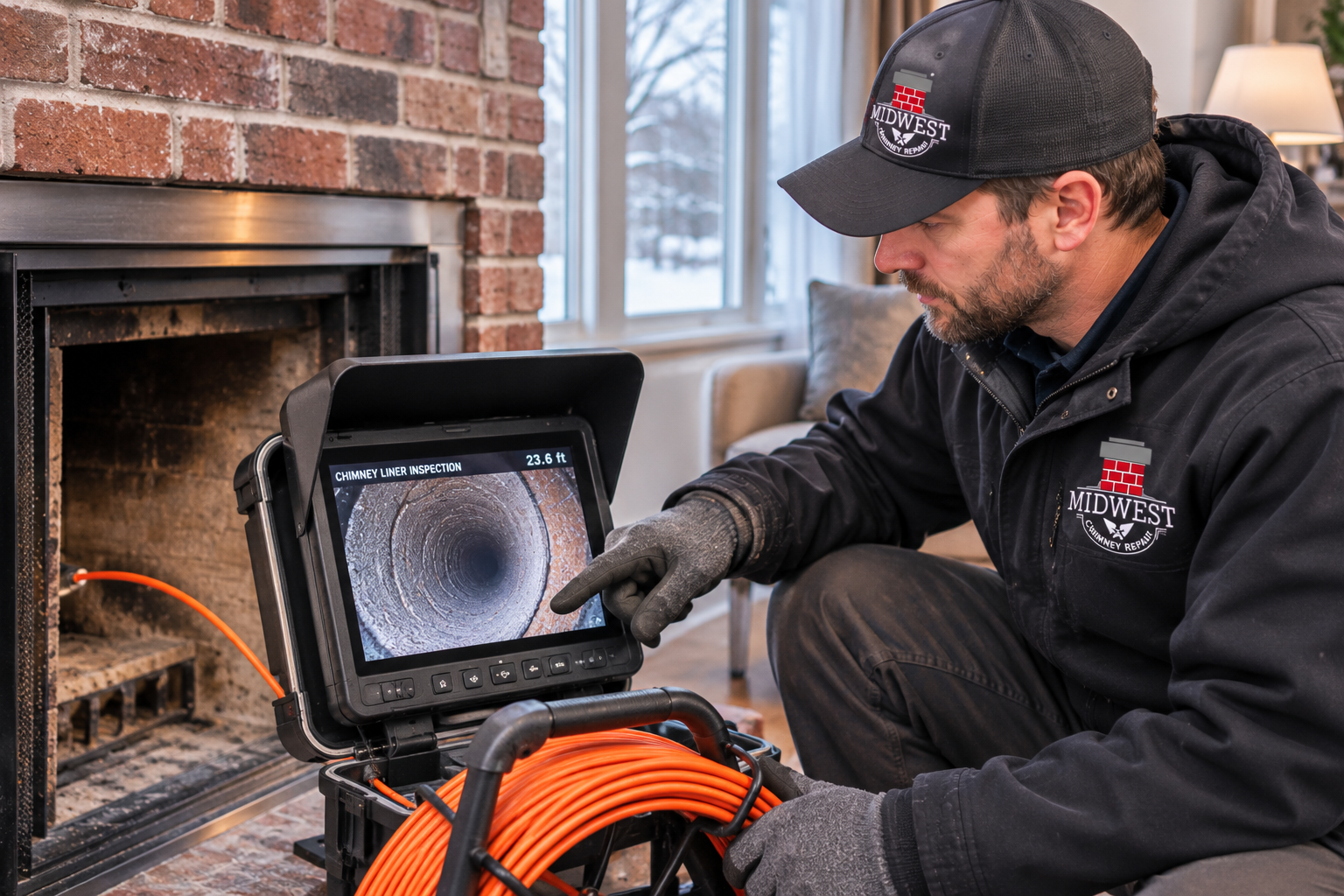
A chimney liner is the tile, metal, or cast-in-place tube inside your chimney. It carries exhaust outside and shields masonry and wood framing from heat. A chimney liner inspection Minnesota pros perform includes a camera scan of the full flue.
Key takeaways:
- Schedule a chimney liner inspection Minnesota winters require, ideally in early fall.
- Add extra evaluations after fires, leaks, storms, appliance changes, and home sales.
- Safe checks stay inside your home. Camera scans, repairs, and relining belong to a pro.
Out of Sight, Out of Mind: Why Liner Damage Hides for Years
Your liner lives inside the chimney, so most damage stays invisible. A roof repair, a quick sweep, or a glance at the firebox will not reveal a cracked tile. Only a camera and a trained eye can.
Many liners serve more than the fireplace. Your furnace or water heater may vent through the same chimney. A hidden liner problem can then affect your heat and your air.
Minnesota adds stress. Heating season can run from October into April, and moisture cycles through freezing and thawing. Twin Cities homeowners often learn about liner damage only after a smoke odor, a carbon monoxide alarm, or a chimney fire. A timely chimney liner inspection Minnesota homes need catches trouble sooner.
What a Failed Liner Can Cost You: Fire, Carbon Monoxide, and Water Damage
Fire Risk: How Cracked Liners Let Heat Reach Wood Framing
A cracked or missing liner section lets heat reach masonry joints and nearby framing. Creosote, the tar-like residue from wood smoke, adds fuel inside the flue. A chimney fire can then crack tiles and damage the structure.
Some fires burn quietly. 🌐 CSIA lists loud popping, dense smoke, and a strong odor as signs. A chimney liner inspection Minnesota technicians perform also checks for creosote buildup and cracks. Burning dry, seasoned wood helps, and the 🌐 EPA Burn Wise program shares clean-burning tips.
Carbon Monoxide Risk: When Exhaust Escapes Into Living Areas
Liner gaps can let exhaust leak into walls and rooms. Carbon monoxide has no smell, so working alarms matter. If an alarm sounds, leave the house and call 911.
The 🌐 NFPA 211 standard covers chimneys, fireplaces, and vents, and it guides professional inspections.
Moisture Damage: Freeze-Thaw Cycles Attack Liners and Masonry
Water entering through a cracked crown, worn flashing, or damaged cap can soak the liner and masonry. In Minnesota, that water freezes and expands, so small cracks grow. Learn more about chimney crown repair and chimney flashing repair.
A chimney liner inspection Minnesota winters call for can reveal water damage before it spreads. Our guides to chimney water intrusion Minnesota and winter chimney masonry Minnesota explain how moisture attacks.
Clay Tile, Stainless Steel, or Cast-in-Place: Know Your Chimney Liner
Minnesota homes use several liner types. Knowing yours helps you ask better questions.
- Clay tile: Common in masonry chimneys. Tiles can crack from heat, chimney fires, and freeze-thaw moisture.
- Stainless steel: A popular relining choice. A pro sizes it to match your appliance.
- Cast-in-place: A poured lining that forms a seamless tube inside the flue.
- No liner: Some older homes have unlined chimneys. A camera scan can confirm.
Fuel matters too. Wood leaves creosote, while gas and oil exhaust runs cooler and condenses moisture. That is why every chimney liner inspection Minnesota technicians perform should note your fuel and appliances.
7 Critical Moments for Chimney Liner Inspection Minnesota Homeowners Should Never Skip
Use this list to answer the big question: when should a chimney liner be evaluated? Each moment below is a clear trigger.
1. Once a Year, Before Heating Season
A yearly chimney liner inspection Minnesota homeowners can plan each fall is the baseline. CSIA and NFPA 211 both recommend yearly inspections, even if you rarely use the fireplace. Early fall is ideal because you finish repairs before the deep freeze.
2. After Any Chimney Fire, Even a Small One
Chimney fires can crack tiles and warp steel liners. Some burn quietly and leave subtle clues. Stop using the fireplace and book a Level 2 evaluation.
3. When You Buy or Sell a Home
NFPA 211 calls for a Level 2 inspection when a property changes hands. A general home inspection often skips the flue interior. Many older Twin Cities homes have liners of unknown age, so a chimney liner inspection Minnesota buyers request documents the liner’s condition.
4. Before You Change Appliances or Fuel
A new furnace, water heater, stove, insert, or gas log set changes how exhaust moves. An old liner may be the wrong size or material. Ask for a chimney liner inspection Minnesota pros can complete before you buy.
5. After a Storm, Lightning Strike, or Leak
Severe weather and water can damage crowns, caps, and liners together. Water stains near the chimney make the liner a suspect, not only the roof.
6. When Smoke, Odors, or Draft Problems Appear
Smoke entering the room, a sharp smell, soot stains, or a fire that will not draw can signal a flue problem. Do not keep burning to test it. Call for a chimney liner inspection Minnesota technicians can complete before your next fire.
7. When Your Chimney’s History Is Unknown
You may not know when the liner was last checked, or whether one exists. Flaking tile, open joints, or rust spotted during a chimney cleaning are also triggers.
Level 1, 2, or 3: Which Chimney Liner Inspection Minnesota Homes Need?
- Level 1: A visual check of accessible parts. It fits a chimney in steady use with no changes.
- Level 2: Adds a camera scan of the flue and a review of accessible attic and basement areas. It fits the triggers above.
- Level 3: A deeper look that may remove parts of the chimney or building to reach a suspected hazard.
A Level 2 chimney liner inspection Minnesota homeowners request gives you photos and video.
Why a Camera Scan Beats a Flashlight
A flashlight sees only the top and bottom. A camera travels the full length and records cracks, gaps, and offset tiles.
Safe Checks Before Your Chimney Liner Inspection Minnesota Appointment
What You Can Safely Observe From Inside Your Home
Keep the fireplace cold and stay on the ground. These steps help you prepare for a chimney liner inspection Minnesota technicians perform. They do not replace a camera scan.
- Shine a flashlight at the firebox floor from the room. Look for tile flakes, brick chunks, or heavy black crust. Do not reach inside.
- Look for soot stains around the opening or on nearby ceilings.
- Test every smoke and carbon monoxide alarm.
- Scan the chimney top with binoculars from the yard. Look for a damaged cap, rust streaks, or debris.
- Take dated photos of anything unusual.
Pro-Only Work: Leave Liner Evaluation and Repair to a Certified Technician
- Climbing onto the roof or leaning a ladder on the chimney
- Lowering cameras or tools into the flue
- Breaking up creosote or glaze deposits
- Sealing cracks with patch products or coatings
- Installing, cutting, or resizing a liner
- Reaching into the flue or smoke chamber
These jobs carry fall, fire, and carbon monoxide risks. A poor patch can hide damage and create new hazards.
Red Flags: Stop Using Your Fireplace and Call a Pro
Stop using the fireplace and call a certified pro if you notice any of these signs:
- Smoke or odor entering rooms
- Dense smoke or loud popping from the chimney
- Tile pieces or creosote flakes in the firebox
- Water stains near the chimney or rust inside the firebox
If a carbon monoxide alarm sounds, leave the house and call 911 first. Then book a chimney liner inspection Minnesota pros can complete before you burn again.
How Pros Evaluate and Fix a Chimney Liner Without Guesswork
A chimney liner inspection Minnesota pros complete follows clear steps, and our chimney inspections page explains more. CSIA certifies chimney professionals and shares homeowner education.
- Interview: You share symptoms, fuel type, and recent changes.
- Exterior review: The tech checks the crown, cap, flashing, and masonry.
- Interior review: The tech examines the firebox, damper, and smoke chamber.
- Camera scan: The tech scans the full flue and records the findings.
- Written report: You receive photos, the cause, and repair options.
Cleaning, Repair, or Relining: Your Options After the Scan
Findings lead to one of three paths. Minor issues may need cleaning or chimney repair, such as cap and crown work. Damaged liners often need chimney relining, which installs a new liner sized for your appliance.
Some small cracks may have repair options, but not every liner is repairable. Book early in fall, because relining and masonry work go best in mild weather. A chimney liner inspection Minnesota homeowners schedule in October leaves time for repairs.
Questions to Ask Before You Hire a Chimney Pro
- Can I see your license number and proof of insurance?
- Do you hold CSIA certification?
- Will you scan the full flue and share the footage?
- Will your written estimate name the problem and the exact repair?
- What warranty covers the work?
Ask each company how it performs a chimney liner inspection Minnesota homeowners can verify with photos. Compare at least two written estimates across the Twin Cities area. For free guidance on choosing contractors, visit 🌐 Verified Chimney Pros.
Chimney Liner Inspection Minnesota Help From Midwest Chimney Repair in Maple Lake
Midwest Chimney Repair is a Woman Veteran-Owned business in Maple Lake, Minnesota. We have served Minnesota homeowners since 1999 and bring more than 25 years of chimney industry experience to every chimney liner inspection Minnesota homeowners request.
Our team is CSIA Certified (#11692), and we hold Minnesota Contractor License RR 806746. Those credentials matter because liner evaluation takes training and the right tools. We show you the problem clearly, then explain your options.
We serve homeowners within approximately a 25-mile radius of our operating area. Minneapolis and Twin Cities homeowners can call to confirm their address. Our hours run Monday through Friday, 9:00 AM to 4:00 PM.
Services and Service Areas in Minnesota
We proudly provide chimney repair MN, including:
Buffalo, MNAnnandale, MNMonticello, MNWaverly, MNClearwater, MN
Our chimney and fireplace repair services include:
Frequently Asked Questions
When should a chimney liner be evaluated?
Evaluate it once a year and after any chimney fire, storm, leak, appliance change, or home purchase. A chimney liner inspection Minnesota pros perform adds a camera scan of the flue.
What happens during a chimney liner inspection Minnesota technicians perform?
The tech checks the crown, cap, firebox, and damper. Then a camera scans the full flue, and you receive photos and written findings.
What is a chimney liner?
It is the tile, steel, or poured tube inside your chimney. It carries exhaust outside and protects nearby framing from heat.
How often does a chimney liner need inspection?
Plan a yearly chimney liner inspection Minnesota heating seasons call for. Add extra checks after fires, leaks, and appliance changes.
What are the signs of a damaged chimney liner?
Watch for smoke odors, soot stains, tile flakes in the firebox, and water stains. A pro should confirm the cause.
Can I inspect my chimney liner myself?
You can make safe observations from inside your home. A true chimney liner inspection Minnesota pros complete needs a camera and training.
Is a chimney sweep the same as a liner inspection?
No. A sweep cleans soot and creosote, while an inspection checks condition and safety.
What is a Level 2 chimney inspection?
A Level 2 chimney liner inspection Minnesota pros use adds a camera scan to the visual check. NFPA 211 calls for it after fires, appliance changes, and sales.
How much does chimney liner inspection Minnesota service cost?
Cost depends on chimney height, access, and inspection level. Ask for a written quote before work begins.
Can a cracked liner be repaired, or does it need relining?
Some small cracks may have repair options, but many damaged liners need relining. A pro should explain the choice in writing.
Is it safe to use my fireplace with a cracked liner?
Pause use until a pro inspects it. If a carbon monoxide alarm sounds, leave the house and call 911.
Do gas furnaces and water heaters need liner checks?
Yes, if they vent through your chimney. A chimney liner inspection Minnesota technicians complete should review every appliance on the flue.
Does insurance cover chimney liner damage?
Coverage varies by policy and cause. Ask your insurer before repairs begin, and keep photos and invoices.
How do I choose a contractor for chimney liner inspection Minnesota homes near Minneapolis?
Ask for a license number, proof of insurance, CSIA certification, and a written estimate. Midwest Chimney Repair is CSIA Certified (#11692) and holds Minnesota Contractor License RR 806746.
How soon should I book a chimney liner inspection Minnesota homeowners need?
Book in early fall, or right away after any red flag. Midwest Chimney Repair in Maple Lake serves homeowners within about 25 miles, so call (612) 655-8181 to confirm.