Chimney Water Intrusion Minnesota: Why Your Chimney Still Leaks After a Roof Repair
Chimney water intrusion Minnesota homeowners face often continues after a roof repair. You paid for new shingles, and the roof looks perfect. Yet a brown stain still spreads across the ceiling beside your fireplace wall.
That stain is frustrating, but it is not a mystery. Water follows a path, and a trained eye can trace it. This story is common across Minnesota, from Twin Cities suburbs to lake-country towns like Maple Lake.
This guide explains the chimney water intrusion Minnesota roofers often miss. You will learn which checks are safe from the ground, which jobs belong to a professional, and when to call. You will also learn how to spot a trustworthy contractor.
Why Chimney Water Intrusion Minnesota Leaks Outlast a New Roof
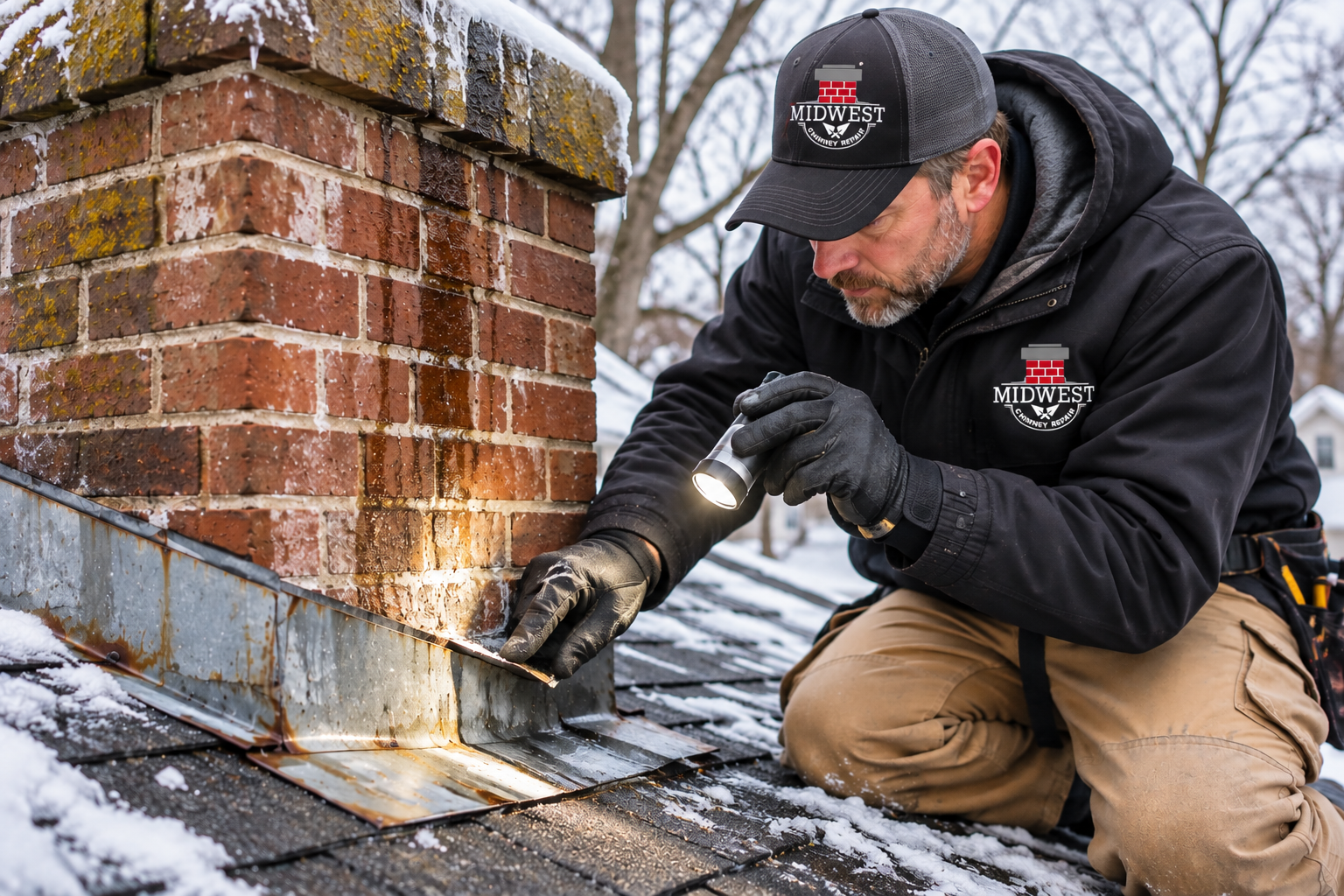
A roof repair fixes the roof. It rarely fixes the chimney. Many repeat leaks start at the flashing, crown, cap, mortar joints, or chase cover, and each part needs its own inspection.
Chimney water intrusion means moisture enters a chimney through cracks, gaps, or failed seals. The water then travels into the masonry, the flue, the firebox, or your ceilings and walls.
Key takeaways:
- Chimney water intrusion Minnesota homes see usually starts at the flashing, crown, cap, mortar, or chase cover, not the shingles.
- Freeze-thaw cycles widen small gaps every winter.
- Safe checks stay on the ground. Roof, ladder, and masonry work belong to a pro.
- A certified inspection finds the true entry point before you pay for more repairs.
Chimney Leak After Roof Repair: Two Trades, One Chimney
Roofers and chimney technicians work on the same spot, yet they look at different parts. A roofer focuses on shingles, underlayment, and the roof deck. A chimney technician focuses on masonry, the crown, the cap, and the flue.
The gap between those jobs causes many repeat leaks. A roofer may reuse old flashing or seal a seam with caulk. That fix can look fine on invoice day and fail by the first freeze. Meanwhile, chimney water intrusion Minnesota homes suffer keeps spreading behind the walls.
Then the blame loop starts. The roofer says the roof is fine, and no chimney specialist has looked yet. One whole-chimney inspection ends that loop.
What Minnesota Winters Do to Chimney Masonry
Brick and mortar absorb water like a hard sponge. In Minnesota, that water freezes overnight, expands, and pushes the masonry apart. Then it thaws and repeats the cycle.
Twin Cities winters bring many of these cycles every year. From Minneapolis bungalows to Maple Lake farmhouses, every masonry chimney faces the same stress.
How Freeze-Thaw Cycles Create Minnesota Chimney Water Damage
A hairline crack in a crown or mortar joint looks harmless in October. By March, repeated freezing can widen it, loosen bricks, and chip the brick faces. Pros call that chipping spalling.
Untreated chimney water intrusion Minnesota winters worsen can turn a small repair into a partial rebuild. Early action usually costs less.
Hidden Costs: Rot, Mold, Rust, and Liner Damage From a Leaking Chimney
Chimney water intrusion Minnesota homeowners ignore does more than stain a ceiling. It rots framing, soaks insulation, and rusts dampers. Inside the flue, moisture can break down liners, and water-damaged liners may need chimney relining.
Mold can follow quickly. The EPA mold guidance advises drying wet materials within 24 to 48 hours to help prevent growth. Fast answers matter.
Safety matters too. A damaged chimney can leak smoke or carbon monoxide into living areas. The NFPA 211 standard covers chimneys, fireplaces, and vents, and it supports regular inspections. If a carbon monoxide alarm sounds, leave the house and call 911.
7 Critical Causes of Chimney Water Intrusion Minnesota Roof Repairs Miss
Use this list to understand where water may enter. Do not climb up to check any of these spots. A certified technician confirms each one safely.
1. Failed, Reused, or Caulked Chimney Flashing
Flashing is the metal that seals the joint between the roof and the chimney. A proper system uses base flashing, step flashing, and counterflashing set into the mortar joints. Roofers sometimes reuse worn pieces or smear caulk over gaps.
Caulk cracks in Minnesota cold, and water slips behind it. That makes flashing a leading suspect for chimney water intrusion Minnesota homeowners notice right after roof work. Learn more about chimney flashing repair.
Why Caulk Is Only a Short-Term Patch
Caulk and roof cement flex poorly in temperature swings. Within a season or two, they often pull loose. A lasting fix addresses the metal and its connection to the masonry.
2. A Cracked or Flat Chimney Crown
The crown is the slab on top that seals the masonry and sheds water away from the flue. A good crown slopes and overhangs the brick below. A cracked or flat crown lets water soak straight down.
Roof crews rarely examine the crown up close. Yet crown cracks are a frequent source of chimney water intrusion Minnesota freeze-thaw cycles make worse. A pro can assess your chimney crown repair options.
3. Open Mortar Joints and Spalling Brick
Mortar wears away over decades. Open joints pull water into the brick, and wet brick spalls in winter. White powder on the brick, called efflorescence, shows water moving through the masonry.
Open joints are a quiet path for chimney water intrusion Minnesota brick chimneys endure. A technician can repoint them before the damage spreads. See our chimney repair services.
4. A Missing, Rusted, or Undersized Chimney Cap
A cap covers the flue opening and blocks rain, snow, and animals. Without one, water falls straight onto the damper. A rusted or loose cap also lets wind-driven rain inside.
Cap problems often cause leaks that show up only in the firebox. A prompt chimney cap replacement can prevent chimney water intrusion Minnesota storms drive into the flue.
5. A Missing or Undersized Cricket
A cricket, also called a saddle, is a small peaked structure behind a wide chimney. It diverts water and melting snow around the chimney. Many building codes call for one when the chimney is wider than 30 inches, so check local rules.
Without a cricket, snow and water pool behind the chimney and test every seam. That pooling often drives chimney water intrusion Minnesota homeowners notice after heavy snowmelt.
6. A Damaged Chase Cover on Framed Chimneys
Many newer homes have a framed chimney with siding and a metal chase cover on top. If that cover rusts, dents, or sags, water pools and drains into the framing. Metal covers last a long time, but they do wear out.
Homeowners often blame the roof for chimney water intrusion Minnesota framed chimneys really suffer at the chase cover. Because this work involves sheet metal and roof access, it belongs to a professional.
7. Condensation, Ice Dams, and Wind-Driven Snow
Not every drip comes from rain. Warm flue gases can condense on a cold or oversized flue and drip into the firebox. Ice dams can push meltwater under shingles near the chimney, and wind can drive snow through small gaps.
A pro can tell condensation from a true leak, and the fixes differ. Sorting out chimney water intrusion Minnesota winters create takes testing, not guessing. A chimney cleaning visit can also reveal moisture signs inside the flue.
Safe Checks for Chimney Water Intrusion Minnesota Homeowners Can Do From the Ground
You can gather useful clues without climbing. Stay on the ground and indoors. Never put yourself at risk for a closer look.
Water Leaking From Chimney? Safe Observations You Can Make Today
- Look for brown or yellow stains on ceilings and walls near the chimney.
- Notice musty smells, peeling paint, or bubbling drywall.
- Use binoculars from the yard to spot cracked crowns, loose caps, missing bricks, or gaps at the roofline.
- Check the chimney face for white powder, flaking brick, or crumbling mortar.
- With the fireplace cold, shine a flashlight at the damper from the room. Look for rust or water marks, and do not reach in.
- Watch whether the stain grows after rain, after snowmelt, or only in strong wind.
Pro-Only Work: Leave These Jobs to a Certified Technician
- Climbing onto the roof or leaning ladders against the chimney
- Applying sealant, roof cement, or waterproof coatings
- Removing or resetting flashing, caps, or crowns
- Repairing masonry or liners
- Cutting into walls or ceilings near the chimney
- Reaching into the flue or squeezing into tight spaces around it
These tasks carry fall, fire, and structural risks. A poor patch can trap water and hide the true source of chimney water intrusion Minnesota crews must trace.
Document the Leak Before You Call
Take dated photos of stains, and note the weather each time. Record how large the stain is and when it changes. Save your roof repair invoice and any warranty papers.
These notes help us trace chimney water intrusion Minnesota leaks faster. They also help if you file an insurance claim. Coverage varies, so ask your insurer before repairs begin.
When to Call a Pro About Chimney Water Intrusion Minnesota Leaks
Call as soon as you notice a stain, a drip, or a damp firebox. Call right away for sagging drywall, active dripping, rust, loose bricks, or a smoke smell. Also call after major storms or heavy snowmelt. Pause fireplace use until a technician inspects the chimney.
Any sign of chimney water intrusion Minnesota winters could worsen deserves a prompt visit. A professional chimney inspection usually means smaller repairs.
What a Professional Chimney Leak Inspection Looks Like
- Interview: The technician asks when, where, and in what weather the leak appears.
- Exterior review: The technician checks the crown, cap, flashing, masonry, and chase cover from safe access points.
- Interior review: The technician examines the firebox, damper, smoke chamber, ceilings, and walls.
- Moisture readings: A meter maps where materials are wet.
- Camera scan and testing: When needed, the pro scans the flue and tests sections with controlled water.
- Written findings: You receive photos, the leak source, and repair options.
NFPA 211 defines three inspection levels. A Level 2 inspection includes a video scan of the flue, and it often fits a leak with an unknown source. The Chimney Safety Institute of America (CSIA) certifies chimney professionals and shares homeowner education. This process finds chimney water intrusion Minnesota roofers cannot confirm from the shingles.
Chimney Leak Repair in Minnesota: How to Hire a Trustworthy Contractor
Ask every company the same questions:
- What is your license number, and can I see proof of insurance?
- Do you hold CSIA certification?
- Will you show photos or video of the problem?
- Will your written estimate name the leak source and the exact repair?
- What warranty covers the work?
Ask each company how it will diagnose chimney water intrusion Minnesota leaks before it quotes a price. Compare at least two written estimates across the Twin Cities area. For more homeowner hiring tips, Verified Chimney Pros publishes free guidance on choosing contractors and avoiding scams.
Local Leak Diagnosis From Midwest Chimney Repair in Maple Lake
Midwest Chimney Repair is a Woman Veteran-Owned business in Maple Lake, Minnesota. We have served Minnesota homeowners since 1999 and bring more than 25 years of chimney industry experience to every leak call. Meet our team on our about page.
Our team is CSIA Certified (certification #11692), and we hold Minnesota Contractor License RR 806746. Those credentials matter because leak diagnosis depends on training, not guesswork. Our goal is to stop chimney water intrusion Minnesota winters trigger at the source, not cover it up.
We serve homeowners within approximately a 25-mile radius of our operating area. Minneapolis and Twin Cities homeowners can call to confirm whether your address falls inside that range. Our office hours run Monday through Friday, 9:00 AM to 4:00 PM. Visit our contact page or read our customer reviews. That experience helps us diagnose chimney water intrusion Minnesota leaks that earlier repairs missed.
Services and Service Areas in Minnesota
We proudly provide chimney repair MN, including:
Buffalo, MNAnnandale, MNMonticello, MNWaverly, MNClearwater, MN
Our chimney and fireplace repair services include:
Frequently Asked Questions
Why does chimney water intrusion Minnesota homeowners report continue after a roof repair?
Roofers repair shingles and underlayment, but they often skip the crown, cap, mortar, and liner. Flashing may also be reused or sealed with caulk that fails. A chimney inspection finds the true entry point.
What is chimney water intrusion?
Chimney water intrusion is moisture entering a chimney through cracks, gaps, or failed seals. It can damage masonry, liners, and the interior of the home. Early repair limits the damage.
How do I know if the leak comes from the roof or the chimney?
Check where the stain sits. Stains beside the chimney after rain or snowmelt often signal chimney water intrusion Minnesota roofers cannot see from the roof. A pro confirms the source with moisture readings and testing.
What is chimney flashing, and why does it fail?
Flashing is the metal that seals the joint between the roof and the chimney. It fails from rust, poor installation, caulk shortcuts, and freeze-thaw movement. Failed flashing is a common source of chimney water intrusion Minnesota roofs show after repairs.
Can a cracked crown cause chimney water intrusion Minnesota homes see after roof work?
Yes. Cracks let water reach the brick and flue below. A professional crown repair usually costs less than fixing interior water damage.
Why does chimney water intrusion Minnesota homes face get worse in winter?
Water enters small cracks, freezes, and expands. That widens the gap and loosens masonry. Repeated freeze-thaw cycles speed up the damage.
Should I call a roofer or a chimney pro?
Start with a chimney pro when the stain appears near the chimney. A pro checks the crown, cap, masonry, and flashing to trace chimney water intrusion Minnesota leaks at the source. Bring the roofer back if the pro finds a roof-level problem.
Does homeowners insurance cover chimney leak damage?
Coverage varies by policy and cause. Sudden damage may qualify, while wear and neglect often do not. Ask your insurer before repairs begin, and keep photos and invoices.
How much does chimney water intrusion Minnesota repair cost?
Cost depends on the leak source, roof access, and materials. A cap or minor repair costs far less than crown work or extensive repointing. Ask for a written estimate that names the leak source.
Will waterproofing sealant fix a leaking chimney?
Not by itself. A vapor-permeable water repellent can help protect sound masonry, but it does not stop chimney water intrusion Minnesota cracks and flashing gaps allow. A pro should assess the chimney first.
Can a leaking chimney cause mold?
Yes. Damp framing, insulation, and drywall can grow mold. Quick action on chimney water intrusion Minnesota leaks helps, and the EPA advises drying wet materials within 24 to 48 hours.
Is it safe to use my fireplace with a leaking chimney?
Pause use until a pro inspects it. Skip fires until a pro rules out chimney water intrusion Minnesota damage inside the flue. If a carbon monoxide alarm sounds, leave the home and call 911.
Is condensation the same as a chimney leak?
No. Condensation forms when warm flue gases meet cold surfaces, and rain leaks usually appear after storms. A pro can tell condensation from true chimney water intrusion Minnesota crews trace to flashing or masonry.
Can chimney leaks cause mold to grow?
Yes. Water intrusion creates humid conditions perfect for mold development. Mold thrives in hidden spaces behind walls where moisture is trapped. By the time you smell mold, colonies may already be well-established.
How do I choose a contractor for chimney water intrusion Minnesota repairs near Minneapolis?
Ask for a license number, proof of insurance, CSIA certification, and a written estimate. Midwest Chimney Repair is CSIA Certified (#11692) and holds Minnesota Contractor License RR 806746. Call (612) 655-8181 to ask about your address.
How soon should I book a chimney leak inspection?
Book as soon as you spot a stain, drip, or damp firebox. Waiting through another freeze can widen cracks. Midwest Chimney Repair serves homeowners within roughly 25 miles of our operating area, so call (612) 655-8181 to confirm your address.