Cold Chimney Draft Minnesota: Why a Cold Chimney Affects Fireplace Draft
Cold chimney draft Minnesota homeowners know usually arrives right on schedule. The first hard freeze of November settles in, you light the first fire of the season, and smoke drifts back into the room. The fireplace worked fine last spring, so what changed?
The short answer is temperature. A flue that sits between fires fills with cold, heavy air, and smoke has to push past it. This guide explains that science in plain language, lists the signs that point to a cold flue, and shows which fixes are safe for homeowners and which belong to a professional.
How Does a Cold Chimney Affect Draft?
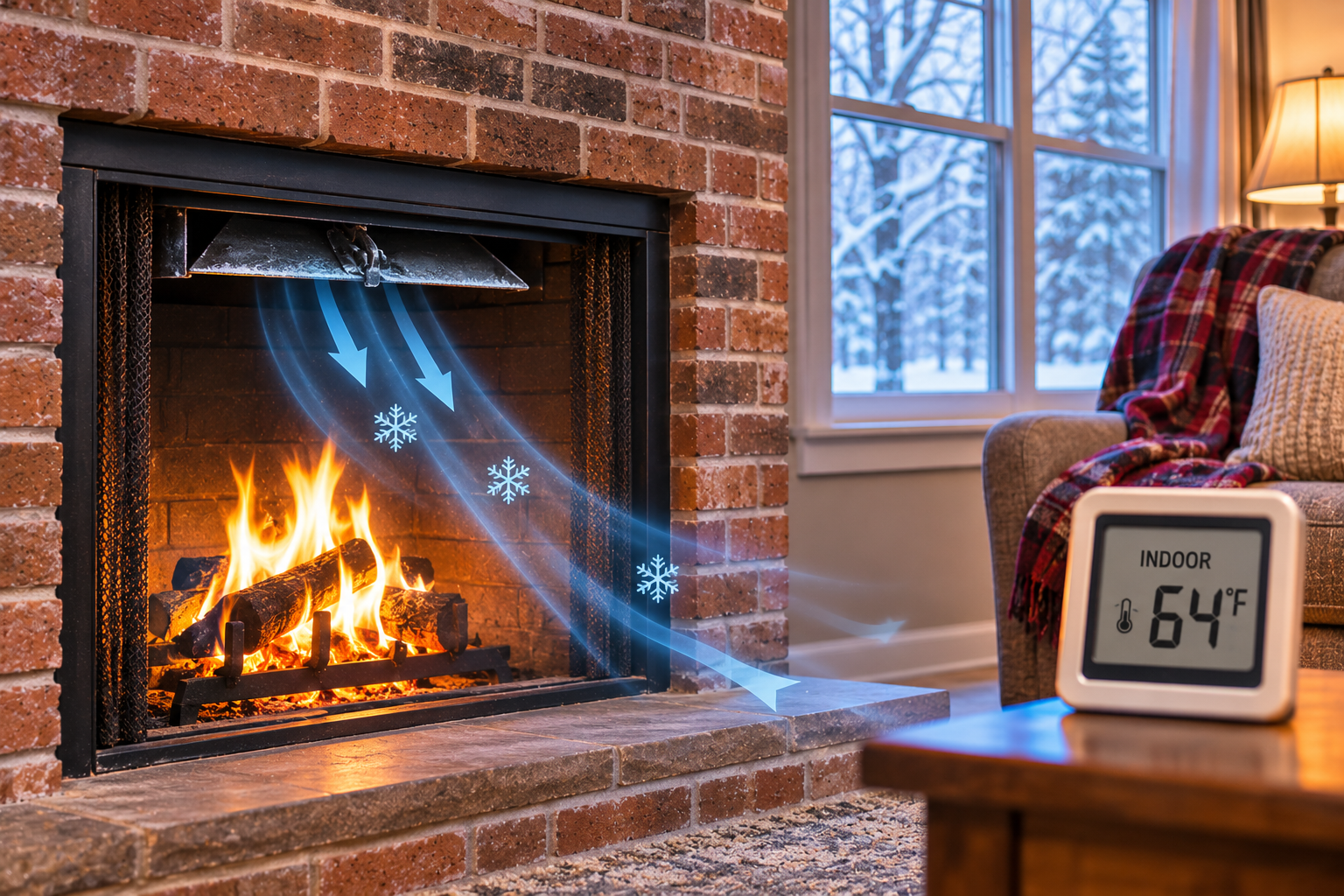
Draft is the upward airflow that carries smoke out of your flue. Warm air rises, so a warm flue pulls smoke up and out. A cold flue does the opposite, because the air inside it is denser than the warm air in your room.
That dense column is sometimes called a cold plug. Until the flue warms up, smoke fights the cold air and often loses, which is why so many first fires of the season smoke into the room. Cold chimney draft Minnesota homes experience is usually strongest in the first minutes of a fire.
Why Cold Chimney Draft Minnesota Winters Bring the Worst Smoke Problems
Minnesota winters create the largest temperature difference your chimney will see all year. An outdoor flue can sit near zero while your living room holds 70 degrees. The bigger that gap, the harder the cold plug pushes back.
Smoke in your living space is also a safety issue, not just a comfort one. It carries fine particles and combustion gases, including carbon monoxide, which has no smell. The CPSC Carbon Monoxide Information Center explains the risks. Keep working smoke and carbon monoxide alarms on every level, and treat repeated smoking as a signal to call a professional.
The Science Behind a Cold Chimney and Weak Draft
Cold Air Is Heavy: The Cold Plug in Your Flue
Cold air is denser than warm air, so it sinks and resists anything pushing up from below. A flue that has been cold for days holds a full column of that heavy air. Your new fire has to heat that column before the flow reverses.
Stack Effect: Why a Warm House Pushes Air Down the Flue
Warm indoor air rises through a house and escapes at the top, which pulls replacement air in at the bottom. In a tall, warm house, an open flue becomes one of those inlets. That is why a cold fireplace can breathe cold air into the room even when no fire is burning, a classic cold chimney draft Minnesota pattern during deep freezes.
Exterior Chimneys Feel Minnesota Winters First
A chimney built on an outside wall sits in the cold on one or more sides. Chimneys that run up through the warm center of a house stay milder and start easier. Exterior chases are common in Minneapolis and Twin Cities homes, and they are a big reason cold flue draft problems Minnesota owners report cluster on the coldest mornings.
7 Critical Signs Cold Chimney Draft Minnesota Is the Problem
Draft trouble has many causes, and our poor chimney draft Minnesota guide covers all seven. The signs below point specifically to temperature as the driver. Read them as clues, and let an inspection confirm the cause.
1. Smoke at Startup That Clears as the Flue Warms
Smoke in the first five to ten minutes, then clean drawing afterward, is the signature of a cold plug. The fire slowly wins the battle with the cold column. Once the flue warms, the draft settles and the smoke stops.
2. Cold Air Blowing From the Fireplace When It Is Off
A steady cold draft at the hearth on frigid days means the flue is acting like an open window. A leaky or stuck-open damper is often involved, as our fireplace damper problems Minnesota guide explains. You are also paying for that lost heat.
3. The Fireplace Drafts Fine in Mild Weather but Smokes in Hard Freezes
A fireplace that behaves in October and misbehaves during a January cold snap is telling you temperature is the variable. Mild days shrink the indoor-outdoor gap, so the cold plug is weak. Hard freezes widen the gap, and the same fire suddenly smokes.
4. Smoking Gets Worse When the Furnace or Fans Run
Furnaces, kitchen fans and dryers pull air out of the house, and replacement air has to come from somewhere. In a tight, modern home, it often comes down the flue. That incoming cold air fights your fire, and cold chimney draft Minnesota winters amplify the effect.
5. Draft Reverses on Windy, Frigid Days
Cold air plus wind can fully reverse a weak draft, pushing smoke and cold air into the room together. Chimneys that sit low on the roofline or near tall trees feel it most. A missing or damaged cap often makes it worse.
6. The Chimney Sits on an Exterior Wall or North Side
Location matters. A chimney on a north-facing exterior wall sees the least sun and the most cold, so its flue stays coldest. If your smoking fireplace matches that description, cold chimney draft Minnesota freezes create is very likely part of the story.
7. Even a Kindling Fire Takes a Long Time to Draw
A small kindling fire should begin to pull within a few minutes. If it still smokes heavily after ten minutes or more, the cold plug is not the whole problem. Buildup, a flue mismatch or a damaged liner may be involved, and those need a camera inspection.
How to Warm a Cold Flue Safely Before Lighting a Fire
Safe Steps Homeowners Can Take
- Confirm the damper is fully open, using the handle from the floor.
- Build a small fire with a handful of dry kindling only, and let it burn for five to ten minutes to warm the flue before adding larger logs.
- Keep the kindling fire modest; a raging fire in a cold flue produces more smoke than the draft can carry.
- Crack a window near the fireplace during startup in a tight, newer home.
- Burn dry, seasoned wood once you add logs, because damp wood makes cool smoke that barely rises. The EPA Burn Wise program has practical fuel tips.
Priming the flue with a small kindling fire is the safest warming method there is. It works with the draft instead of against it.
What Not to Do
- Never use lighter fluid, torches or accelerants to warm a flue.
- Do not hold burning newspaper up near the damper; the kindling method is safer and works better.
- Do not reach into the firebox or up past the damper to check anything.
- Do not close the damper while any embers remain; keep it open until the ashes are cold.
- Never climb the roof to inspect or warm the chimney. Roof-level work belongs to trained technicians.
When a Cold Chimney Points to a Bigger Problem
A cold plug is normal physics. Cold chimney draft Minnesota homeowners should take seriously is the kind that does not improve with a warm flue. Persistent trouble can point to defects that need professional repair.
An uninsulated or damaged liner loses heat fast and weakens draft. An oversized flue paired with an insert or stove can draft weakly no matter the temperature. A throat damper that no longer seals lets the cold plug pour in around the clock. Masonry damage from freeze-thaw cycles can add rough surfaces and moisture that cool the smoke further. Our winter chimney masonry Minnesota guide covers that freeze-thaw damage in detail.
If these possibilities apply, our chimney liner inspection Minnesota guide explains how professionals evaluate the flue itself.
Red Flags: Stop Using the Fireplace and Call a Professional
Stop building fires and schedule an inspection if you notice any of these cold chimney draft Minnesota warning signs:
- Smoke fills the room on every fire, even after the flue has warmed
- A smoke or carbon monoxide alarm sounds during a fire
- Cold air pours from the fireplace so strongly that the room will not stay warm
- You see rust, debris, nests or damage around the damper
- The fireplace smells strongly of smoke or animals when cold
- Thick smoke continues more than ten minutes after lighting
If a carbon monoxide alarm sounds, leave the house immediately and call 911.
How Professionals Fix Cold Chimney Draft Minnesota Homes Develop
What an Inspection Covers
A technician reviews your symptoms, then examines the firebox, damper, smoke chamber and flue, often with a camera. The NFPA 211 standard defines three inspection levels. Level 1 covers readily accessible parts, and Level 2 adds a camera scan of the flue. Our chimney inspections page explains what each visit involves.
Repairs That Keep a Flue Warm and Drawing
Top-Sealing Dampers
A top-sealing damper caps the flue at the top, where it seals tight against cold air and closes off the cold-plug pathway. For fireplaces with leaky throat dampers, it is one of the most effective upgrades for a cold fireplace draft Minnesota homes deal with all winter.
Insulated Liners and Relining
Adding or upgrading liner insulation helps the flue warm quickly and stay warm. Where a liner is damaged or badly sized, relining restores the correct path for smoke. See our chimney relining page for how that process works.
Caps, Crowns and Masonry Repairs
A properly fitted cap tames wind-driven downdrafts and keeps debris out. Repairing crowns and masonry keeps moisture out of the flue, where it would otherwise cool the smoke and feed freeze-thaw damage. These repairs fall under our broader chimney repair services, and a chimney cleaning removes buildup that worsens cold-weather draft loss.
Choosing a Qualified Professional
Look for CSIA certification and a Minnesota contractor license, and ask for both numbers. The Chimney Safety Institute of America (CSIA) recommends an annual inspection, which catches draft-related defects before winter. Free homeowner guidance at Verified Chimney Pros helps you compare companies and avoid costly mistakes before you hire.
Cold Chimney Draft Minnesota Prevention Checklist
- In early fall: schedule the annual inspection that CSIA recommends, before the first hard freeze.
- Before each fire: confirm the damper is fully open from the floor.
- At startup: light a small kindling fire and give the flue five to ten minutes to warm.
- During cold snaps: crack a window near the fireplace at startup if the house is tight.
- When not in use: close the damper tightly to block the cold plug.
- Every year: have the flue inspected and cleaned so buildup never worsens a cold-weather draft problem.
These habits turn cold chimney draft Minnesota surprises into routine starts. They also give your technician a clear symptom history if a visit is needed.
Cold Chimney Draft Help in Maple Lake, Minneapolis and the Twin Cities
Midwest Chimney Repair works from Maple Lake and serves homeowners within an approximately 25-mile radius. If you live in Minneapolis or elsewhere in the Twin Cities, call to confirm whether your address is covered. Our team can help you sort out any cold chimney draft Minnesota freezes have brought to your home.
Services and Service Areas in Minnesota
We proudly provide chimney repair MN, including:
Buffalo, MNAnnandale, MNMonticello, MNWaverly, MNClearwater, MN
Our chimney and fireplace repair services include:
Frequently Asked Questions
What is cold chimney draft?
Cold chimney draft happens when a flue full of dense, cold air blocks smoke from rising. The smoke fights the heavy air and often backs into the room. Warming the flue usually restores normal flow.
Why does my fireplace smoke on the first fire of the season?
The flue has been cold for months, so it holds a full column of heavy air. Cold chimney draft Minnesota homes face is strongest on that first fire. A short kindling fire to warm the flue usually helps.
How do I warm up my chimney flue before lighting a fire?
Open the damper fully, then light a small fire with a handful of dry kindling and let it burn five to ten minutes before adding logs. Never use lighter fluid or torches. If smoke persists after the flue warms, call a professional.
Is cold air blowing from my fireplace normal?
Some cold air is common in freezing weather, but a steady draft that chills the room is not. It usually means the damper is not sealing or the flue lacks protection. A professional can pinpoint the cause.
Does outdoor temperature affect chimney draft?
Yes. The bigger the gap between indoor and outdoor temperatures, the harder the cold plug pushes back. That is why cold chimney draft Minnesota problems peak during hard freezes.
Why does my exterior-wall chimney draft worse than my neighbor's?
Exterior chimneys sit in the cold on one or more sides, so their flues stay much colder than chimneys inside the warm house envelope. North-facing chases are coldest of all. Insulation and a tight-sealing damper help offset that exposure.
What is stack effect, and how does it involve my chimney?
Stack effect is the movement of warm indoor air rising and escaping at the top of a house, which pulls replacement air in below. An open or leaky flue becomes one of those inlets. That is why a cold fireplace can push cold air into the room with no fire at all.
Does a top-sealing damper help with cold drafts?
Yes. It seals the flue at the top, which blocks the cold column before it forms and stops heated air from escaping. It is a common professional fix for a leaky throat damper. An inspection confirms whether it suits your fireplace.
Can I fix cold chimney draft Minnesota issues myself?
You can safely prime the flue with kindling, confirm the damper position and crack a window at startup. Anything at the damper level or above, including cap and liner work, belongs to a professional. Do not climb the roof or reach into the flue.
Does Minnesota cold weather damage the chimney itself?
It can. Water that enters masonry freezes, expands and widens cracks through repeated freeze-thaw cycles. Damaged masonry then lets in more moisture, which cools smoke and weakens draft further.
How long should it take a chimney to draw after lighting?
A small kindling fire should begin pulling within a few minutes, and the flue should be drawing cleanly within five to ten. Heavy smoke beyond that point suggests a problem beyond the cold plug. Schedule an inspection to find it.
Can a chimney cap cause cold drafts?
A missing or damaged cap exposes the flue to wind and cold, and it can worsen downdrafts on gusty days. A properly fitted cap moderates both. Cap work is roof-level work, so leave it to a technician.
When should I call a professional about a cold chimney?
Call if smoke fills the room after the flue warms, if alarms sound, or if cold air pours from the fireplace all winter. Persistent symptoms point to damper, liner or masonry defects. An inspection identifies which repair applies.
Does Midwest Chimney Repair serve Minneapolis?
We are based in Maple Lake with an approximately 25-mile service radius. Minneapolis and Twin Cities homeowners should call (612) 655-8181 to confirm whether their address is covered.
How do I schedule an inspection for cold chimney draft Minnesota concerns?
Call (612) 655-8181 or email mnchimneyrepair@gmail.com. Our hours are Monday–Friday, 9:00 AM–4:00 PM. Notes on when the smoking and cold drafts occur help us prepare.