
Firewood Moisture Fireplace Minnesota: Why Wet Wood Threatens Winter Fires
Firewood moisture fireplace Minnesota searches spike every November for the same reason. The first fires of the season smoke, hiss and stall, and wet wood is very often the culprit. The wood you burn shapes how your fireplace behaves before a technician ever touches the chimney.
This guide explains what firewood moisture really means, why wet wood is a safety issue and not just a nuisance, and the seven mistakes we see most around the Twin Cities. It also separates the checks you can safely make at home from the work that belongs to a professional. Whether you stack cordwood in Maple Lake or buy it in Minneapolis, the same rules apply.
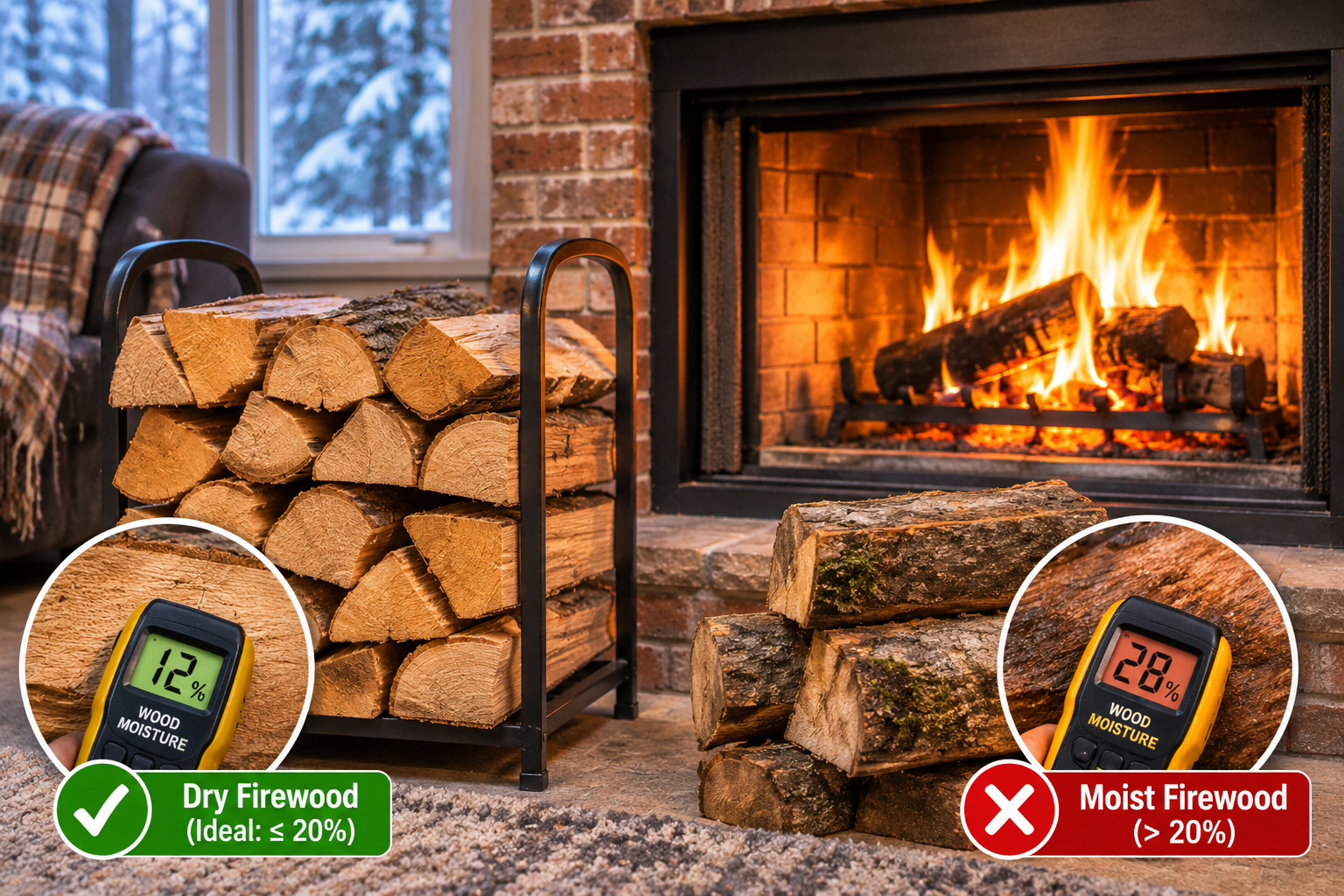
How Dry Should Fireplace Wood Be?
Burn wood at roughly 20% moisture content or less. Wood at that level lights readily, flames burn bright, and smoke travels up the flue instead of into the room. Wood above about 25% is not ready, and wood between 20% and 25% needs more drying time.
Wet wood announces itself. The fire hisses and steams, flames run dull orange, and smoke drifts rather than rushing upward. Glass doors blacken quickly, and the room smells like a campfire.
This firewood moisture fireplace Minnesota guide keeps the target simple: measure with a meter, burn only dry wood, and start drying next year’s stack now.
Why Wet Wood Is a Fire and Safety Risk, Not Just a Nuisance
Smoke in your living space carries fine particles and combustion gases, including carbon monoxide, which has no smell. The CPSC Carbon Monoxide Information Center explains the risks. Keep working smoke and carbon monoxide alarms on every level, and test them before the season begins.
Wet wood also threatens the chimney itself. Cool, smoky fires leave more creosote on flue walls, and creosote is the fuel behind chimney fires. A single season of damp wood can undo an otherwise clean flue.
Wet wood wastes money, too. Heat that should warm your room goes into boiling water inside the logs instead. You burn more wood for less warmth.
The Creosote Chain: From Wet Logs to Chimney Fire
Here is the chain we describe to homeowners. Damp wood burns cool, cool smoke carries more unburned tar, that tar condenses on flue walls, and the layer thickens with every smoky fire. Heavy creosote burns extremely hot if it ignites.
You cannot judge creosote levels from the hearth. Buildup hides deep in the flue, which is why our chimney cleaning service and chimney inspections page describe professional removal and evaluation instead.
7 Critical Firewood Moisture Fireplace Minnesota Mistakes to Avoid
Each mistake below keeps a stack wet or hides wet wood from you. Fix them one at a time, and your fires improve the same week.
1. Burning Wood the Same Season It Was Split
Freshly cut wood holds a large share of its weight in water. Burning it that first winter means hissing fires, cold rooms and heavy creosote. Split wood this past summer so it has a full season to dry before next winter.
2. Stacking Wood Flat on the Ground
Soil wicks moisture into the bottom rows, and ground contact blocks airflow under the stack. Restack on racks, pallets or runners so air moves beneath the pile. Keep the bottom row off the dirt all year.
3. Wrapping the Whole Stack in a Tarp
A fully wrapped stack traps humidity against the wood. Cover the top only, and leave the sides open so wind can dry the pile. Before snow arrives, make sure the cover sheds water and brush off accumulations before they glaze into ice.
4. Trusting Looks Instead of a Meter
Gray weathered faces and end cracks suggest drying, but they describe the surface. The center of a thick split can stay wet for months. A moisture meter turns guessing into a number, and the split-face test below shows you how.
5. Measuring the Wrong Spot
The bark face of a split reads far drier than the inside. Always split a piece fresh and read the exposed face. Take readings from several splits in different parts of the stack, because drying is never even.
6. Buying “Seasoned” Wood Without Asking Questions
Ask when the wood was split, what species it is, and whether it was stacked or heaped. Most firewood moisture fireplace Minnesota buyers run into starts at the delivery, not at the hearth. Meter a few random splits before the truck leaves, and keep kiln-dried wood in mind as a reliable backup.
7. Burning Wet Wood Anyway “Just This Once”
One smoky fire feels harmless, but a season of them leaves a real creosote layer. If you already burned a damp stack this fall, do not panic; just stop and book an inspection. A professional look confirms whether cleanup is needed.
How to Test Firewood Moisture the Right Way
Pick a Simple Meter
Inexpensive pin and pinless meters both work for homeowners. What matters more is how you use it. Keep the meter handy near the wood rack so testing becomes routine.
Use the Split-Face Test
Split a sample piece, then press the meter to the freshly exposed face. Record several readings across the stack rather than one. Wet centers hide behind dry-looking bark, so fresh faces tell the truth.
Read the Numbers
Under about 20% is ready to burn. Between 20% and 25% is close; give it more time. Above 25%, keep that wood out of the fireplace and keep it drying. The EPA Burn Wise program shares matching guidance on seasoned wood and clean burning.
Good Firewood Moisture Fireplace Minnesota Habits Start in Summer
Minnesota’s drying season is short. Humid springs, a brief summer and early snow leave less time for cordwood to season than in milder states. Wood that gets split and stacked by early summer has a real chance of being ready by November; wood split in September usually does not.
Choose a sunny, breezy spot for the stack, elevate it, and cover only the top before snow flies. Around Maple Lake and the Twin Cities, the stacks that burn clean next winter are the ones that went up before the first frost. If this year’s wood is still wet, buy dry or kiln-dried for now and start your own stack for next season.
Stage a few days of wood indoors so cold snaps do not tempt you toward damp logs. Small habits like that keep fires hot and flues cleaner.
Buying Firewood in the Twin Cities: What to Ask Before You Load Up
- When was this split? A confident seller knows the answer.
- What species is it? Denser hardwoods generally take longer to season than softer woods.
- Was it stacked or heaped? Heaped wood dries unevenly.
- May I meter a sample? Any reputable seller allows it.
- How was it stored? Covered tops and elevated stacks are good signs.
These five questions protect your fireplace as much as your wallet. Wet cords cost the same as dry ones at delivery, but only one of them heats your home.
Safe Checks, Red Flags, and Work for Professionals
Safe for Homeowners
Metering splits, restacking wood, adjusting covers and glancing at the cold firebox from the floor are all safe. Testing smoke and carbon monoxide alarms belongs on the same list. None of it requires a ladder.
Red Flags: Stop Burning and Call
- Heavy smoke on every fire, even with metered dry wood
- Strong hissing with little flame and a sharp, smoky odor
- Flaky, crusty or shiny glaze visible near the firebox opening
- A lingering smoke smell when the fireplace is cold
- Any smoke or carbon monoxide alarm sounding during a fire
If a carbon monoxide alarm sounds, leave the house immediately and call 911.
Work That Belongs to a Professional
Never climb the roof, reach past the damper or scrape the flue yourself. Creosote removal, camera inspection and any repair require training and tools. Wet-wood habits often overlap with draft trouble, so our poor chimney draft Minnesota and cold chimney draft Minnesota guides are useful reading before your appointment.
How Professionals Undo a Season of Wet Fires
Inspection Comes First
A technician reviews your firewood and burning habits, then examines the firebox, damper, smoke chamber and flue. The NFPA 211 standard defines three inspection levels, where Level 2 adds a camera scan of the flue. The Chimney Safety Institute of America (CSIA) recommends an annual inspection, which catches creosote before it becomes a hazard.
Cleaning
A professional cleaning removes the creosote layer that wet fires leave behind. Our chimney cleaning page explains the process. Cleaning also restores the full flue opening, which draft problems had narrowed.
Liner and Repair Checks
A camera pass confirms whether heavy buildup or moisture has damaged the liner, and our chimney liner inspection Minnesota guide explains what comes next. Any damage found is handled through our broader chimney repair services, and our winter chimney masonry Minnesota guide covers the freeze-thaw side.
Choosing a Qualified Professional
Look for CSIA certification and a Minnesota contractor license, and ask for both numbers. Free homeowner guidance at Verified Chimney Pros helps you compare companies and avoid costly mistakes before you hire.
Your Firewood Moisture Minnesota Checklist for the Season
- Before the season: meter the stack, and replace wet logs with dry or kiln-dried wood.
- Each fire: build hot fires with seasoned wood, and avoid letting fires smore unattended overnight.
- After storms: knock snow and ice off covers before it glazes.
- Monthly: re-test splits from different stack locations.
- Yearly: book the inspection and cleaning CSIA recommends.
Run this list every season and the wood problem solves itself. Every firewood moisture fireplace Minnesota fix begins with the stack, not the fireplace.
Firewood and Fireplace Help in Maple Lake, Minneapolis and the Twin Cities
Midwest Chimney Repair works from Maple Lake and serves homeowners within an approximately 25-mile radius. If you live in Minneapolis or elsewhere in the Twin Cities, call to confirm whether your address is covered. Our team can evaluate any firewood moisture fireplace Minnesota winters have exposed, along with the creosote it left behind.
Services and Service Areas in Minnesota
We proudly provide chimney repair MN, including:
Buffalo, MNAnnandale, MNMonticello, MNWaverly, MNClearwater, MN
Our chimney and fireplace repair services include:
Frequently Asked Questions
What is firewood moisture content?
It is the percentage of the wood’s weight that is water. Freshly cut wood holds a large share of water, while seasoned firewood drops to about 20% or less. A moisture meter gives you the number.
How dry should fireplace wood be in Minnesota?
Aim for roughly 20% moisture content or less, measured on a fresh split face. Wood between 20% and 25% needs more drying time. Above about 25%, keep it out of the fireplace.
Why do firewood moisture fireplace Minnesota searches peak every November?
Because that is when the first fires of the season smoke, hiss and stall. Cold weather exposes wood that never finished drying. Checking the stack in early fall avoids the November surprise.
Why does wet wood hiss and steam?
Water inside the logs boils as the fire heats them, which produces the hissing and visible steam. That process steals heat from the room. It also cools the smoke, which encourages creosote.
How do I test firewood moisture at home?
Use a moisture meter on a freshly split face, and take readings from several splits around the stack. Do not rely on the bark side, which dries first. Compare readings against the 20% target.
What kind of moisture meter should I buy?
Inexpensive pin and pinless meters both work for homeowners. Accuracy depends more on technique than price, so learn the split-face test. Keep the meter near the wood rack for routine checks.
How long does firewood take to season in Minnesota?
Softer woods may be ready in about six months, while dense hardwoods often need a year or more. Splitting, elevating and sun exposure speed the process. Minnesota’s short drying season makes early splitting important.
Can I burn wood that reads 22%?
It is borderline. Wood that close will burn, but it still adds moisture and creosote to the flue. Giving it more drying time is the better choice.
Is kiln-dried firewood a good option?
Yes. Kiln drying drives moisture down quickly, so it burns clean and hot. It is a dependable backup when your own stack is not ready.
Should I cover my woodpile?
Cover the top only, and leave the sides open for airflow. A fully wrapped tarp traps humidity and slows drying. Before winter, make sure the cover sheds snow and ice.
Where should I stack firewood?
Choose a sunny, breezy spot, and elevate the stack on racks or pallets. Airflow underneath matters as much as sunshine. Keep the bottom row off the ground all year.
Can burning wet wood damage my chimney?
Yes. Cool, smoky fires deposit extra creosote, which raises chimney fire risk and can narrow the flue. A season of wet burning deserves a professional inspection and cleaning.
Can I store firewood indoors?
Staging a few days’ worth near the hearth is fine and keeps cold-snap fires dry. Avoid bringing in wet wood to “finish drying,” since indoor drying is slow. Keep larger quantities outside in a proper stack.
Does Midwest Chimney Repair serve Minneapolis?
We are based in Maple Lake with an approximately 25-mile service radius. Minneapolis and Twin Cities homeowners should call (612) 655-8181 to confirm whether their address is covered.
How do I schedule a visit for firewood moisture fireplace Minnesota problems?
Call (612) 655-8181 or email mnchimneyrepair@gmail.com. Our hours are Monday–Friday, 9:00 AM–4:00 PM. Notes on your wood source and meter readings help us prepare.