Poor Chimney Draft Minnesota: Common Causes and Next Steps
Poor chimney draft Minnesota homeowners notice usually appears on the first fires of November. Smoke rolls into the room, the fire burns low, and the flue seems to push air the wrong way. Draft trouble is frustrating, but most causes are easy to name once you know where to look.
This guide explains how draft works, the seven causes we see most often, and the checks you can safely make from the living room floor. It also shows when to hand the problem to a professional. Whether your home is in Minneapolis or near Maple Lake, the same physics applies.
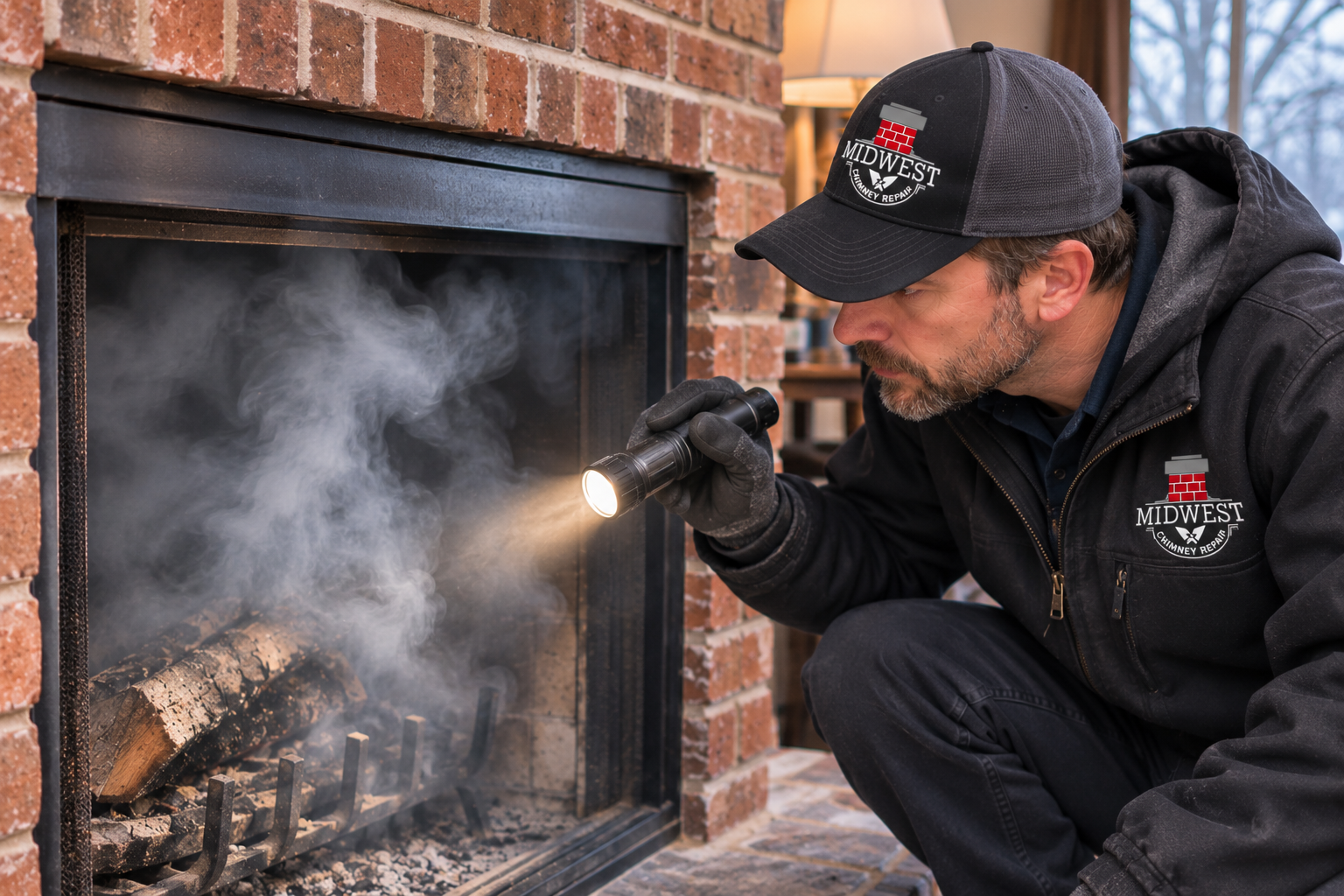
Why Won’t My Chimney Draw?
Chimney draft is the airflow that carries smoke up the flue and out of the house. Draft fails for two broad reasons. Either something blocks the path, or something weakens the upward pull.
Blockages include creosote, bird nests and debris. Weak pull comes from a cold flue, negative air pressure, wet wood or a flue that does not match the fireplace. Most poor chimney draft Minnesota homes experience traces back to one of the seven causes below.
Why Poor Chimney Draft Is a Fire and Safety Risk
Smoke in your living space is more than an annoyance. It carries fine particles and combustion gases, including carbon monoxide, which has no smell. A chimney that drafts badly on every fire deserves attention, not a shrug.
Weak draft also slows fires down. Slow, smoky fires produce more creosote, and creosote is the fuel behind chimney fires. That is why poor chimney draft Minnesota owners report should be treated as a safety signal first and a comfort issue second.
Test your smoke and carbon monoxide alarms before the heating season begins. The CPSC Carbon Monoxide Information Center explains the risks and warning signs.
How Chimney Draft Works in a Minnesota Winter
The Simple Physics Behind Weak Chimney Draft
A fire heats the air inside the flue, and hot air rises. That rising column pulls fresh air into the firebox, which feeds the flames. A tall, warm, clear flue drafts well, while a cold or blocked one does not.
Why Cold Starts Are the Hardest
A flue that sits between fires fills with cold, dense air. That heavy air resists the smoke trying to rise, so the first minutes of a fire often smoke the worst. Once the flue warms, the draft usually settles.
Why Today’s Tighter Homes Change the Picture
New windows, added insulation and sealed doors make homes efficient, but they also limit makeup air. Exhaust fans, dryers and furnaces then compete for the air the fireplace needs. In those conditions, the path of least resistance can run straight down the flue.
7 Common Causes of Poor Chimney Draft Minnesota Homeowners See
Each cause below points to a different fix. Read them as clues, not a diagnosis. Only an in-person evaluation confirms what is happening inside the flue.
1. Creosote and Soot Buildup Narrowing the Flue
Creosote and soot coat the flue walls a little more with every fire. A thickened layer shrinks the passage, cools the smoke and weakens the pull. Heavy buildup is a classic source of poor chimney draft Minnesota fireplaces show late in the season, and it is also a fire risk.
A professional chimney cleaning restores the full opening. This is pro-only work, because creosote removal happens deep inside the flue.
2. Nests, Leaves and Other Blockages
Birds, squirrels and falling leaves clog caps and flues, especially after a summer of disuse. Even a partly blocked cap screen can choke a chimney that drafted fine last spring. If a smoky fireplace also smells like animals or you hear scratching, treat a blockage as the likely cause.
Never climb the roof to look. Keep that question for a technician instead.
3. A Cold, Stalled Flue at Startup
Cold-flue stalls are the most common poor chimney draft Minnesota complaint on the first hard nights of fall. The fix starts with the fire itself. Light a small kindling fire first, let the flue warm for a few minutes, and then add larger logs.
A flue that keeps smoking long after startup points to a deeper cause. At that point, stop and schedule an evaluation.
4. Negative Air Pressure From Fans and Tight Homes
Kitchen fans, bath fans and dryers push air out of the house, and something must replace it. In a tight home, that replacement air often comes down the flue. If your fireplace smokes mainly when the furnace or fans run, pressure is a likely suspect.
Poor chimney draft Minnesota homes with recent window or insulation upgrades often show this pattern. Try opening a window near the fireplace during one fire as a simple test. If the draft improves, you have your answer and a clear story for your technician.
5. Wet Wood and Smoldering Fires
Damp wood hisses, smolders and makes cool smoke, and cool smoke barely rises. Wet wood is a quiet driver of poor chimney draft Minnesota winters magnify, because outdoor stacks absorb moisture all season.
Burn only dry, seasoned firewood, and store it covered and off the ground. The EPA Burn Wise program shares practical tips for cleaner, more efficient burning.
6. Damper Position and Flue Size Mismatches
A damper that is not fully open chokes the exit, and one that slips closed can do the same. Our fireplace damper problems Minnesota guide covers those failures in detail. Check the handle from the floor before every fire.
Size mismatches matter too. An insert or stove vented into an oversized flue can draft weakly, and a damaged liner can roughen the walls that should guide smoke upward. Our chimney liner inspection Minnesota guide explains how that gets evaluated.
7. Wind, Caps and Chimney Downdraft Minnesota Homes Face
Wind can push smoke back down the flue, especially near tall trees, rooflines or open ground around Maple Lake and the Twin Cities. A missing cap, a clogged screen or a cap set at the wrong height makes downdrafts worse. A chimney downdraft Minnesota pattern that appears only on windy days is a strong clue.
Cap work and wind solutions happen at roof level. Leave them to a trained technician.
Why Fireplace Draft Problems Spike During Twin Cities Winters
November is when fireplace draft problems Minnesota homeowners notice reach their peak. Flues sit cold for months, then get hit with hard use during the first freeze. Older Minneapolis masonry chimneys and remodeled, tighter homes across the metro both feel it.
Timing matters as well. A draft check in early fall leaves time for cleaning or repairs before the deep cold arrives, when you need the fireplace most.
Safe Checks for Poor Chimney Draft Minnesota Homeowners Can Make
These checks use only what you can see and do safely from the living room. Work through them with the fireplace cold, and never lean into the opening.
What You Can Safely Observe
- Confirm the damper moves fully open, using the handle from the floor.
- Shine a flashlight into the firebox for soot piles, rust or debris, without reaching in.
- Note when smoke appears: at startup only, on windy days, or on every fire. Poor chimney draft Minnesota patterns like these help a technician diagnose quickly.
- Take clear photos and keep short notes for your appointment.
- Test your smoke and carbon monoxide alarms.
Fire-Building Habits That Are Safe to Try
- Start with small kindling and let it warm the flue for several minutes before adding logs.
- Burn dry, seasoned wood only, and never overload the firebox.
- Open a nearby window during one fire as a pressure test, and mention the result to your technician.
- Never use lighter fluid or burn trash, treated wood or wrapped paper goods.
Work That Belongs to a Professional
Never climb onto the roof, remove a cap or reach past the damper. Do not try to pull a nest or blockage out yourself, because debris can hide damage behind it. Poor chimney draft Minnesota causes inside the flue need cameras, tools and training.
Red Flags: Stop Building Fires and Call a Professional
Call a professional if you notice any of these poor chimney draft Minnesota warning signs:
- Smoke spills into the room on every fire, even with the damper open and dry wood
- A smoke or carbon monoxide alarm sounds during a fire
- The fireplace smells strongly of smoke or animals when it is cold
- You can see a nest or heavy debris at or near the damper from the floor
- Water, rust or ice appears in the firebox
- Thick smoke keeps rolling long after startup, even with a warm flue
If a carbon monoxide alarm sounds, leave the house immediately and call 911.
How Professionals Diagnose and Fix Poor Chimney Draft Minnesota Homes Develop
What a Draft Evaluation Includes
A technician starts with the history: when smoke appears, which fans run, and what wood you burn. Then they check the firebox, damper, smoke chamber and flue, often with a camera. The NFPA 211 standard defines three inspection levels. Level 1 covers readily accessible parts, and Level 2 adds a camera scan of the flue.
Our chimney inspections page explains what each visit involves. The Chimney Safety Institute of America (CSIA) recommends an annual inspection, which catches buildup and damage before they choke a flue.
Fixes That Match the Cause
- Professional cleaning for creosote and soot, through our chimney cleaning service
- Cap repair or replacement, sized for your roof and wind exposure
- Damper fixes, or a top-sealing damper where a throat damper leaks badly
- Relining or resizing when the flue does not match the appliance
- Masonry and moisture repairs that keep the flue dry
Poor chimney draft Minnesota fixes work best when they match the cause. Cleaning a flue will not help if a cap screen is clogged, and a new cap will not fix wet wood.
Choosing a Qualified Professional
Look for CSIA certification and a Minnesota contractor license, and ask for both numbers. Free homeowner guidance at Verified Chimney Pros helps you compare companies and spot red flags before you hire.
Poor Chimney Draft Minnesota Prevention Checklist
A steady routine keeps poor chimney draft Minnesota surprises out of your season.
- Before the season: schedule the annual inspection and cleaning that CSIA recommends.
- Each fire: confirm the damper is fully open, and close it only after the ashes are cold.
- All season: burn dry, seasoned wood stored covered and off the ground.
- Watch patterns: note wind, fans or startup timing whenever smoke appears.
- Every month: glance at the firebox for soot, rust or debris from the floor.
These habits also make any professional visit faster, because you arrive with a clear symptom history.
Draft Help in Maple Lake, Minneapolis and the Twin Cities
Midwest Chimney Repair works from Maple Lake and serves homeowners within an approximately 25-mile radius. If you live in Minneapolis or elsewhere in the Twin Cities, call to confirm whether your address is covered. Our team can help you sort out any poor chimney draft Minnesota winters have exposed.
Services and Service Areas in Minnesota
We proudly provide chimney repair MN, including:
Buffalo, MNAnnandale, MNMonticello, MNWaverly, MNClearwater, MN
Our chimney and fireplace repair services include:
Frequently Asked Questions
What is chimney draft?
Draft is the flow of air up the flue that carries smoke out of your house. Heat, flue height and a clear passage keep it working. Anything that blocks the path or cools the smoke weakens it.
Why does smoke come into the room when I light a fire?
Common causes include a damper that is not fully open, a blocked flue, a cold flue at startup or negative air pressure in the house. Poor chimney draft Minnesota homes experience usually improves once the specific cause is found. Stop using the fireplace and schedule an evaluation.
Why does my fireplace smoke only when it is windy?
Wind-related downdrafts often point to a missing cap, a clogged screen or nearby trees and rooflines. This pattern is a helpful diagnostic clue. A technician can recommend roof-level fixes that reduce the effect.
Can a dirty chimney cause poor chimney draft Minnesota problems?
Yes. Creosote and soot narrow the flue and cool the smoke, which weakens the pull. That same buildup raises chimney-fire risk, so a professional cleaning solves two problems at once.
Why does my fireplace smoke at startup but not later?
A flue that sits between fires fills with cold, dense air that resists smoke. Starting with small kindling and letting the flue warm for a few minutes usually helps. If heavy smoke continues after the flue is warm, another cause is likely.
Can kitchen or bathroom fans cause draft problems?
Yes. Exhaust fans push air out of the house, and a tight home pulls replacement air down the flue. Opening a window near the fireplace during one fire is a safe test, and improvement points to a pressure issue.
Does wet wood cause poor chimney draft Minnesota fires?
Yes. Damp wood burns cool and smoky, and cool smoke barely rises. Burn dry, seasoned firewood stored covered and off the ground.
How do I know if my chimney is blocked?
From indoors, look for clues such as animal smells, scratching sounds, debris at the damper level or sudden draft loss. Confirming a blockage requires a look up the flue, which belongs to a technician. Do not climb the roof or reach into the chimney.
Can the wrong flue size cause draft problems?
Yes. An appliance vented into an oversized flue, or a damaged liner that roughens the walls, can draft weakly. A camera inspection measures whether the flue matches the fireplace. Relining or resizing is the usual fix.
Does Minnesota cold weather make draft worse?
It can. Cold starts are harder because dense cold air sits in the flue, and hard freezes can worsen masonry and moisture damage that affects draft. Poor chimney draft Minnesota winters produce is common on the first cold nights.
How do professionals diagnose a draft problem?
They take a symptom history, inspect the firebox, damper, smoke chamber and flue, and often use a camera. Under NFPA 211, Level 1 covers accessible parts and Level 2 adds a flue scan. The findings point to the right fix.
Will a chimney cleaning fix poor draft?
Cleaning fixes draft loss caused by creosote and soot, and it removes a fire hazard at the same time. If a clogged cap, pressure issue or flue mismatch is behind poor chimney draft Minnesota homeowners see, those need separate repairs. That is why diagnosis comes first.
Can I fix poor chimney draft Minnesota issues myself?
You can safely adjust fire-building habits, test with a window open and confirm the damper position from the floor. Anything inside the flue, at the cap or on the roof belongs to a professional. DIY attempts risk injury and can hide the real cause.
Does Midwest Chimney Repair serve Minneapolis?
We are based in Maple Lake with an approximately 25-mile service radius. Minneapolis and Twin Cities homeowners should call (612) 655-8181 to confirm whether their address is covered.
How do I schedule an inspection for poor chimney draft Minnesota concerns?
Call (612) 655-8181 or email mnchimneyrepair@gmail.com. Our hours are Monday–Friday, 9:00 AM–4:00 PM. Notes on when the smoke appears help us prepare.