
Sooty Fireplace Glass Minnesota: What the Black Film on Your Glass Is Trying to Tell You
Sooty fireplace glass Minnesota homeowners notice every November is one of the clearest visual clues a fireplace can give you. A black, hazy or spotted film on the glass doors does not appear without a reason. It means the fire is not burning the way it should, and the glass is simply showing you the evidence.
This guide explains what that film is, the seven causes behind it, how to clean it safely, and which warning signs mean the problem lives deeper than the glass. Whether you live in Minneapolis or near Maple Lake, the same rules apply.
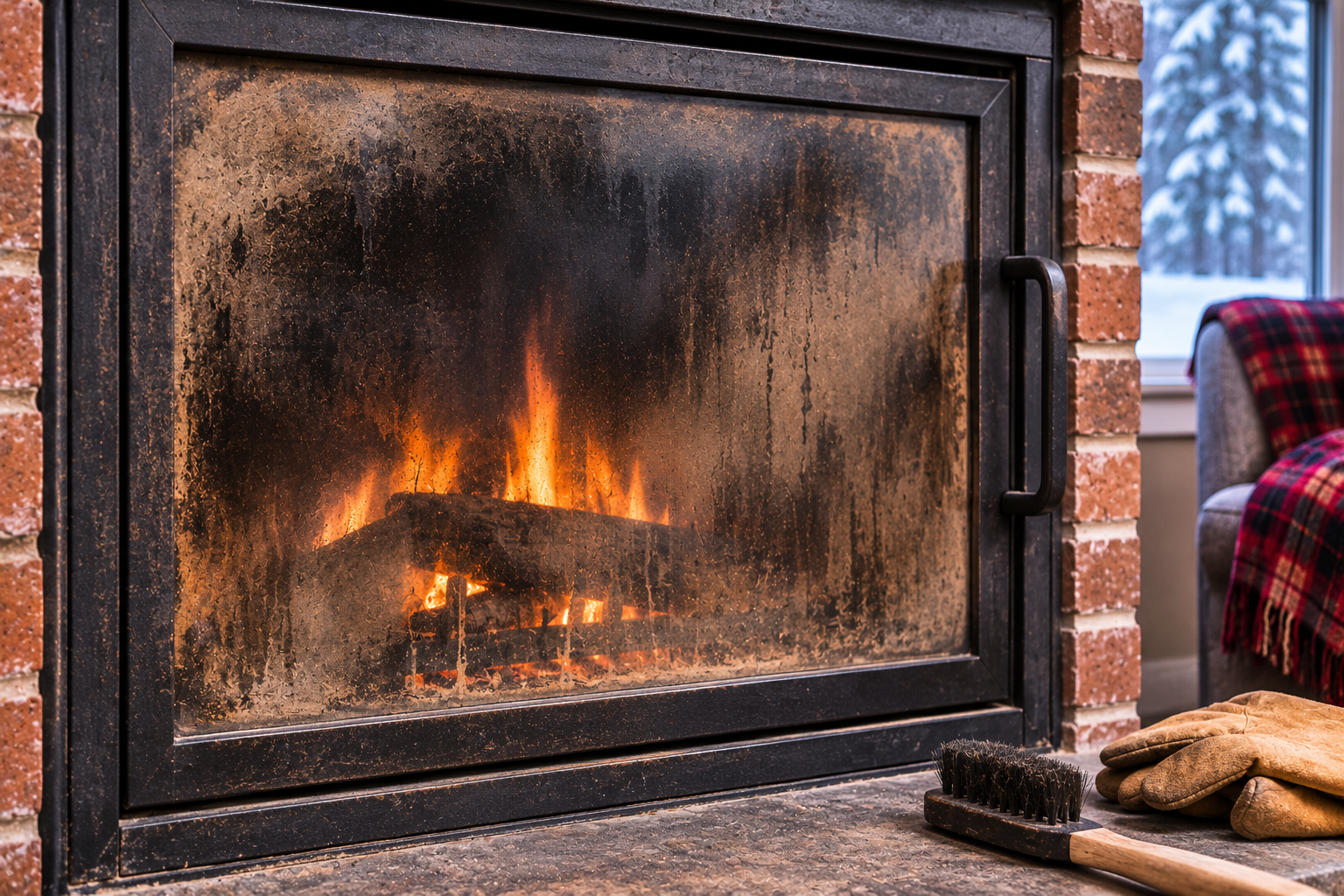
What Does Sooty Fireplace Glass Mean?
Sooty fireplace glass Minnesota fireplaces develop is a thin film of unburned carbon and creosote particles that condense on the cool surface of the glass doors. It forms when smoke cools before it leaves the firebox, which usually means one or more things are off.
The most common reasons are wet or unseasoned firewood, a damper that is not fully open, a weak draft, or creosote buildup narrowing the flue. Less often, the glass itself is damaged or the firebox design is restricting airflow.
Cleaning the glass is fine, but sooty fireplace glass Minnesota winters expose that keeps returning after cleaning has a deeper cause worth inspecting.
Why Minnesota Winters Produce More Sooty Fireplace Glass
Local conditions stack up against a clean burn in three ways.
Cold, dense air in the flue. A chimney that sat idle all summer holds cold air, so early smoke cools faster and deposits carbon on the glass before it leaves the firebox. That is why the first fires of November look blacker than mid-January ones.
Wet or poorly seasoned wood. Minnesota’s short drying season and snowy winters leave many homeowners burning wood that still carries water. Wet wood smolders instead of burning hot, which means more smoke, more soot and faster creosote buildup.
Freeze-thaw moisture in the system. Water that enters through a cracked crown or failing flashing cools the flue and chills the firebox, which further slows combustion. Our guide to chimney water intrusion Minnesota covers where that water usually enters.
7 Causes of Sooty Fireplace Glass Minnesota Homeowners See
Each cause points to a different fix. Read these as clues, not a diagnosis. Only an in-person inspection confirms what is really happening.
1. Wet or Unseasoned Firewood
Wet wood burns cool and smoky because water inside the log must boil off before the wood ignites properly. That cool smoke condenses on the glass as a black film within one or two fires.
Sooty fireplace glass Minnesota first fires show most often traces to wood that was cut this year or stored uncovered through rain and snow. Our guide to firewood moisture fireplace Minnesota explains how to test and store it.
Burn only dry, seasoned firewood, never trash, painted wood or treated lumber. The EPA Burn Wise program shares practical tips for cleaner, more efficient home burning.
2. A Damper That Is Not Fully Open
If the damper is closed or only partly open, smoke has nowhere to go but into the firebox and against the glass. Even a small gap in the seal produces heavy sooting over a few fires.
Sooty fireplace glass Minnesota homeowners clean but see return usually means the damper is not sealing properly. Our fireplace damper problems Minnesota guide lists the warning signs, including stuck handles and broken linkages.
3. Weak Chimney Draft
Draft is the pressure difference that pulls smoke up the flue. When it is weak, smoke lingers in the firebox and coats the glass instead of leaving through the chimney.
Sooty fireplace glass that gets worse as the evening goes on often points to a draft problem rather than a wood problem. Our guide to poor chimney draft Minnesota covers the seven common causes.
4. Creosote Buildup Narrowing the Flue
Creosote forms when smoke cools and condenses on cool flue surfaces. When it builds up thickly, it restricts the path, which slows draft and pushes smoke back against the glass.
Sooty fireplace glass Minnesota winters make worse is often the visible sign of a flue that needs cleaning. A professional chimney cleaning clears it safely, and the Chimney Safety Institute of America (CSIA) recommends annual inspection to catch buildup you cannot see.
5. Overloaded Firebox or Too Much Wood
Cramming too much wood into the firebox starves the fire of air. The result is a smoky, smoldering burn that puts heavy soot on the glass in minutes.
Sooty fireplace glass that appears quickly after loading usually means the fire needs less wood, not more. Build smaller, hotter fires with dry kindling first, then add larger logs once the flame climbs.
6. A Blockage Above the Firebox
Nests, debris, fallen mortar or a damaged liner can restrict the flue above where your flashlight reaches. Draft weakens, smoke backs up and the glass goes black.
Sooty fireplace glass that does not improve after a cleaning or a change in wood points to something above the firebox. A camera scan finds it, and our chimney liner inspection Minnesota guide explains what comes next.
7. Firebox Damage Restricting Airflow
Cracked panels, missing mortar or warped components can disrupt the way air moves through the firebox, which slows combustion and puts more soot on the glass.
Sooty fireplace glass paired with visible wear in the firebox deserves a closer look. Our firebox damage Minnesota guide separates minor cosmetic wear from repair-worthy damage.
What You Can Safely Do at Home
Safe Cleaning Tips for Sooty Fireplace Glass
Cleaning the glass is a safe task when the fireplace is completely cold, with no warm ash or embers and the damper closed to keep dust from rising.
- Wait until the fire has been out for at least 24 hours and the glass is cool to the touch.
- Crumple a ball of newspaper, dip it in ash from the firebox, and wipe the glass in small circles. The mild abrasive removes soot without scratching.
- For heavier buildup, use a fireplace glass cleaner specifically made for high-temperature glass. Avoid household ammonia or abrasive scrubbers.
- Wipe the glass dry with a soft cloth to prevent streaks.
- Photograph the glass after cleaning for your technician, especially if the film returns quickly.
Sooty fireplace glass Minnesota homeowners clean but see return within a few fires has a cause that cleaning alone will not fix.
What You Should Not Do at Home
Never climb onto the roof, reach past the damper, poke at a blockage or enter the flue to investigate soot problems. Creosote removal, camera scanning and structural repair all need professional tools and access.
Never use oven cleaner, steel wool or razor blades on fireplace glass. Those products scratch the surface, and scratched glass gets dirty faster and can weaken under heat.
Red Flags: Stop the Fire and Call a Professional
Sooty fireplace glass alone is usually manageable, but paired with any of these signs, stop using the fireplace and call:
- Smoke entering the room during or after a fire
- A strong smoky odor from a cold fireplace
- Heavy black or shiny creosote inside the firebox
- Water, ice or damp spots in or above the firebox
- Soot marks spreading above the fireplace opening onto the mantel
- A chimney fire history, an appliance change or a recent home purchase
If a carbon monoxide alarm sounds, leave the house immediately and call 911. Keep working smoke and carbon monoxide alarms on every level.
How Professionals Find the Real Cause of Sooty Fireplace Glass
What a Cleaning and Inspection Covers
A technician clears creosote and soot from the flue, then inspects the damper, smoke chamber, flue liner and firebox, often with a camera. The NFPA 211 standard defines three inspection levels. Level 1 covers readily accessible parts, and Level 2 adds a camera scan of the flue.
The camera scan is what separates a wood problem from a flue problem. Sooty fireplace glass Minnesota homes see usually clears once the real cause is addressed, whether that is a cleaning, a damper repair or a relining project.
When Cleaning Is Not Enough
Sometimes sooty glass is only the symptom. A flue that is the wrong size, a damaged liner or moisture from above all weaken performance in ways cleaning cannot fix. Our chimney relining and chimney repair pages cover those options.
Choosing a Qualified Professional
Look for CSIA certification and a Minnesota contractor license, and ask for both numbers. Free homeowner guidance at Verified Chimney Pros helps you ask better questions before you hire.
Sooty Fireplace Glass Prevention Checklist for the Season
- Burn dry wood only: meter it if you can, and aim for below about 20 percent moisture.
- Build smaller, hotter fires: less wood, more air, a cleaner burn.
- Open the damper fully before lighting and keep it open until the fire is out.
- Clean the glass every few fires with newspaper and ash, not chemicals.
- Watch the pattern: soot that returns quickly after cleaning means call a professional.
- Book an annual inspection before the season starts, as CSIA recommends.
Sooty fireplace glass Minnesota winters expose is easier to prevent than to chase down mid-season. A clean burn starts with dry wood and a clear flue.
Sooty Fireplace Glass Help in Maple Lake, Minneapolis and the Twin Cities
Midwest Chimney Repair works from Maple Lake and serves homeowners within an approximately 25-mile radius. If you live in Minneapolis or elsewhere in the Twin Cities, call to confirm whether your address is covered. Our team can walk you through any sooty fireplace glass Minnesota winters have left behind.
Services and Service Areas in Minnesota
We proudly provide chimney repair MN, including:
Buffalo, MNAnnandale, MNMonticello, MNWaverly, MNClearwater, MN
Our chimney and fireplace repair services include:
Frequently Asked Questions
What causes sooty fireplace glass?
Sooty fireplace glass Minnesota homeowners see is caused by unburned carbon and creosote particles condensing on cool glass. Wet wood, a partly closed damper, weak draft and creosote buildup are the usual reasons. The glass is simply showing you how the fire is burning.
Is sooty fireplace glass dangerous?
The soot itself on the glass is not dangerous, but the conditions that cause it can be. Wet wood and weak draft mean combustion gases, including carbon monoxide, may be staying in the room. Keep alarms tested and burn only dry wood.
How do I clean sooty fireplace glass safely?
Wait until the fireplace is completely cold, crumple newspaper, dip it in ash, and wipe the glass in small circles. For heavier buildup, use a fireplace glass cleaner made for high-temperature glass. Avoid ammonia, steel wool and razor blades.
Why does my fireplace glass turn black so quickly?
Fast blackening usually means wet or unseasoned firewood, an overloaded firebox, or a damper that is not fully open. Sooty fireplace glass that returns within a few fires after cleaning has a deeper cause worth inspecting.
Can wet firewood cause black fireplace glass?
Yes. Wet wood smolders instead of burning hot, producing cool smoke that condenses on the glass as a black film. Our guide to firewood moisture fireplace Minnesota covers testing and storage.
Does a weak chimney draft cause sooty glass?
Yes. Weak draft slows the exhaust path, so smoke lingers in the firebox and coats the glass instead of leaving through the chimney. Sooty fireplace glass that worsens as the evening goes on often points to a draft problem.
Can I use oven cleaner on fireplace glass?
No. Oven cleaner contains chemicals that can damage high-temperature glass and leave residues that burn on the next fire. Newspaper and ash, or a fireplace-specific glass cleaner, are the safe options.
Does sooty glass mean I need a chimney cleaning?
It can. Creosote buildup narrowing the flue slows draft and pushes smoke back against the glass. Sooty fireplace glass that persists after a change in wood usually means a professional chimney cleaning and inspection is due.
How often should fireplace glass be cleaned?
A quick wipe every few fires keeps the glass clear and helps you spot changes early. Sooty fireplace glass Minnesota homeowners see that returns rapidly after cleaning means the underlying cause needs a professional look.
Can a cracked firebox cause sooty glass?
Yes. Firebox damage can disrupt airflow through the chamber, which slows combustion and puts more soot on the glass. Our firebox damage Minnesota guide lists the warning signs.
What does Level 2 inspection mean for sooty glass?
Under NFPA 211, Level 1 covers readily accessible parts of the chimney and fireplace. Level 2 adds a camera scan of the flue, which finds blockages, damage or sizing issues that cleaning alone will not resolve.
Does freeze-thaw weather affect fireplace glass?
Indirectly, yes. Moisture entering through the crown or flashing cools the flue and slows combustion, which increases soot on the glass. Our post on winter chimney masonry Minnesota explains the damage cycle.
How much does a chimney cleaning and inspection cost?
Cost depends on access, flue condition and whether a camera scan is needed. A professional inspection gives you a clear scope before any work begins.
Does Midwest Chimney Repair serve Minneapolis?
We are based in Maple Lake with an approximately 25-mile service radius. Twin Cities homeowners should call (612) 655-8181 to confirm whether their address is covered.
How do I schedule a chimney cleaning and inspection?
Call (612) 655-8181 or email mnchimneyrepair@gmail.com. Our hours are Monday–Friday, 9:00 AM–4:00 PM. Photos of the glass and firebox help us prepare.