
Water Stains Around the Fireplace: Expert Guide for Minnesota Homeowners
You’re admiring your fireplace when you notice it—a brownish water stain on the drywall around the firebox opening. It’s not huge, and it might be old. Surely it’s not a big deal, right?
Wrong. Water stains around your fireplace are one of the most serious warning signs in any Minneapolis or Bloomington home. They signal water intrusion from your chimney system, and this water has already penetrated deep enough into your home’s structure to be visible. What you’re seeing is the tip of an iceberg of potential damage.
Understanding what causes these stains, why they indicate urgent problems, and what you should do immediately can prevent thousands of dollars in structural repairs and mold remediation.
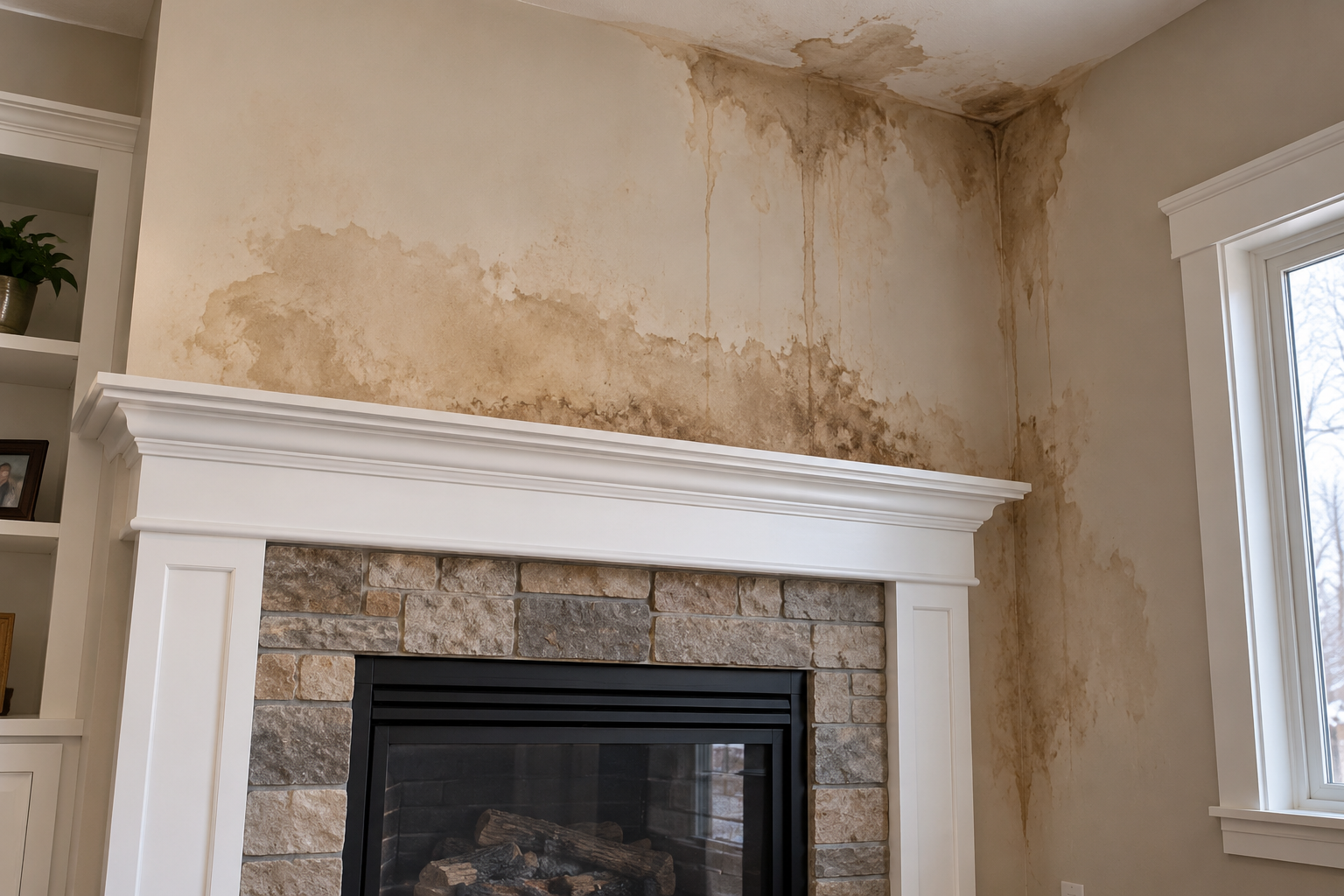
What Water Stains Around the Fireplace Really Mean
Water stains visible on drywall, brick, or plaster around your fireplace indicate one clear fact: water has penetrated your chimney system and traveled into your home’s interior structure.
This isn’t a cosmetic issue. This isn’t something you can ignore until spring. This is evidence that water intrusion is actively occurring or has occurred recently, and structural damage is developing or has already developed.
Where the Water Comes From
Water reaching the interior of your fireplace typically originates from one of several sources:
The chimney crown: The concrete seal at the chimney top is cracked or deteriorated, allowing water to enter the brick structure above the roofline.
Chimney flashing: The metal seal where your chimney meets the roof is damaged, rusted, or improperly installed, allowing water to run between the chimney and roof into the structure.
Mortar joints: Deteriorated mortar between bricks allows water to penetrate the masonry and travel downward into the chimney structure.
The chimney cap: Missing or damaged, allowing water to enter directly from above.
The exterior chimney wall: Water running down the outside of the chimney penetrates through deteriorated masonry and travels inward.
Once water enters the chimney structure, it doesn’t stop at the exterior wall. It travels downward, through the flue system, into the smoke chamber, and eventually into the firebox where it becomes visible as water stains.
By the time you see water stains inside, water has been infiltrating your home for some time.
Why Water Stains Demand Immediate Attention in Minnesota
Minnesota’s climate creates unique urgency around water intrusion. Unlike homeowners in milder regions who might have weeks or months before water damage becomes critical, Minneapolis and Bloomington homeowners face immediate escalating risks.
Freeze-Thaw Cycles Accelerate Damage
Minnesota’s temperature swings between fall and spring create relentless freeze-thaw cycles. Water that has entered your chimney structure doesn’t just sit there harmlessly. It:
- Enters brick and mortar pores
- Freezes as temperatures drop
- Expands approximately 9% in volume, cracking masonry from inside
- Thaws when temperatures rise, leaving larger cracks
- Repeats this process 50+ times through winter
Each freeze-thaw cycle causes more damage. What was a manageable water intrusion in October becomes extensive structural damage by February.
Hidden Water Damage Spreads Quickly
Water stains you can see represent water that has already penetrated deep into your home. But the damage extends far beyond what’s visible:
- Water is traveling through wall cavities adjacent to the chimney
- Insulation is absorbing moisture and losing effectiveness
- Wood framing is becoming saturated and vulnerable to rot
- Mold is developing in hidden spaces where moisture is trapped
- Structural components are weakening as water exposure continues
This hidden damage accelerates through winter.
Mold and Health Risks
Water intrusion creates conditions perfect for mold growth. Mold:
- Thrives in damp, hidden spaces behind walls
- Can cause respiratory problems and allergies
- Becomes difficult and expensive to remediate once established
- Spreads rapidly in Minnesota’s damp climate
Water stains visible today can indicate mold colonies already developing behind the walls.
Assessing Water Stains: What You Can Observe Safely
You can evaluate water stains and gather information for a professional without climbing onto your roof or entering dangerous spaces.
Safe Observations Around the Fireplace
Stain appearance: Note the color (brown/tan typically indicates mineral deposits from water travel), size, and location. Are the stains old and dried, or do they look fresh?
Stain pattern: Do stains follow a vertical path (suggesting water running down), or are they concentrated in one area (suggesting water entering from a specific point)?
Multiple stains: If you see several stains at different heights, this suggests persistent water intrusion over time.
Damp spots: If areas feel damp to the touch, water is actively entering or recently entered.
Smell: Musty or moldy odors near the fireplace indicate moisture accumulation and possible mold growth.
Paint or plaster condition: Peeling paint, bubbling wallpaper, or deteriorating plaster indicates water has been present behind the surface.
Wood discoloration: Wooden trim or studs showing dark staining indicates water saturation.
Areas to Check Beyond the Visible Stain
Ceiling above the fireplace: Water travels upward as well as downward. Check ceilings for water stains or discoloration.
Walls extending from the fireplace: Water intrusion often shows stains in multiple locations as it travels through the wall structure.
Adjacent rooms: Water doesn’t stay contained to one room. Check the back side of fireplace walls in adjacent rooms for stains or moisture.
Upper floors: If your chimney extends through multiple floors, check those areas for water damage signs.
Attic area near chimney: If accessible, look for water stains, wet insulation, or damp wood in the attic near the chimney.
Do NOT Attempt These Investigations
Do not climb into the chimney or flue to investigate. Do not climb onto the roof to inspect the crown or cap. Do not perform any structural work yourself. These are professional-only activities that require proper safety training and equipment.
How Water Damage Progresses Without Professional Intervention
Understanding the timeline of water damage escalation emphasizes why immediate action is critical.
Week 1-2 (Initial Detection)
You notice the first water stains. Water has recently entered your home, or old water damage has just become visible. At this stage, intervention is easiest and least expensive.
Week 3-4 (Damage Expansion)
Water continues entering through the same source. Additional stains appear. Damp spots develop. Musty odors become noticeable. Hidden water damage is developing in wall cavities and attic spaces.
Month 2 (Freeze-Thaw Intensification)
If water intrusion began in fall, Minnesota’s freeze-thaw cycles have begun. Water inside the chimney structure and walls freezes and expands. Structural damage accelerates. Freeze-thaw cycles repeat weekly.
Month 2-3 (Hidden Damage Becomes Apparent)
Mold growth becomes visible or smell becomes strong. Insulation is saturated. Wood framing shows signs of water damage. Structural integrity is compromised. Professional remediation becomes necessary—and expensive.
Month 3-6 (Emergency Repair Stage)
Structural wood is rotting. Mold has spread significantly. Water damage is extensive. Professional intervention required urgently. Repair costs are now substantial.
Professional Water Damage Assessment Process
When you contact a professional about water stains around your fireplace, here’s what happens.
Initial Inspection
The professional will:
- Examine the visible water stains and assess their severity
- Look for additional stains you might have missed
- Evaluate damp areas and moisture levels
- Note odors and other evidence of water intrusion
- Ask about when stains first appeared and whether they’re growing
Chimney System Evaluation
The professional inspects the chimney system to identify the water source:
- Using specialized cameras, they examine the flue interior for cracks, deterioration, or damage
- They assess the chimney crown condition
- They evaluate flashing where the chimney meets the roof
- They check for mortar deterioration
- They inspect the chimney cap
Water Source Determination
Based on the inspection, the professional identifies where water is entering:
- Is water coming from above (crown or cap failure)?
- Is water entering from the roof line (flashing damage)?
- Is water penetrating through deteriorated masonry (mortar failure)?
- Is water traveling down the outside of the chimney and entering through cracks?
Hidden Damage Assessment
Professionals assess hidden damage:
- Using moisture meters, they detect water in walls and structural components
- They evaluate insulation condition
- They assess wood framing for water saturation
- They evaluate mold risk and existing mold growth
- They determine the extent of damage beyond visible stains
Comprehensive Report and Repair Plan
You receive a detailed report documenting:
- The water intrusion source
- The extent of visible damage
- The extent of hidden damage detected
- Immediate repair recommendations
- Priority for repair sequencing
- Professional remediation requirements
- Cost estimates for repairs
Water Damage Repair: What to Expect
Depending on severity, repair may involve multiple components.
Immediate Chimney Repairs
Addressing the water source is the first step:
- Crown repair or replacement: If the crown is cracked or damaged, it must be repaired or replaced to stop water entry from above.
- Flashing repair or replacement: If flashing is the source, it must be repaired or replaced and properly sealed.
- Chimney cap installation or repair: If missing or damaged, a proper cap must be installed.
- Repointing deteriorated mortar: If mortar is failing, it must be removed and replaced.
Water Damage Remediation
After the water source is addressed, interior damage must be remediated:
- Drywall and plaster replacement: Water-damaged drywall or plaster must be removed and replaced.
- Insulation replacement: Saturated insulation loses effectiveness and promotes mold growth. It must be replaced.
- Mold remediation: If mold is present, it must be professionally removed and the area treated.
- Wood frame evaluation and repair: Water-damaged wood framing may need reinforcement or replacement.
- Chimney interior cleaning: After water intrusion is stopped, the chimney interior must be cleaned and inspected.
Waterproofing and Prevention
After repairs are complete, waterproofing protects against future water intrusion:
- Professional chimney waterproofing: A protective sealant is applied to exterior masonry surfaces
- Additional protective measures: Chimney caps, proper flashing, and maintained crowns prevent future problems
Cost of Immediate Repair vs. Delayed Intervention
The financial consequences of delaying professional attention are substantial.
Immediate Professional Intervention Costs
If you address water intrusion when first noticed:
- Professional inspection and assessment: $200-$500
- Chimney crown repair: $500-$1,500
- Flashing repair or replacement: $400-$1,200
- Professional waterproofing: $500-$1,500
- Minor drywall patch and paint: $200-$500
Total immediate intervention: $1,800-$5,200
Delayed Intervention Costs (After Months of Water Damage)
If water intrusion continues through winter:
- Professional assessment: $200-$500
- Chimney repairs (extensive): $1,500-$5,000
- Drywall and plaster replacement: $1,000-$3,000
- Insulation replacement: $500-$2,000
- Mold remediation: $1,000-$5,000+
- Structural wood repair or replacement: $2,000-$10,000+
- HVAC system inspection and repair: $500-$2,000
Total delayed intervention: $7,200-$27,500+
The difference between immediate action and delay is often $15,000-$20,000 in additional costs.
Services and Service Areas in Minnesota
We proudly provide chimney repair MN, including:
Buffalo, MNAnnandale, MNMonticello, MNWaverly, MNClearwater, MN
Our chimney and fireplace repair services include:
Frequently Asked Questions
What causes water stains around fireplaces in Minnesota specifically?
Water enters chimney systems through multiple sources: cracked crowns, damaged flashing, deteriorated mortar, or missing caps. Minnesota’s climate accelerates damage through freeze-thaw cycles. Water penetrates the chimney structure and travels downward into the firebox where it becomes visible as stains.
Are water stains around my fireplace an emergency?
Yes. Water stains indicate water has already penetrated your home’s structure. While not an immediate life-safety emergency like a fire, it’s an urgent structural emergency requiring professional evaluation within days, not weeks.
Can I just paint over water stains to cover them up?
No. Painting covers the symptom but doesn’t address the cause. Water will continue entering through the same source, and damage will expand. The stain will return and grow. Professional repair addressing the water source is the only solution.
How quickly does water damage spread in Minnesota?
Very quickly, especially through winter. Initial water intrusion in October can cause extensive damage by February due to repeated freeze-thaw cycles. Hidden damage accelerates exponentially—by the time damage becomes visible in multiple locations, it’s already extensive.
Should I call a plumber or a chimney professional about water stains around my fireplace?
Call a chimney professional. Water around the fireplace originates from your chimney system, not plumbing. A chimney professional can identify the source and recommend repairs. General contractors or plumbers won’t have the specific expertise needed.
What if I ignore water stains and they don't get worse?
Damage continues invisibly in wall cavities and attic spaces even if visible stains don’t grow. Mold develops in hidden spaces. Wood framing absorbs moisture and becomes vulnerable to rot. By the time problems become obvious, extensive damage has occurred. Professional evaluation is critical.
Can water stains indicate mold is already growing?
Yes. If water has been intrude long enough for stains to become visible, mold may already be developing in hidden spaces behind walls. Musty odors strongly suggest mold is present. Professional assessment should include mold evaluation.
How long does professional water damage repair typically take?
Timeline depends on repair extent. Simple crown repair might take 1-2 days. Extensive water damage remediation involving multiple contractors can take weeks or months. A professional can estimate timeline after assessment.
Will homeowner's insurance cover water damage from a chimney leak?
Coverage depends on your specific policy and whether damage is considered sudden or maintenance-related. Many policies don’t cover water damage from neglected maintenance. Contact your insurance agent immediately if you have water stains, but don’t delay professional evaluation awaiting insurance determination.
What's the difference between water stains and efflorescence?
Efflorescence is white powder on exterior masonry indicating water traveled through it. Water stains on interior surfaces are typically brown or tan, indicating water has entered your home and mineral deposits are being left behind. Both indicate water intrusion, but interior water stains are more urgent.
Should I worry about water stains if the fireplace is old?
Yes. Age doesn’t make water stains less serious. Older chimneys may have more deterioration, making water intrusion more likely. If an old chimney is showing water intrusion, problems may be more extensive than in newer chimneys.
Can professional waterproofing prevent water stains?
Waterproofing applied to the chimney exterior before water intrusion occurs can prevent stains from developing. However, if water stains already exist, the source must be repaired first. Waterproofing is prevention for future intrusion, not repair for current damage.
What questions should I ask a professional about water stains?
Ask where the water is coming from, how extensive the damage is (visible and hidden), whether mold is present, what repairs are needed immediately versus later, whether you should use the fireplace, what the timeline is, and what the cost estimate covers.
If I only see one small stain, do I still need professional evaluation?
Yes. One visible stain indicates water intrusion has been sufficient to be noticeable. Professional evaluation determines whether the source is minor (easily repaired) or serious (requiring major repair). Quick intervention when stains first appear is cheaper than waiting.
How can I prevent water stains around my fireplace in the future?
Professional chimney maintenance including annual inspection, chimney waterproofing, proper crown and flashing maintenance, and keeping the chimney cap intact all prevent water intrusion. Professional maintenance costs far less than water damage remediation.
What should I do if I notice water stains actively dripping?
This indicates active water intrusion. Contact a professional immediately. Do not use the fireplace. Document the dripping with photos or video for insurance purposes. This is the most urgent type of water stain.