
Winter Chimney Masonry Minnesota: How Moisture Damages Mortar and Brick
Winter chimney masonry Minnesota homeowners rely on takes a beating every year. Brick and mortar soak up rain, snowmelt, and humidity. Then temperatures drop, and that trapped water freezes.
The damage starts small. A sandy mortar joint or a white stain looks harmless in November. By March, that spot can crack, flake, and loosen bricks. It happens from Maple Lake farmhouses to Minneapolis bungalows.
This guide explains what moisture does to your chimney, which signs matter, and which checks stay safe from the ground. You will also learn when to call a certified pro about winter chimney masonry Minnesota repairs.
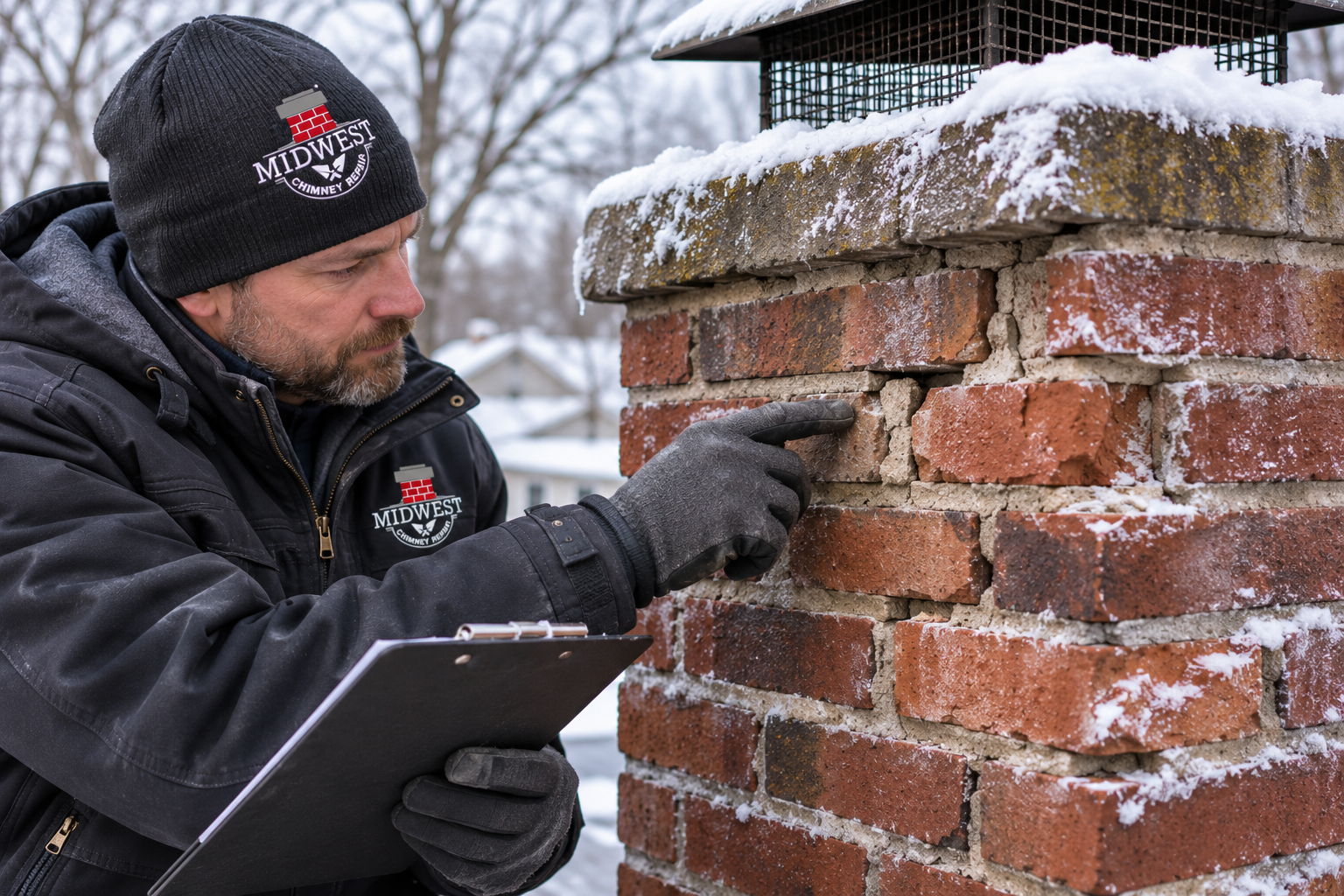
How Winter Chimney Masonry Minnesota Damage Starts
Winter moisture damages chimney masonry through freeze-thaw cycles. Water enters tiny cracks in mortar and brick. It freezes, expands, and pushes the material apart.
Winter chimney masonry Minnesota damage is the mortar erosion, brick spalling, and cracking that repeated freezing and thawing cause.
Key takeaways:
- Winter chimney masonry Minnesota problems start with trapped water, not cold alone.
- Sandy mortar, flaking brick, and white powder are early warning signs.
- Safe checks stay on the ground. Roof, ladder, and masonry work belong to a pro.
Why Your Brick Chimney Drinks Water All Season
Brick and mortar look solid, but both are porous. They absorb water like a hard sponge. Rain, wet snow, and snowmelt all soak in, and your chimney stands fully exposed above the roofline.
Mortar is softer than brick, so it wears faster. Over the years, joints erode and open tiny paths for water. Gaps at the crown, cap, and flashing add even more.
Most homeowners never see this damage because it hides high above the roof. That is why winter chimney masonry Minnesota inspections matter before the first deep freeze.
Freeze-Thaw Cycles: The Hidden Force Behind Winter Chimney Masonry Minnesota Damage
Water expands about 9 percent when it freezes. Inside a tiny crack, that pressure has nowhere to go. It pushes outward and widens the gap.
Minnesota swings between freezing nights and thawing days, especially in late fall and early spring. Twin Cities weather can repeat that pattern many times in one season. Each round adds stress.
A chimney is exposed on all four sides. Wind, snow, and sun hit it from every direction. That exposure makes winter chimney masonry Minnesota homeowners own especially vulnerable.
Hidden Costs: Rot, Mold, Rust, and Liner Damage
Wet masonry does not stay wet in one place. Moisture can travel into walls, ceilings, and insulation. It can rot framing, rust dampers, and damage flue liners, which may then need chimney relining.
Mold can follow. The EPA mold guidance advises drying wet materials within 24 to 48 hours to help prevent growth.
Safety matters too. A damaged chimney can let smoke or carbon monoxide into living areas. The NFPA 211 standard covers chimneys, fireplaces, and vents. If a carbon monoxide alarm sounds, leave the house and call 911.
7 Critical Signs of Winter Chimney Masonry Minnesota Damage
Use this list to spot trouble early. Look only from the ground or from inside your home. Never climb up for a closer view.
1. Sandy, Crumbling, or Recessed Mortar Joints
Healthy mortar sits nearly flush with the brick. Damaged mortar turns sandy, crumbles, or sinks back from the face. Crumbling joints are among the most common winter chimney masonry Minnesota problems.
Open joints let water in, and winter freezing widens them. Pros fix this with tuckpointing, also called repointing. See our chimney masonry repair service.
2. Spalling Brick Faces
Spalling happens when the brick surface flakes, pops off, or peels away. Frozen water inside the brick forces the face off. You may find brick chips at the base of the chimney.
Once the face breaks, the brick absorbs even more water. That cycle drives winter chimney masonry Minnesota repair costs up.
3. White Powder and Stains on the Brick
White, chalky powder is called efflorescence. It forms when water carries salts through masonry and leaves them on the surface. The powder is not the damage, but it proves water is moving through your brick.
Dark patches or green streaks also point to constant moisture.
4. Stair-Step Cracks Along the Mortar Lines
Cracks that follow mortar lines in a stair-step pattern deserve attention. They can signal water damage, settling, or both. Horizontal gaps under the crown are another warning.
Do not fill cracks with caulk or patching products. A pro should find out why the masonry moved.
5. Loose Bricks or a Leaning Chimney
Loose bricks, a shifting cap, or a visible lean call for fast action. Severe winter chimney masonry Minnesota damage can become a safety hazard, not just a repair. Falling brick can hurt people and damage the roof.
Keep people and pets away from the base of the chimney. Then call a certified technician right away.
6. A Cracked Crown, Failed Flashing, or Damaged Cap
Often the brick is not the first thing to fail. A cracked crown, worn flashing, or rusted cap sends water into the masonry. Water from these parts drives much winter chimney masonry Minnesota deterioration. Fixing brick without stopping the water wastes money.
Learn more about chimney crown repair, chimney flashing repair, and chimney cap replacement. Our guide to chimney water intrusion Minnesota explains each leak point.
7. Rust, Water Marks, or Musty Odors Inside
Moisture in masonry often shows up indoors. Look for rust on the damper, water marks in the firebox, or a musty smell near the fireplace. Peeling paint on nearby walls also counts.
These clues suggest winter chimney masonry Minnesota moisture has traveled beyond the brick.
Safe Checks for Winter Chimney Masonry Minnesota Homeowners Can Do From the Ground
What You Can Safely Observe
- Scan the chimney with binoculars from the yard. Look for missing mortar, flaking brick, or a tilted cap.
- Check the ground for brick chips or mortar sand.
- Look for white powder, dark stains, or green growth on the brick.
- Inspect nearby ceilings and walls for stains or peeling paint.
- With the fireplace cold, shine a flashlight at the damper from the room. Look for rust, and do not reach inside.
- Take dated photos after storms and thaws.
Pro-Only Work: Leave Winter Chimney Masonry Minnesota Repairs to a Certified Technician
- Climbing onto the roof or leaning a ladder against the chimney
- Repointing, patching, or replacing brick
- Applying sealers, coatings, or caulk
- Repairing crowns, caps, or flashing
- Reaching into the flue or smoke chamber
- Cutting into walls or ceilings near the chimney
These jobs carry fall, fire, and structural risks. A bad patch can trap water and hide the real problem.
Document the Damage Before You Call
Take dated photos and note the weather each time. Save your roof repair invoices and warranty papers. These notes help us trace winter chimney masonry Minnesota damage faster, and they help if you file an insurance claim. Coverage varies, so ask your insurer before repairs begin.
How Pros Fix Winter Chimney Masonry Minnesota Damage Without Guesswork
A professional starts with a full inspection. The technician checks the crown, cap, flashing, brick, mortar, and flue. A Level 2 inspection adds a camera scan of the flue, and it often fits chimneys with moisture damage.
The 🌐 Chimney Safety Institute of America (CSIA) certifies chimney professionals and shares homeowner education. Certification shows a technician passed an exam.
Repointing and Brick Replacement for Winter Chimney Masonry Minnesota Damage
Repointing removes failed mortar and replaces it with new mortar that matches the original. Pros replace badly spalled bricks too.
Why the Mortar Mix Matters
Hard modern mortar can damage softer older brick. Pros match the mortar’s strength and look to your chimney’s age.
Crown, Cap, and Flashing Repair
Pros repair or rebuild damaged crowns, replace worn caps, and reseal or replace flashing. These fixes cut off water at the top, so the masonry can dry out.
Water Repellents: Helpful, Not a Cure
A vapor-permeable water repellent can protect sound masonry. It lets moisture escape while it sheds rain. It does not fix cracks, open joints, or bad flashing. Avoid film-forming sealers, because they can trap moisture behind the brick.
Why Timing Matters for Winter Chimney Masonry Minnesota Repairs
Mortar needs mild weather to cure well. That makes fall and spring the best seasons for masonry work. Winter emergencies still happen, so ask your pro about temporary protection until warmer days.
When to Call a Pro About Winter Chimney Masonry Minnesota Damage
Call a pro for crumbling mortar, flaking brick, white staining, active leaks, or musty odors. Call right away for loose bricks, a leaning chimney, or a smoke smell. Also call after major storms or heavy snowmelt.
Pause fireplace use until a technician inspects the chimney. A professional chimney inspection usually leads to smaller repairs, and a chimney cleaning visit can reveal moisture signs inside the flue.
What a Professional Winter Chimney Masonry Minnesota Inspection Includes
- Interview: The technician asks where and when moisture shows up.
- Exterior review: The technician checks the crown, cap, flashing, mortar, and brick.
- Interior review: The technician examines the firebox, damper, and nearby ceilings.
- Moisture readings and a camera scan, when needed.
- Written findings with photos and repair options.
Questions to Ask Before You Hire
- Can I see your license number and proof of insurance?
- Do you hold CSIA certification?
- Will you show photos or video of the problem?
- Will your written estimate name the cause and the exact repair?
- What warranty covers the work?
Before you compare winter chimney masonry Minnesota quotes across the Twin Cities, read the free homeowner tips at 🌐 Verified Chimney Pros.
Local Help From Midwest Chimney Repair in Maple Lake
Midwest Chimney Repair is a Woman Veteran-Owned business in Maple Lake, Minnesota. We have served Minnesota homeowners since 1999 and bring more than 25 years of chimney industry experience to every masonry call.
Our team is CSIA Certified (#11692), and we hold Minnesota Contractor License RR 806746. Those credentials matter because accurate diagnosis takes training. We aim to stop winter chimney masonry Minnesota damage at the source, not cover it up. Our focus is education first, then clear repair options.
We serve homeowners within approximately a 25-mile radius of our operating area. Minneapolis and Twin Cities homeowners can call to confirm whether their address qualifies. Our hours run Monday through Friday, 9:00 AM to 4:00 PM.
Services and Service Areas in Minnesota
We proudly provide chimney repair MN, including:
Buffalo, MNAnnandale, MNMonticello, MNWaverly, MNClearwater, MN
Our chimney and fireplace repair services include:
Frequently Asked Questions
What does winter moisture do to chimney mortar and brick?
Water enters small cracks, freezes, and expands. That erodes mortar and flakes brick. Winter chimney masonry Minnesota damage grows with every freeze-thaw cycle.
What is winter chimney masonry Minnesota damage?
It is mortar erosion, brick spalling, and cracking from repeated freezing and thawing. It often starts small and hides high on the chimney.
What is spalling brick?
Spalling is when a brick face flakes, pops, or peels off. Trapped freezing water causes it. It is a classic winter chimney masonry Minnesota symptom.
What does white powder on my chimney mean?
It is usually efflorescence, which is salt left behind by moving water. It shows moisture is passing through the masonry. A pro should find the source.
Is crumbling mortar an emergency?
Not always, but do not wait. Open joints worsen winter chimney masonry Minnesota damage with every storm. A pro can judge how urgent your chimney is.
What is tuckpointing, and does my chimney need it?
Tuckpointing, or repointing, replaces failed mortar with fresh mortar. Your chimney may need it if joints are sandy, recessed, or open. A pro should confirm.
Can I seal my chimney myself?
No. Sealing requires roof access, and the wrong product can trap moisture. Ask a pro about a vapor-permeable repellent after repairs.
Why does winter chimney masonry Minnesota damage happen so fast?
Freezing nights and thawing days repeat often in fall and spring. Chimneys sit exposed on all four sides, so they take the full stress.
Can winter chimney masonry Minnesota damage like a leaning chimney wait?
No. Keep people and pets away from the base, and call a pro now. Leaning or loose masonry can fall.
When is the best time for masonry repair?
Fall and spring work best because mortar cures in mild weather. Winter chimney masonry Minnesota emergencies can still get temporary protection. Call early.
How much does winter chimney masonry Minnesota repair cost?
Cost depends on damage, roof access, and materials. Minor repointing costs far less than rebuilding part of a chimney. Ask for a written estimate that names the cause.
Does insurance cover winter chimney masonry Minnesota damage?
Coverage varies by policy and cause. Sudden damage may qualify, while wear often does not. Ask your insurer before repairs begin.
Is it safe to use my fireplace with winter chimney masonry Minnesota damage?
Pause use until a pro inspects it. Damaged masonry or liners can let smoke or carbon monoxide escape. If a carbon monoxide alarm sounds, leave and call 911.
How do I choose a chimney contractor near Minneapolis?
Ask for a license number, proof of insurance, CSIA certification, and a written estimate. Midwest Chimney Repair is CSIA Certified (#11692) and holds Minnesota Contractor License RR 806746.
How soon should I book a masonry inspection?
Book a winter chimney masonry Minnesota inspection when you see crumbling mortar or flaking brick. Midwest Chimney Repair in Maple Lake serves homeowners within about 25 miles, so call (612) 655-8181 to confirm.