
Firebox Damage Minnesota: What Your Fireplace Is Trying to Tell You
Firebox damage Minnesota homeowners discover in November usually began months earlier. A hairline crack, a dark stain or a missing bit of mortar looks minor on a cold evening. Each one, however, tells a story about heat, moisture and how the fireplace has been used.
This guide explains what those clues mean. It also separates the checks you can make safely from the work that belongs to a professional. Whether you live in Minneapolis or near Maple Lake, the same warning signs apply.
Firebox Damage Minnesota: What Your Fireplace Is Trying to Tell You
Firebox damage Minnesota homeowners discover in November usually began months earlier. A hairline crack, a dark stain or a missing bit of mortar looks minor on a cold evening. Each one, however, tells a story about heat, moisture and how the fireplace has been used.
This guide explains what those clues mean. It also separates the checks you can make safely from the work that belongs to a professional. Whether you live in Minneapolis or near Maple Lake, the same warning signs apply.
What Does Firebox Damage Mean?
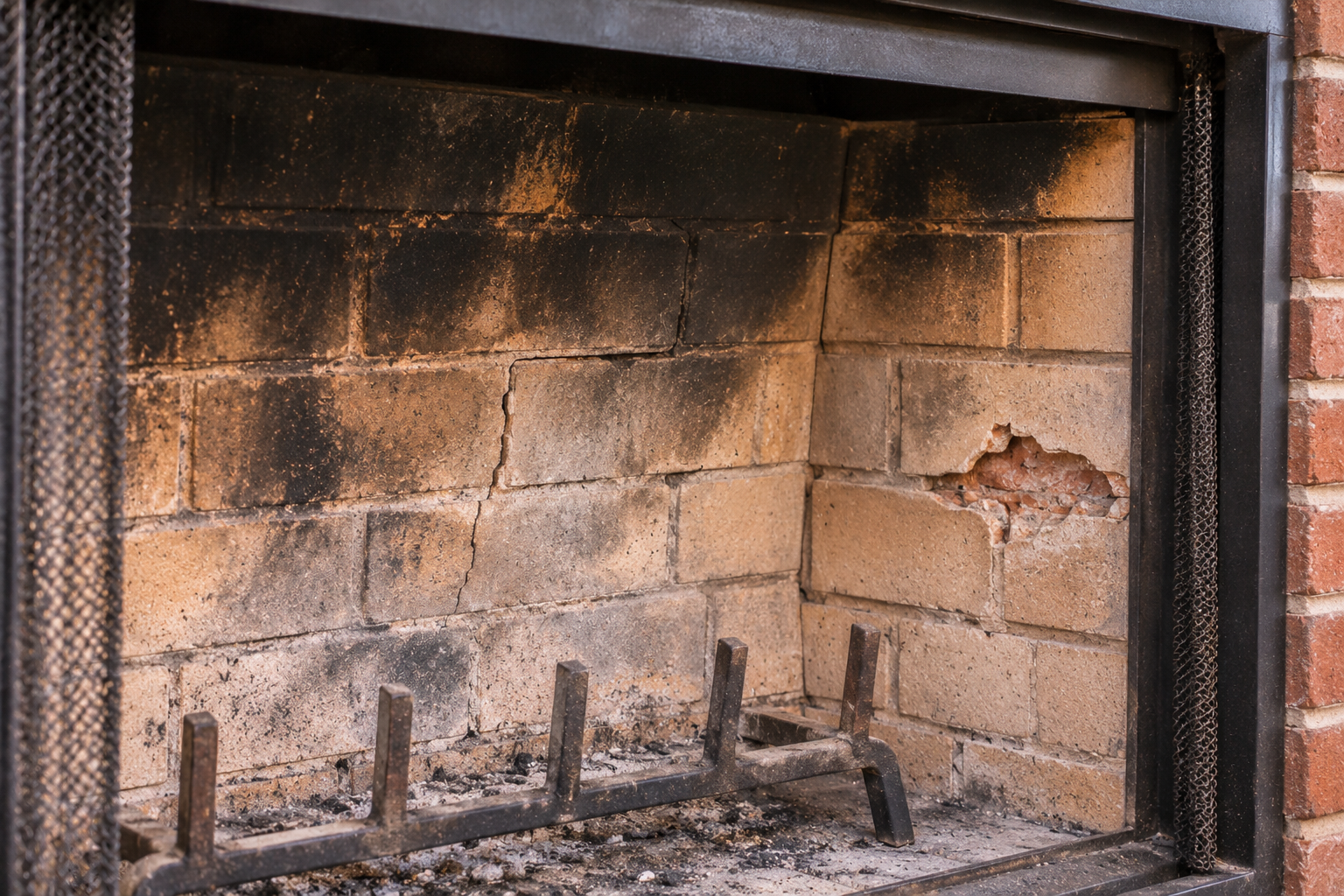
Firebox damage Minnesota fireplaces develop is physical wear inside the chamber where the logs burn. It includes cracked firebrick, crumbling mortar joints, warped panels, rust, and heavy soot or moisture stains. Some wear is cosmetic. Other damage lets heat or smoke reach parts of the house that were never meant to handle either.
Here is the simple rule. Hairline surface lines deserve watching. Gaps, loose bricks, missing pieces and active moisture deserve a professional look before the next fire.
Why Minnesota Winters Are So Hard on a Firebox
The firebox is the chamber at the front of your fireplace where the fire burns. Masonry fireplaces line it with firebrick set in thin refractory mortar. Factory-built fireplaces use refractory panels or metal. Both designs shield the framing and masonry behind them from intense heat.
Minnesota winters test that protection. Fires run longer and hotter during cold snaps, then the firebox cools completely between fires. That heating and cooling cycle stresses every material inside. Moisture entering from the top of the chimney adds freeze-thaw stress on top of it.
That is why firebox damage Minnesota homes show often looks different from damage in milder climates. Older masonry fireplaces across the metro often show it first.
7 Critical Firebox Damage Minnesota Signs and What Each One Means
Each sign below points to a different cause. Read them as clues, not as a diagnosis. Only an in-person inspection can confirm what is happening behind the surface.
1. Cracked or Flaking Firebrick
Firebrick handles heat well, but it still ages. Hairline cracks are common and often cosmetic. Wide cracks, loose bricks or faces that flake away are different, because they leave less protection between the fire and the structure behind it.
Cracked firebrick is a frequent form of firebox damage Minnesota fireplaces show after years of hard winter use.
2. Missing or Eroded Mortar Joints
Mortar joints seal the firebox walls. When they erode, gaps open between the bricks. Heat and sparks can then reach the masonry and framing behind the firebrick.
Eroded joints are firebox damage Minnesota homeowners often miss, because the gaps can be narrow and hidden in shadow. A pile of sandy grit on the hearth is a common clue. Pros take open joints seriously because heat passing through them can reach combustible materials.
3. Soot Stains Above or Beside the Opening
Black streaks on the fireplace face or mantel mean smoke is escaping into the room. Causes range from weak draft to a blocked flue to firebox damage Minnesota homeowners cannot see from the front.
Do not guess at the cause. Smoke in the living space is a safety issue, so it calls for an inspection rather than a stronger cleaner.
4. Rust, Warping and Discolored Metal
Rust on the grate, damper or metal firebox points to moisture. Warped or color-shifted metal points to overheating.
Warped metal is firebox damage Minnesota fireplaces with thin panels show quickly. Factory-built units are especially sensitive to both problems because their parts are thinner than masonry.
5. White Powder, Damp Spots or Water Marks
White, chalky deposits are called efflorescence. They form when water moves through masonry and leaves mineral salts behind. A damp hearth or rust streaks after rain or snowmelt tell the same story.
These deposits are one of the first signs of moisture-related firebox damage Minnesota owners can spot. Moisture usually enters from above, so fix the source and not just the firebox. Our guide to chimney water intrusion Minnesota explains the common leak paths.
6. Shiny, Tar-Like or Flaky Buildup
Creosote forms when smoke cools and condenses. In the firebox and flue it can look like flaky soot, crunchy tar or a shiny glaze. Heavy glaze is hard to remove and burns very hot if it ignites.
Slow, smoldering fires and damp wood are the usual causes. A professional chimney cleaning removes the buildup. The visit often reveals firebox damage Minnesota owners had not noticed.
7. A Damaged Damper or Cracked Hearth
The damper sits at the top of the firebox and seals the opening when the fireplace is not in use. A damper that sticks, warps or no longer closes tightly should be checked. Cracks in the hearth, where embers can land, deserve the same attention.
What Causes Firebox Damage Minnesota Fireplaces Develop?
Overfiring and the Wrong Fuel
Overfiring causes firebox damage Minnesota owners can often prevent. Fires that burn far too hot can crack firebrick and warp panels. Overloaded fireboxes and unsuitable fuel are common causes.
Burn only dry, seasoned firewood. Never burn trash, painted wood or treated lumber. The 🌐 EPA Burn Wise program offers practical tips for cleaner, more efficient burning at home.
Moisture From Above
Moisture creates firebox damage Minnesota freeze-thaw cycles then magnify. Water that sneaks in around a cracked crown or failing flashing runs down the flue and into the firebox. When it freezes, it expands and widens every small crack.
That is why chimney crown repair and chimney flashing repair often matter as much as the firebox itself. Our post on winter chimney masonry Minnesota shows how freezing weather breaks down brick and mortar.
A Past Chimney Fire or Appliance Change
Hidden firebox damage Minnesota owners cannot see may follow a past chimney fire. Some chimney fires burn slowly and quietly, so many homeowners never know one happened.
If you suspect one, or you recently bought the home, ask for a deeper look. The 🌐 NFPA 211 standard describes Level 2 inspections for fires, appliance changes and property sales.
Safe Checks Before Your Next Fire
A quick look for firebox damage Minnesota winters cause takes about five minutes. Do it only when the fireplace has been cold for at least a day, with no warm ash or embers.
What You Can Safely Observe
- Shine a flashlight into the firebox from the front, standing on the floor outside the opening.
- Look at the firebrick and mortar joints for the firebox damage Minnesota winters tend to cause: cracks, gaps or loose pieces.
- Check the hearth and the wall above the opening for soot, stains or cracks.
- Note any rust, white powder or damp spots.
- Take clear photos of any firebox damage Minnesota winters have left, for comparison next year and for your pro.
- Test your smoke and carbon monoxide alarms.
Work That Belongs to a Professional
Never crawl into the firebox, reach up past the damper or climb onto the roof. Do not patch mortar or panels yourself, because firebox damage Minnesota fireplaces develop usually has a hidden cause. Store-bought patches rarely hold up to fireplace heat and can hide the problem a professional needs to see.
Anything inside the flue or smoke chamber, or at roof level, also belongs to a trained technician.
Red Flags: Stop Using the Fireplace and Call
Skip the fire and call a professional if you notice any of these firebox damage Minnesota warning signs:
- Smoke drifting into the room while the fireplace burns
- Loose, shifted or missing bricks or panels
- Visible gaps in the firebox walls or floor
- Active water or ice in or above the firebox
- A persistent smoke odor when no fire is burning
- A wall beside the fireplace that feels unusually hot during a fire
- Evidence of a past chimney fire
If a carbon monoxide alarm sounds, leave the house immediately and call 911.
How Professionals Evaluate and Repair Firebox Damage Minnesota Homes Develop
[H3] What a Firebox Inspection Includes
An inspection for firebox damage Minnesota fireplaces develop covers the firebox, damper, smoke chamber and accessible flue. A technician often uses a camera to see areas you cannot. The 🌐 Chimney Safety Institute of America (CSIA) recommends an annual inspection.
NFPA 211 defines three inspection levels. Level 1 covers readily accessible parts. Level 2 adds a camera scan of the flue. Our 🔗 chimney inspections page explains what each visit involves.
[H3] Common Repair Options for Firebox Damage Minnesota Homes Need
- Repointing firebox joints with refractory mortar
- Replacing cracked firebrick or refractory panels
- Repairing or replacing a damaged damper
- Fixing the moisture source at the crown or flashing
- Relining the flue when it is involved (see our 🔗 chimney relining page and the 🔗 chimney liner inspection Minnesota guide)
The right fix depends on the cause. Repairing only visible damage while a leak continues above invites the problem to return. Our general 🔗 chimney repair page covers the full scope.
[H3] Choosing a Qualified Professional
Look for CSIA certification and a Minnesota contractor license, and ask for both numbers. Free homeowner guidance at 🌐 Verified Chimney Pros can help you ask better questions and spot red flags before you hire.
[H2] Firebox Damage Minnesota Maintenance Checklist for the Season
A steady routine catches firebox damage Minnesota winters create before it spreads.
- Before the first fire: inspect the cold firebox and schedule a visit if anything looks new.
- During the season: note smoke spillage, odors and new stains.
- After a cold snap or thaw: look for damp spots and white powder.
- In spring: schedule repairs before the next heating season.
- Every year: book a professional inspection, as CSIA recommends.
Small habits protect your fireplace. A five-minute look each month costs nothing and catches change early.
[H2] Firebox Damage Help in Maple Lake, Minneapolis and the Twin Cities
Midwest Chimney Repair works from Maple Lake and serves homeowners within an approximately 25-mile radius. If you live in Minneapolis or elsewhere in the Twin Cities, call to confirm whether your address is covered. Our team can walk you through any firebox damage Minnesota winters have left behind.
Services and Service Areas in Minnesota
We proudly provide chimney repair MN, including:
Buffalo, MNAnnandale, MNMonticello, MNWaverly, MNClearwater, MN
Our chimney and fireplace repair services include:
Frequently Asked Questions
What is firebox damage?
Firebox damage Minnesota homeowners see is wear to the chamber where the fire burns. It includes cracked firebrick, eroded mortar, warped panels, rust and stains. Some is cosmetic, but some affects safety.
What causes firebox damage Minnesota fireplaces get?
Repeated heating and cooling, overly hot fires, moisture and age are the main causes. Freeze-thaw cycles make moisture damage worse each winter. A professional can identify the cause in your fireplace.
Are cracks in firebrick dangerous?
Hairline cracks are common and often cosmetic. Wide cracks, loose bricks or missing pieces are different because they reduce protection from heat. Have a professional evaluate them before burning.
Is it safe to use a fireplace with firebox damage Minnesota winters have caused?
It depends on the damage. Gaps, loose bricks, smoke spilling into the room or active water mean you should stop using the fireplace until a professional inspects it.
How do I know if firebox damage Minnesota homeowners find is serious?
Watch for gaps, loose or shifted pieces, smoke in the room and moisture. Hairline surface lines are usually lower risk. When unsure, photograph the area and call a professional.
Can I repair firebox damage Minnesota homes develop myself?
No. Firebox repairs involve heat-rated materials and hidden areas, and DIY patches can hide a serious problem. A CSIA certified professional should handle all repairs.
How much does firebox repair cost?
Cost depends on the type of damage, the fireplace design and whether moisture or flue issues are involved. A professional inspection gives you a clear scope before any work begins.
How often should I have my firebox inspected?
CSIA recommends an annual chimney and fireplace inspection. Schedule an extra visit after a chimney fire, a change in appliance or when buying a home.
Does freeze-thaw weather damage a firebox?
Indirectly, yes. Water entering through the crown or flashing freezes, expands and widens cracks in masonry and the firebox. That is why firebox damage Minnesota winters cause often connects to roof-level problems.
What do white stains inside my firebox mean?
White powder is usually efflorescence, which signals that moisture is moving through the masonry. Find and fix the water source, because cleaning the stain alone will not stop it from returning.
Why is there soot on the wall above my fireplace?
Soot above the opening means smoke is escaping into the room. Possible causes include poor draft, a blockage or damage in the firebox or smoke chamber. Stop using the fireplace and schedule an inspection.
What is the difference between Level 1 and Level 2 inspections?
Under NFPA 211, Level 1 covers readily accessible parts of the chimney and fireplace. Level 2 adds a camera scan of the flue and is advised after a fire, an appliance change or a home sale.
Can a chimney liner problem cause firebox damage?
A damaged liner can let heat and moisture reach the masonry, and the firebox can show the effects. A camera inspection checks both areas together. This is firebox damage Minnesota owners often trace back to the flue.
Does Midwest Chimney Repair serve Minneapolis?
We are based in Maple Lake with an approximately 25-mile service radius. Minneapolis and Twin Cities homeowners should call (612) 655-8181 to confirm whether their address is covered.
How do I schedule a firebox damage Minnesota inspection?
Call (612) 655-8181 or email mnchimneyrepair@gmail.com. Our hours are Monday–Friday, 9:00 AM–4:00 PM. Share any photos of the damage so we can prepare.