
Fireplace Damper Problems Minnesota: Why Your Damper May Not Be Working Properly
Fireplace damper problems Minnesota homeowners face usually appear on the first cold evening of the season. You reach for the handle, it will not move, and the smoke has nowhere to go. One small metal plate decides whether your fireplace works safely.
This guide explains how a damper works, why it fails and which checks are safe from the living room floor. Whether you live in Minneapolis or near Maple Lake, the same signs apply. Anything inside the flue belongs to a trained technician.
Fireplace Damper Problems Minnesota: Why Your Damper May Not Be Working Properly
Fireplace damper problems Minnesota homeowners face usually appear on the first cold evening of the season. You reach for the handle, it will not move, and the smoke has nowhere to go. One small metal plate decides whether your fireplace works safely.
This guide explains how a damper works, why it fails and which checks are safe from the living room floor. Whether you live in Minneapolis or near Maple Lake, the same signs apply. Anything inside the flue belongs to a trained technician.
Why Is My Fireplace Damper Not Working?
A damper stops working when it rusts, warps, jams, loses its linkage or collects soot and creosote. These fireplace damper problems Minnesota fireplaces develop are common because moisture, cold snaps and years of heat all wear on the metal.
The rule is simple. If the damper is stuck closed or partly closed, do not light a fire. If it will not close tightly, the risk is lower, but you still lose heat and let in cold air and moisture.
Why Fireplace Damper Problems Minnesota Homes Develop Are a Fire and Safety Risk
A damper that cannot open fully traps smoke and combustion gases in the house. Those gases include carbon monoxide, which has no smell and can build up quickly. Heat and smoke then have nowhere to go but into the room.
A closed damper over glowing embers is also a hazard after the flames die. Embers can keep producing carbon monoxide, so keep the damper open until the fire is completely out.
Many fireplace damper problems Minnesota homeowners notice are safety problems first and comfort problems second. Treat any change in how the damper moves as a reason to call.
How a Fireplace Damper Works, and Why Minnesota Winters Test It
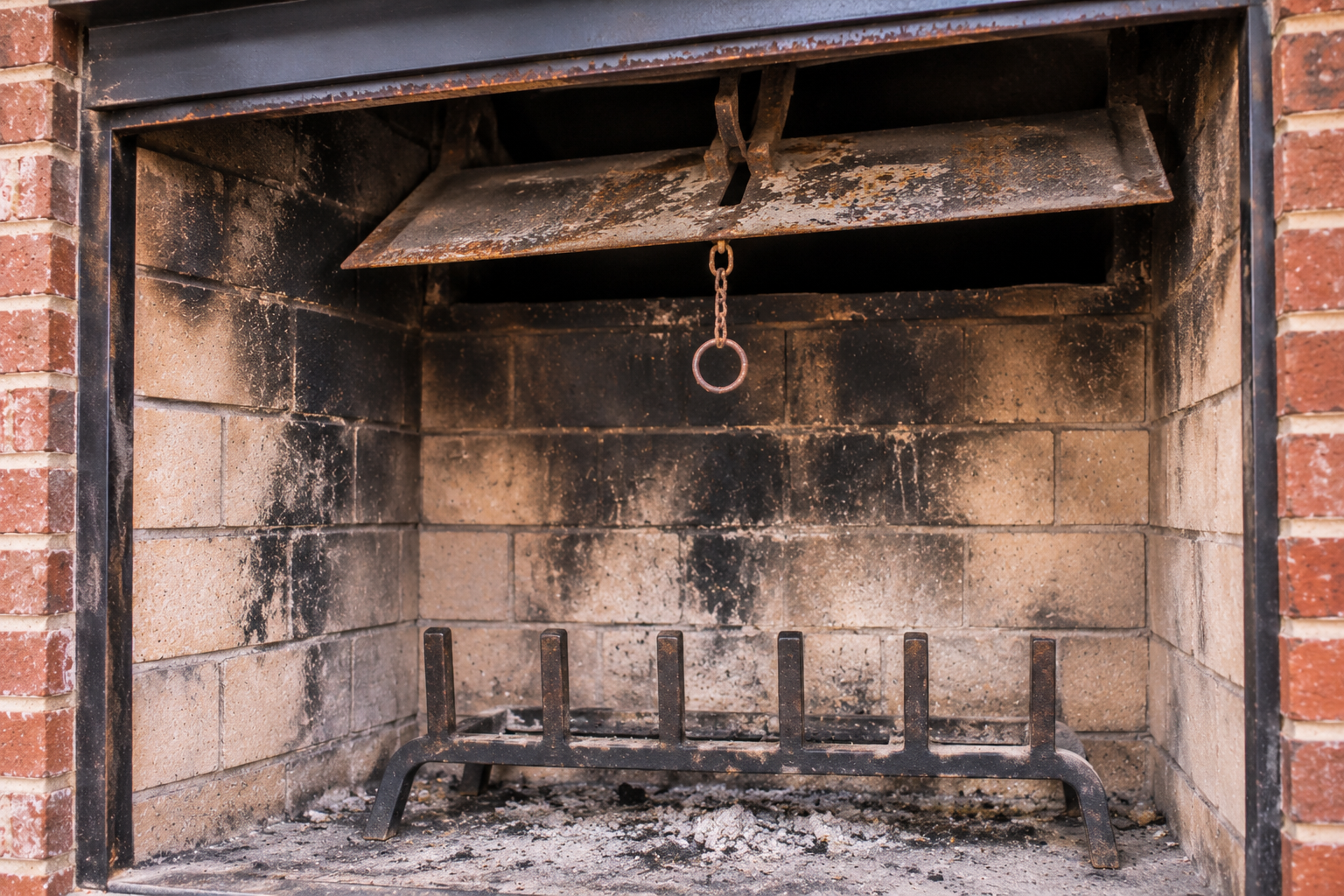
A damper is a movable metal plate inside the flue. Open, it lets smoke leave the house. Closed, it seals the chimney when the fireplace is off.
A throat damper sits just above the firebox and uses a handle or lever. A top-sealing damper sits at the chimney top and uses a chain or cable from the firebox.
Minnesota winters test both types. Warm indoor air escapes up any leaky damper, and freeze-thaw moisture runs down the flue and rusts the metal. That is why fireplace damper problems Minnesota homes show so often involve rust and poor sealing.
7 Critical Fireplace Damper Problems Minnesota Homeowners Should Recognize
Each sign points to a different cause. Read them as clues, not a diagnosis. Only an in-person inspection confirms what is happening above the firebox.
1. A Stuck Damper That Will Not Move
Rust, debris and warping can jam the plate or its handle. Never force it with a hammer or pry bar, because that can break the mechanism.
Stuck dampers are among the most common fireplace damper problems Minnesota owners report. If yours will not open, do not light a fire.
2. A Damper That Will Not Close Tightly
A gap lets cold air flow down the flue. You may feel a draft at the hearth or hear a whistle on windy nights. A leaky damper is one of the fireplace damper problems Minnesota winters make obvious, and it wastes heat all season.
3. Smoke Spilling Into the Room
Smoke entering the room means the exhaust path is not working. A damper that is not fully open can cause it, but so can a blocked flue or weak draft. Fireplace damper problems Minnesota fireplaces have are only one possible cause.
Stop using the fireplace, ventilate the room and test your alarms. The CPSC Carbon Monoxide Information Center explains the risks.
4. Rust Flakes or Orange Staining
Rust means moisture is reaching the metal. Orange streaks or rust flakes on the hearth are typical clues, and rust is a classic mark of fireplace damper problems Minnesota moisture creates.
Moisture usually enters from above, so fixing only the damper will not solve it. Our guide to chimney water intrusion Minnesota covers the common leak paths.
5. A Warped or Bent Damper Plate
Fires that burn too hot can bend the plate so it no longer seats or opens fully. Heat-warped metal is one of the fireplace damper problems Minnesota fireplaces develop after overly hot fires. It often appears with other heat damage, as our firebox damage Minnesota guide explains.
6. Soot, Creosote or Debris Around the Damper
Smoke cools and condenses near the damper, so soot and creosote collect there. Heavy buildup can jam moving parts and restrict airflow.
A professional chimney cleaning clears it, and burning only dry, seasoned wood helps. The EPA Burn Wise program shares practical tips.
7. Odors, Cold Drafts or Animal Noises
A smoky smell from a cold fireplace, a steady draft or scratching sounds can point to fireplace damper problems Minnesota fireplaces develop when a damper is open, damaged or missing. Do not reach into the chimney to investigate. Call a professional instead.
What Causes Fireplace Damper Problems Minnesota Homes Face Every Winter?
Moisture and Freeze-Thaw Cycles
Water that slips past a cracked crown or failing flashing runs down the flue onto the damper. Rust follows, and freezing temperatures make stuck parts harder to move.
Moisture drives many fireplace damper problems Minnesota winters create. That is why chimney crown repair and our post on winter chimney masonry Minnesota matter as much as the damper.
Heat and Overfiring
Overloaded fires and the wrong fuel overheat the metal. Overfiring causes fireplace damper problems Minnesota owners can prevent, because repeated heating and cooling bends the plate and wears the hinges. Burn only dry, seasoned firewood, never trash or treated lumber.
Age and Skipped Maintenance
Dampers are mechanical parts, so they wear out. Hinges loosen, linkage rusts and old plates crack. The Chimney Safety Institute of America (CSIA) recommends an annual inspection to catch this early.
Why Older Minneapolis and Twin Cities Fireplaces Get Hit First
Older metro homes often have masonry fireplaces that sit unused for months. Humid summers and freezing winters then work on the metal unseen. The first fire of November becomes the first time anyone tests the damper.
That timing is why a quick check in early fall prevents a cold-night surprise. It also leaves time to schedule repairs before the heating season peaks.
Safe Checks for Fireplace Damper Problems Minnesota Homeowners Can Make
Do these checks only when the fireplace has been cold for at least a day, with no warm ash or embers.
What You Can Safely Observe
- Stand on the floor in front of the fireplace and move the handle fully open, then fully closed. It should move smoothly.
- Shine a flashlight up from the opening without leaning in or reaching up.
- Look for rust, bent metal or soot piles on visible surfaces.
- Note drafts, odors or noises that suggest fireplace damper problems Minnesota winters may be causing.
- Take clear photos for your technician.
- Test your smoke and carbon monoxide alarms.
Work That Belongs to a Professional
Never reach up past the damper, enter the firebox or climb onto the roof. Do not pry, hammer or replace a damper yourself. Fireplace damper problems Minnesota owners try to fix alone often get worse, and a failed repair can hide a hazard.
Never test a damper by lighting a fire to see where the smoke goes.
Common Damper Mistakes Homeowners Make
- Lighting a fire without confirming the damper is open
- Closing the damper while embers still glow
- Forcing a stuck handle with tools
- Ignoring a leaky damper because the fireplace is “rarely used”
- Treating rust flakes as cosmetic
Each mistake is easy to make on a busy evening. A simple routine prevents all of them.
Red Flags: Do Not Light a Fire and Call a Professional
Skip the fire and call if you notice any of these fireplace damper problems Minnesota warning signs:
- A damper stuck closed or partly closed
- Smoke in the room during or after a fire
- A handle that moves while nothing changes in the flue
- Heavy rust, flaking or holes in the metal
- A missing or visibly bent damper plate
- Active water or ice near the damper
If a carbon monoxide alarm sounds, leave the house immediately and call 911.
How Professionals Evaluate and Fix Fireplace Damper Problems Minnesota Homes Develop
What a Damper Inspection Includes
A technician tests the damper, then checks the firebox, smoke chamber and flue, often with a camera. The NFPA 211 standard defines three inspection levels. Level 1 covers readily accessible parts, and Level 2 adds a camera scan of the flue.
Our chimney inspections page explains each visit. An inspection for fireplace damper problems Minnesota fireplaces have also reveals related damage. If a flue concern turns up, our chimney liner inspection Minnesota guide explains what comes next.
Repair or Replace the Damper?
Some fireplace damper problems Minnesota owners face need only cleaning, while others need a new damper. A warped, rusted-through or broken plate usually needs replacement. If a throat damper leaks badly, a professional may suggest a top-sealing damper.
The right fix depends on the cause. Replacing a damper while a leak continues above invites the problem to return. Our chimney repair page covers the full scope.
Choosing a Qualified Professional
Look for CSIA certification and a Minnesota contractor license, and ask for both numbers. Free homeowner guidance at Verified Chimney Pros helps you ask better questions before you hire.
Fireplace Damper Problems Minnesota Prevention Checklist
- Before the first fire: move the handle through its full range and schedule a visit if anything sticks.
- Every fire: open the damper fully before lighting, and keep it open until the fire is out and the ashes are cold.
- After a cold snap or thaw: look for rust, damp spots and drafts.
- When not in use: close the damper to cut heat loss.
- Every year: book a professional inspection, as CSIA recommends.
These habits catch fireplace damper problems Minnesota winters cause before they become safety issues.
Fireplace Damper Help in Maple Lake, Minneapolis and the Twin Cities
Midwest Chimney Repair works from Maple Lake and serves homeowners within an approximately 25-mile radius. If you live in the Twin Cities area, call to confirm your address is covered. Our team can walk you through any fireplace damper problems Minnesota winters have caused.
Services and Service Areas in Minnesota
We proudly provide chimney repair MN, including:
Buffalo, MNAnnandale, MNMonticello, MNWaverly, MNClearwater, MN
Our chimney and fireplace repair services include:
Frequently Asked Questions
What does a fireplace damper do?
A damper is a movable plate in the flue that opens to vent smoke and closes to seal the chimney. Fireplace damper problems Minnesota homeowners notice usually involve one of those two jobs failing.
Why is my fireplace damper stuck?
Rust, soot, debris, warping or a broken linkage are the usual causes. Fireplace damper problems Minnesota winters create often start with moisture. Do not force it; call a professional.
Is it safe to use a fireplace with a stuck damper?
No, not if the damper is closed or partly closed. Smoke and carbon monoxide can enter the home. Wait for a professional inspection.
Why does smoke come into the room when I light a fire?
Possible causes include a damper that is not fully open, a blocked flue or weak draft. Fireplace damper problems Minnesota fireplaces develop are one possible cause. Stop using the fireplace, ventilate the room and schedule an inspection.
How can I tell whether my damper is open?
A handle can be misleading if the linkage is broken. Look up from the front opening with a flashlight, without reaching in. If you cannot tell, do not light a fire and call a professional.
Can fireplace damper problems Minnesota homeowners have cause carbon monoxide risks?
Yes. A damper that is closed or partly closed during a fire can trap combustion gases in the home. Keep working carbon monoxide alarms on every level, and if one sounds, leave and call 911.
Why does my fireplace feel drafty with the damper closed?
A warped plate, worn edge or gap can let cold air down the flue. In winter you lose heated air that way. A professional can tell you whether repair or replacement makes more sense.
Can I repair a damper myself?
No. Reaching into the flue or forcing parts risks injury and damage. Fireplace damper problems Minnesota homes develop often have hidden causes that need a trained technician.
How much does damper repair or replacement cost?
Cost depends on the damper type, access, the damage and whether moisture or flue issues are involved. A professional inspection gives you a clear scope before any work begins.
What is the difference between a throat damper and a top-sealing damper?
A throat damper sits just above the firebox and uses a handle. A top-sealing damper sits at the chimney top and uses a chain or cable. A professional can tell which you have and which suits your fireplace.
Does freeze-thaw weather damage a damper?
Indirectly, yes. Water entering through the crown or flashing rusts the metal, and ice can bind moving parts. That is why fireplace damper problems Minnesota winters cause often connect to roof-level problems.
How often should my damper be inspected?
CSIA recommends an annual chimney and fireplace inspection, and the damper is part of it. Also move the handle through its full range before your first fire each season.
Should my damper be open or closed?
Open it fully before lighting a fire and keep it open until the fire is out and the ashes are cold. Close it when the fireplace is not in use to reduce heat loss.
Does Midwest Chimney Repair serve Minneapolis?
We are based in Maple Lake with an approximately 25-mile service radius. Twin Cities homeowners should call (612) 655-8181 to confirm whether their address is covered.
How do I schedule an inspection for fireplace damper problems Minnesota homeowners notice?
Call (612) 655-8181 or email mnchimneyrepair@gmail.com. Our hours are Monday–Friday, 9:00 AM–4:00 PM. Photos of the damper area help us prepare.